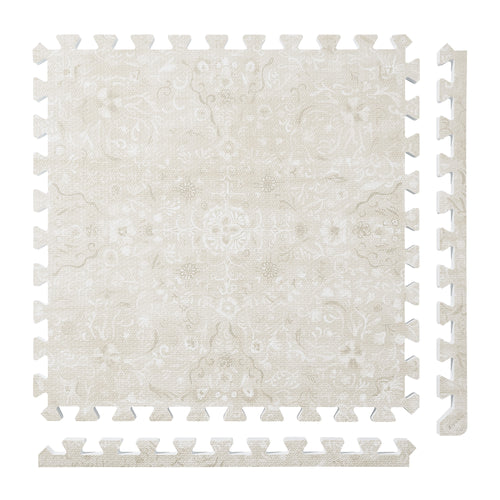
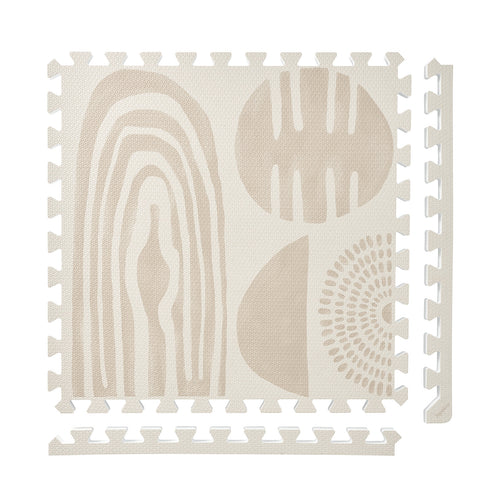
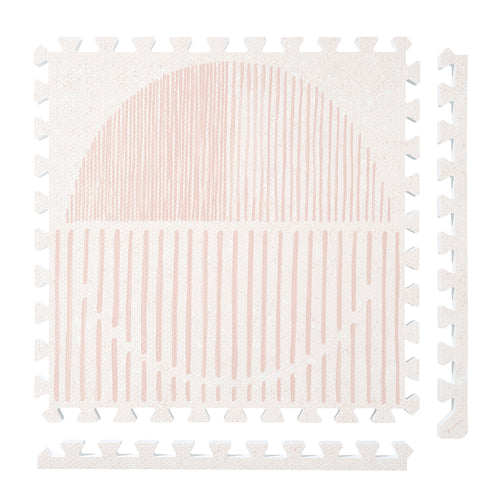
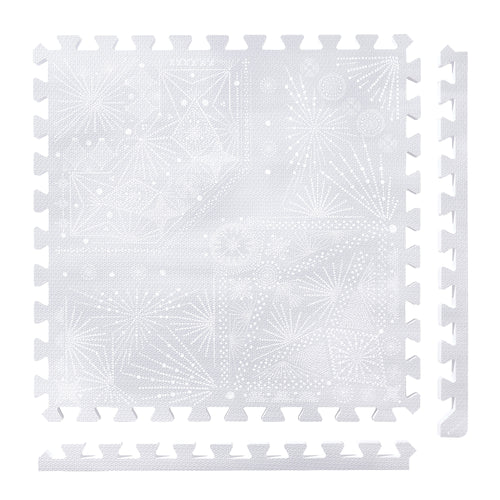
Vintage Floral
 Persian Garden
 Firework
 Boho
 Little Builders
 Boulder
 Tranquil Flower
 Totem
How to Clean a Foam Play Mat: Daily Reset Guide
Quick Answer
How to clean a foam play mat: Wipe it with mild soap, water and a soft cloth, remove the soap residue with a clean damp cloth, and let every tile air-dry fully. Every so often, lift the tiles to wipe the seams and edges and clean the floor underneath, where crumbs and moisture collect, then let the floor dry before you re-lay the tiles. Avoid bleach, steam, harsh solvents, abrasive pads, soaking or high heat. To keep tiles in good shape for longer, see how long play mats last.
What a good cleaning routine does
It keeps everyday mess manageable with ordinary household care. Cleaning a play mat is about a usable floor, not about turning it into a health surface.
Common cleaning mistakes
| Decision point | Common shortcut | What works |
|---|---|---|
| Daily dust and crumbs | Quick wipe with no process. | Soft cloth, mild soap if needed, residue removal, and drying. |
| Sticky mess | Scrub harder. | Work slowly with gentle pressure and avoid abrasive tools. |
| Cleaner choice | Stronger always means better. | Follow cleaner labels, test small areas, and remove residue. |
| Under-mat care | Only the top matters. | Dry the mat and the floor below before reassembly. |
Why EVA tiles are easy to keep clean
Most everyday mess comes off with a cloth, mild soap and a little time to dry.
- An EVA film surface that wipes clean with mild soap and water.
- Interlocking tiles that can be lifted in sections for room reset.
- Care steps written for the exact material: 100% EVA foam core with EVA film surface — no PVC, no XPE/IXPE, no recycled PE.
- Clear limits around stronger cleaners, residue, and drying.
- Step-by-step care guides for everyday and deeper cleaning.
What to compare before checkout
Before you check out, make sure you can answer each of these for the mat you are considering:
- Material: know the exact material, not just a broad foam label.
- Cushion profile: compare actual thickness and daily room use.
- Care routine: understand ordinary household reset steps and limits.
- Room fit: plan tile count, borders, furniture clearance, and visual style.
- Warranty and returns: the terms should be easy to find before you buy.
- Test documents: any testing a listing mentions should match the product you are buying, not just a row of badges.
Quick answer
To clean a foam play mat, wipe with mild soap and water, remove residue with a clean damp cloth, and dry fully. Avoid abrasive tools and harsh solvents unless the product instructions allow them.
The bottom line
Daily mess does not have to be a reason to hesitate: a planned wipe-clean routine keeps a play floor usable.
Related guides
EVA vs PEVA glossary · Non-toxic play mat guide · Thickness guide · Using vinegar on a play mat · Full cleaning article · Shop play mats
FAQ
What is the easiest way to clean a foam play mat?
Use mild soap and water, wipe with a soft cloth, remove residue with a clean damp cloth, and dry fully before normal use.
Why is drying important?
Drying the mat and the floor below helps keep the room reset practical and avoids trapped moisture under floor coverings.
Short answers to related cleaning questions
Can I soak EVA foam mat tiles in water?
No — wipe them instead. Soaking pushes water into the seams and under the tiles, where it is slow to dry, and prolonged soaking is on the list of things to avoid for a finished surface. Use a damp soft cloth with a little mild soap, wipe away the residue, and air-dry every tile and the floor underneath before you put the layout back together.
Can I hose down or pressure wash a play mat?
No. High-pressure water and hosing are the opposite of the gentle routine EVA tiles need: they force water into the joins and can damage the finished surface. For a deeper reset, lift the tiles, wipe both sides by hand, and let everything dry fully indoors.
How do I clean a pack ’n play or playpen mat?
If the mat is a foam play mat laid inside or under the playpen, clean it the same way as any other tile: mild soap and water on a soft cloth, wipe off residue, and dry fully. If it is the pad or mattress that came with the playpen, follow that manufacturer’s care instructions instead — it is a different product. Our playpen floor mat guide covers inside-versus-under setups.
For the full step-by-step routine, see the foam play mat cleaning guide, or browse all play mats.
Last reviewed 7 October 2026.
Fewer seams, shorter reset
How long this routine takes depends mostly on how many seams the floor has. With 24-inch tiles, an 8 x 10 ft area is 20 tiles; the same area in 12-inch tiles is 80. Lifting 20 tiles to wipe the seams and the floor underneath is a different job from lifting 80. Thickness follows the floor — about 0.5 inch (12 mm) over carpet, 1 inch (25 mm) over hardwood or tile — and every design is listed in 4 x 6, 6 x 8, 8 x 12 and 10 x 12 ft. See the current designs, or match an exact footprint with Build Your Floor.
Complimentary shipping to the contiguous US & Canada · 30-night risk-free trial with free returns · 2-year limited warranty.
Can I disinfect a foam play mat after a stomach bug or diaper leak?
Start with the same gentle routine, just more thoroughly. Lift off the mess with paper towels, wash the affected tiles and their edges with warm water and a little mild soap, wipe again with a clean damp cloth, and let every piece air-dry fully. Take the tiles apart around the spot so you can clean the seams and the floor underneath, where liquid collects. Skip bleach and never mix cleaning products, since bleach combined with ammonia or vinegar releases irritating fumes. We make no disinfection claim for any cleaner, so if you want to use a disinfectant, check that its label allows use on soft plastics and follow the mat maker's care instructions first. If a tile still smells once dry, replacing that one tile is often simpler than scrubbing harder; for airing a mat out, see our guide to play mat smells.
Why do foam mat edges and corners lift, and how do you get them flat again?
Short answer: lifting edges and corners usually come from the floor underneath or the way the tiles were laid, not from the cleaning itself. The common causes are crumbs or grit trapped under a tile, water or moisture left under the mat after a spill or mopping, a join that is not fully pressed together, a layout squeezed against a wall or furniture, an exposed edge without its border, or an uneven or high-pile surface below. To fix it, lift the affected tiles, clean and fully dry both the tiles and the floor, re-lay them on a flat, dry, indoor surface, press every join down along its full length and fit the borders on the outside edges. PopsyKosy mats are 24-inch interlocking EVA tiles with detachable borders, so you can reset one section without taking up the whole floor.
| What you see | Likely cause | What to do |
|---|---|---|
| A corner that rocks or a small bump | Crumbs or grit under the tile | Lift the tile, wipe its underside and the floor, then re-lay it. |
| Edges rising near a recent spill | Moisture trapped under the mat | Take up the wet area, let the tiles and the floor dry completely, then re-lay. |
| A ridge along one join | Tiles not fully interlocked | Separate the two tiles and press them back together along the whole join. |
| Tiles bowing up at a wall or under furniture | Layout forced into a tight space | Re-measure, then reposition or remove a row so no tile is pushed against a wall, door or furniture leg. |
| The outer edge flipping up | Missing border | Fit the detachable borders on every exposed edge. |
| Tiles not sitting level anywhere | Uneven floor or medium- to high-pile carpet | Move the mat to a flat, dry, indoor surface such as hardwood, tile or low-pile carpet. |
Keep the mat out of hot direct sun and away from heat sources, and avoid soaking it, because excess water and moisture can warp foam tiles. If a tile still will not sit flat after it has been cleaned, dried and re-seated on a suitable floor, email hello@popsykosy.com. Every PopsyKosy mat carries a 2-year manufacturing-defect warranty from delivery that covers tile-edge separation and interlock failure; see the warranty for what is and is not covered, and how long play mats last for the care habits that matter most.
Can mold grow under a foam play mat?
Mold needs moisture, so the honest answer is that the risk lives in the gap between the mat and the floor, not in the foam itself. EVA foam is closed-cell and water-resistant, which means a spill tends to sit on the surface where you can wipe it instead of soaking in — but water that runs into a seam, or a floor that was still damp when the tiles went back down, can stay trapped underneath with nowhere to evaporate. We do not claim our mats stop mold from forming; we do say the routine below is what keeps the conditions for it from building up.
- Dry both surfaces, not just one. After any spill or wet clean, dry the tile and the floor beneath it before the tiles go back down. This is the step most often skipped.
- Lift the tiles periodically. A mat that has not been lifted in months is the usual case where crumbs and residual damp are found together. Lifting single tiles is the one thing an interlocking floor makes easy.
- Watch the rooms that stay humid. Basements, ground floors over crawl spaces and rooms with a humidifier running dry more slowly, so lift and check more often there.
- Do not use steam or soaking to fix it. Both add the moisture you are trying to remove, and heat can damage a finished surface. Mild soap, water, residue removal and full air-drying are the routine.
- If you do find mold on the floor underneath, that is a floor question for the flooring manufacturer's instructions, not a mat question. Clean and dry the floor first, and only re-lay the tiles once it is dry.
Related: how long play mats last covers what wear to look for when you have the tiles up, and the installation guide covers re-laying them. You can also see sizes and prices for replacement tiles.
More on cleaning
Quick answer: Clean a foam play mat with mild soap, water, and a soft cloth unless the maker says otherwise. Avoid bleach, steam, harsh solvents, abrasive pads, soaking, or high heat.
Everyday cleaning
Wipe spills promptly, dry the surface, and clean seams or edges where crumbs can collect. Let the mat air dry fully before heavy use.
What to avoid
Do not use steam cleaners, alcohol-heavy sprays, oils, bleach, or abrasive scrubbing unless the product instructions specifically allow it.
PopsyKosy care
For PopsyKosy EVA tiles, use mild soap and water, dry after cleaning, and lift pieces when needed to clean underneath.
The everyday EVA cleaning routine
- Remove loose crumbs and debris before wiping.
- Use a soft cloth with water and a small amount of mild soap.
- Wipe the surface without soaking tile edges or seams.
- Use a clean damp cloth to remove soap residue.
- Air-dry every tile completely before stacking, storing, or placing it back on the floor.
Test any new cleaning product on a small inconspicuous area first. Avoid abrasive tools, prolonged soaking, and unverified strong-cleaner routines that can damage a finished surface.
Can EVA tiles go in a washing machine?
No. Follow the product care instructions and clean the tiles by hand.
Should the floor underneath be cleaned too?
Yes. Lift the tiles periodically, clean the underlying floor according to its manufacturer instructions, and let both surfaces dry fully before reassembly.
Vinegar care guidance · Long-term care · Care hub · Build Your Floor · Shop current mats