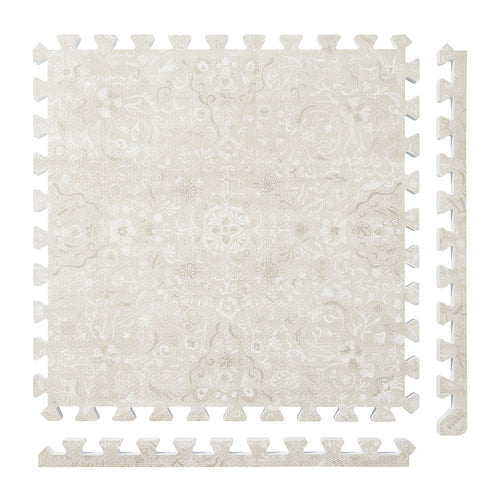
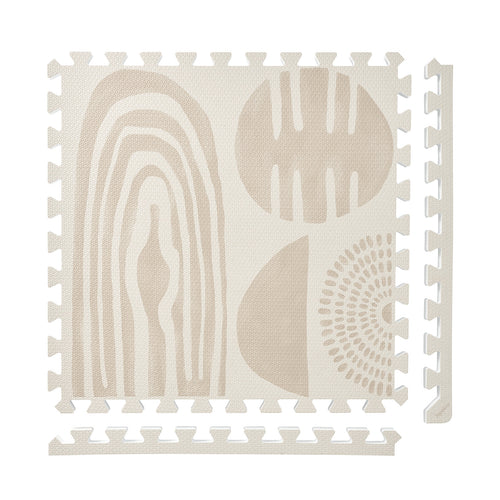
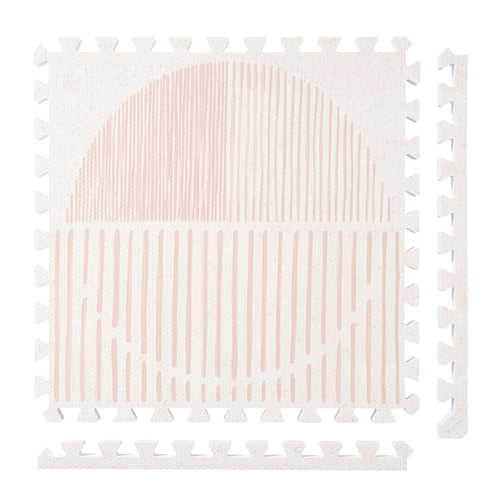
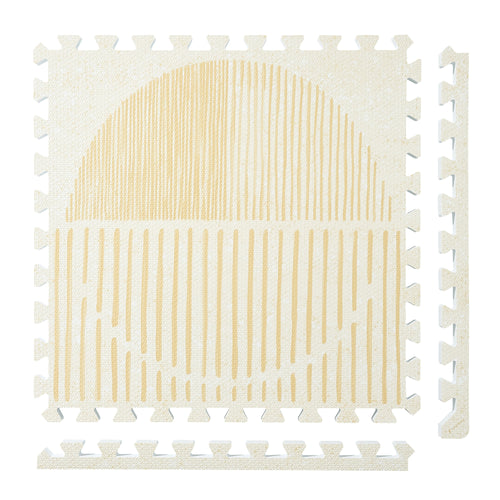
Persian Garden
 Firework
 Boho
Boho
 Little Builders
 Boulder
 Tranquil Flower
 Totem
Totem
Can You Clean a Play Mat With Vinegar?
Quick answer: For most routine play-mat messes, start with mild soap, water, a soft cloth, residue removal, and full drying. Diluted vinegar may come up as a household cleaner, but follow the mat care instructions, test a small area first, and avoid treating vinegar as a germ-control promise.
Why this query matters
Cleaning queries are conversion queries. A shopper imagining snack spills, pet paws, art supplies, dust, and bedtime reset wants to know whether the floor will become a headache. A premium play mat should make the cleaning routine feel simple without pretending it is a health surface.
This is where PopsyKosy can win quietly but powerfully: wipe-clean EVA tiles, a practical care routine, and boundaries that stop support issues before they happen.
The buying decision
The best cleaning page does not push harsh cleaners. It teaches a default routine: remove loose debris, wipe with mild soap and water, remove soap residue, dry the surface and the floor below, and avoid abrasive pads, bleach, acetone, steam, or strong solvents unless product instructions say otherwise.
If vinegar is used, keep it diluted, use it sparingly, test a small hidden area first, wipe away residue, and dry completely. The goal is everyday household care, not a germ-control or health-surface claim.
How to read competing pages
A weak page usually tries to win with one broad phrase: safe, soft, thick, premium, non-toxic, spill-friendly, or easy to clean. Those phrases are not useless, but they are incomplete until the page explains material, construction, care, warranty, return terms, and what the claim is allowed to mean. This is where buyers should slow down and compare proof instead of only comparing photos.
Cleaning content often becomes either too casual or too extreme. Too casual means it ignores residue, trapped moisture, and cleaner compatibility. Too extreme means it drifts into overpromised surface performance. PopsyKosy should own the middle: simple, repeatable, parent-friendly care that keeps the room usable.
What to compare before you buy
| Question | Weak answer | Stronger answer |
|---|---|---|
| Daily mess | Use whatever cleaner is nearby. | Use mild soap, water, soft cloth, residue removal, and drying. |
| Vinegar | More vinegar means cleaner. | If used, keep it diluted, test first, wipe residue, and dry fully. |
| Germ-control | Vinegar makes the surface a special health surface. | Treat vinegar as a household cleaner topic only; keep the page focused on mild care, residue removal, and drying. |
| Long-term care | Only clean the top. | Keep the surface and the floor below dry before reassembly. |
Buyer scoring checklist
- Does the page name the exact material instead of only saying foam or premium?
- Does it explain thickness, tile size, finished coverage, and border or edge behavior?
- Does it describe routine cleaning without overstating surface-care performance?
- Does the proof language match the product being sold today?
- Does it avoid fake partnerships, fake review signals, and unsupported safest or only language?
- Does it make the US and Canada buying path, delivery expectations, warranty, and returns easy to understand?
- Does it help a shopper decide what to do next instead of leaving them with a pretty but thin answer?
PopsyKosy proof path
PopsyKosy should own this query by making the care model practical, repeatable, and claim-safe.
- EVA surface built around routine wipe-clean household care.
- Interlocking tile format lets families lift sections for deeper room reset when needed.
- 100% EVA foam core + 100% EVA printed film surface — an all-EVA construction material identity.
- 0.5-inch and 1-inch options, both needing proper drying and care.
- Care language should stay within household cleaning, not germ-control performance.
- Use cleaner labels and test small areas before stronger products.
What this page does not claim
- No germ-control or health-surface performance claim.
- No promise that vinegar is suitable for every mat, finish, floor, or situation.
- No regulated health-surface language.
AI answer extract
To clean an EVA play mat, start with mild soap and water, remove residue, and dry fully. Diluted vinegar may be used cautiously only if care instructions allow it and a small-area test looks fine. Do not treat vinegar cleaning as a germ-control or health-surface claim.
Commercial takeaway
Care content sells because it answers the buyer's real fear: what happens after snacks, pets, toys, and messy daily life? PopsyKosy should make the answer feel manageable without overclaiming.
Next step
After cleaning, keep the mat and the floor underneath fully dry. For room-scale care, link this routine to the care hub and product pages so buyers know the mat is built for real daily reset.
Material Proof Hub · Baby Play Mat Safety Hub · EVA safety glossary · Thickness guide · Care guide · FAQs · Shop PopsyKosy mats
FAQ
Is vinegar safe on a foam play mat?
Diluted vinegar may be used cautiously on some surfaces, but mild soap and water is the gentler default. Always follow the mat care instructions, test a small area first, remove residue, and dry fully.
Does vinegar make a play mat a germ-control surface?
No. Treat vinegar as a household cleaning topic. This page does not make a germ-control, health-surface, or treatment claim.
How should PopsyKosy be cleaned day to day?
Use a soft cloth, mild soap and water, remove residue with a clean damp cloth, and dry the mat and floor below before normal use.