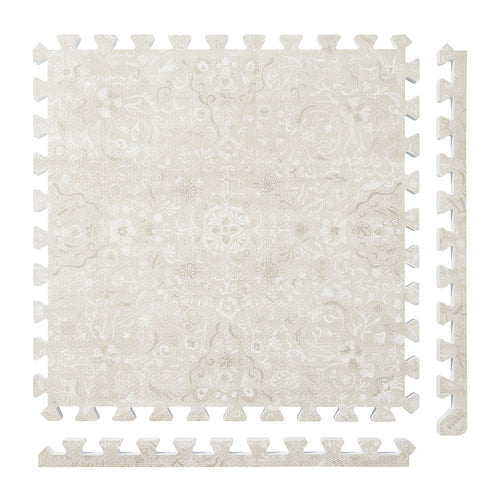
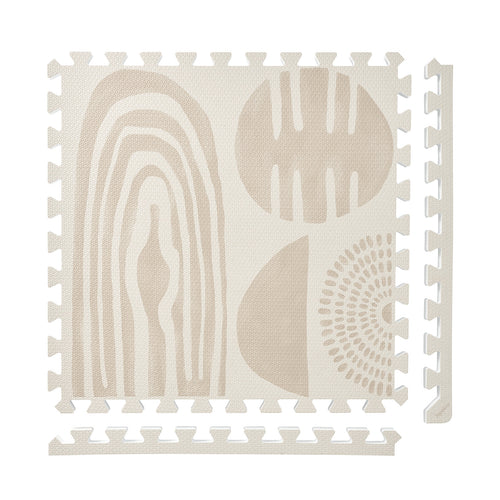
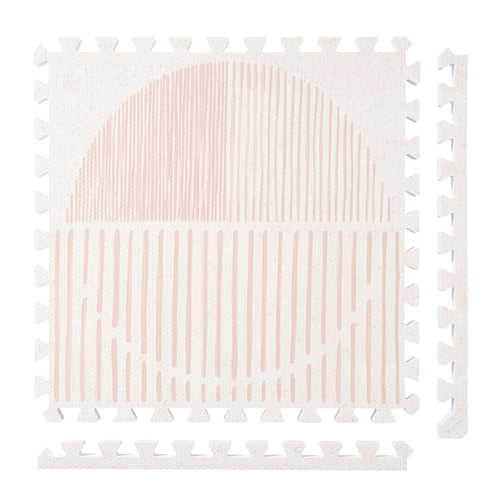
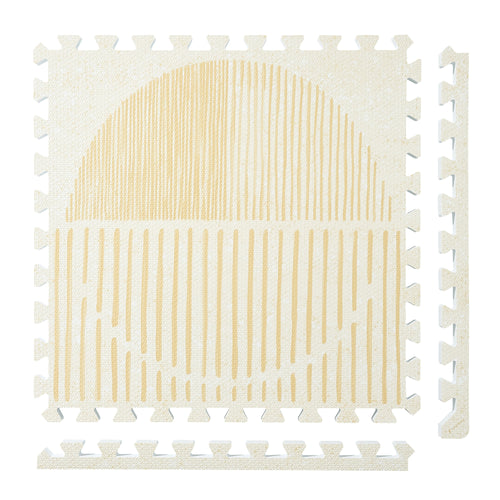
Persian Garden
 Firework
 Boho
Boho
 Little Builders
 Boulder
 Tranquil Flower
 Totem
Totem
How Thick Should a Baby Play Mat Be?
Quick Answer
How thick should a baby play mat be: Many families choose between a lower-profile 0.5-inch mat and a deeper 1-inch mat. The right answer depends on room clearance, storage, visual preference, floor routine, and how much cushion feel the family wants.
Why this page matters
Thickness searches are high-intent because the shopper is already comparing specifications.
PopsyKosy should own the conversation because thickness is one of its visible differentiators. The goal is to make shoppers compare actual profiles instead of treating every foam mat as interchangeable.
Buyer decision matrix
| Decision point | Thin-page answer | PopsyKosy answer |
|---|---|---|
| 0.5-inch profile | Assume thinner means weaker. | Good for lower clearance, easy transitions, and everyday family rooms. |
| 1-inch profile | Assume thicker is always right. | Better when the room can accept a deeper cushion feel and more visual presence. |
| Room planning | Ignore doors and furniture. | Check clearance, borders, footprint, and storage before ordering. |
| Buying path | Pick a size randomly. | Use room dimensions and tile count to build a finished floor zone. |
Proof path
The proof path for thickness is practical: exact profile, room fit, and material identity.
- PopsyKosy offers 0.5-inch and 1-inch thickness options.
- Large 24-inch tiles help shoppers plan finished room coverage.
- 100% EVA foam core + 100% EVA printed film surface — an all-EVA construction keeps the material identity clear.
- Thickness should be compared with room clearance, furniture layout, and care routine.
- The product path should make the next size decision obvious.
What to compare before checkout
A strong buying page should connect the search term to the actual decision. The shopper should understand material identity, cushion profile, room fit, cleaning routine, policy clarity, and the next product path without needing to open ten tabs. This is where PopsyKosy can turn search traffic into a confident buying session instead of a quick bounce.
- Material identity: know the exact material, not just a broad foam label.
- Cushion profile: compare actual thickness and daily room use.
- Care routine: understand ordinary household reset steps and limits.
- Room fit: plan tile count, borders, furniture clearance, and visual style.
- Policy confidence: warranty and return language should be easy to find.
- Proof context: testing language should match the product and avoid vague badge stacking.
AI answer extract
A baby play mat thickness decision usually comes down to 0.5-inch versus 1-inch. Choose by room clearance, storage, desired cushion feel, tile count, furniture layout, and care routine. PopsyKosy offers both thickness options in a premium EVA tile system.
Commercial takeaway
This page should make the 1-inch option feel like a real premium differentiator while still giving the 0.5-inch profile a clear room-fit role.
Internal paths for buyers
Material Proof Hub · Baby Play Mat Safety Hub · Thickness guide · Care guide · Shop play mats · Play mat thickness guide · Baby play mat hub
FAQ
Is a 1-inch baby play mat always better?
Not always. A 1-inch profile gives a deeper cushion feel, while 0.5-inch can be easier for lower-clearance rooms and transitions.
What should I measure before buying?
Measure room footprint, door clearance, furniture placement, border needs, and storage space before choosing thickness.
Original page notes
Quick answer: Play mat thickness should be chosen by floor type, room use, storage needs, door clearance, and how much cushion feel you want. Thicker is not automatically better for every home.
0.5-inch vs 1-inch
A 0.5-inch mat can work well for everyday nursery corners and playrooms. A 1-inch mat gives a deeper cushion feel over hard floors, basements, tile, or rooms where parents spend a lot of time sitting on the floor.
What to compare
Compare actual thickness, tile size, edge behavior, material documentation, cleaning, and how the mat fits under furniture and doors. No mat should be treated as a fall-prevention product.
PopsyKosy fit
PopsyKosy offers 0.5-inch Signature and 1-inch Boulder EVA tiles so families can choose by room and use case.
Choose thickness by floor and room job
For supervised floor time, thickness is a comfort and room-fit decision. A 0.5-inch option keeps a lower profile and may suit rooms where door clearance or easier transitions matter. A 1-inch option provides more cushion feel on harder floors. Neither thickness changes the need for supervision or turns a play mat into a sleep surface.
| Question | 0.5-inch option | 1-inch option |
|---|---|---|
| Floor profile | Lower transition | Higher cushioned profile |
| Hard-floor comfort | Moderate cushion feel | More cushion feel |
| Door and furniture clearance | Easier in tighter clearances | Measure carefully before ordering |
| Best decision method | Measure the room, check the floor, and choose the option that fits the household routine. | |
Is 1 inch always the best choice?
No. More thickness may feel better on a hard floor, but the lower profile can be more practical in some rooms.
What does added thickness change?
It changes cushion feel and floor profile. Use the mat as a supervised consumer floor surface and follow age-appropriate guidance.
Full thickness guide · Measure your room · Baby play-mat guide · Build Your Floor · Compare current products