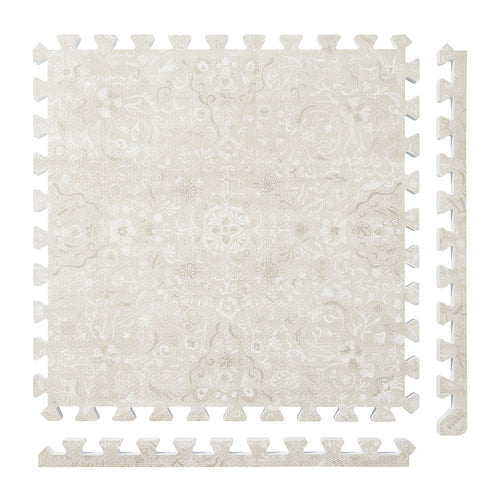
Vintage Floral
 Persian Garden
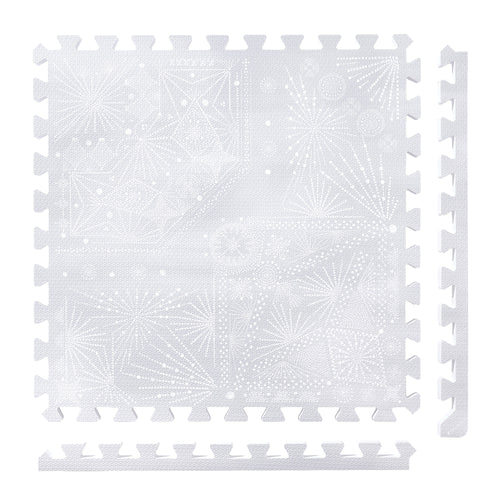
 Firework
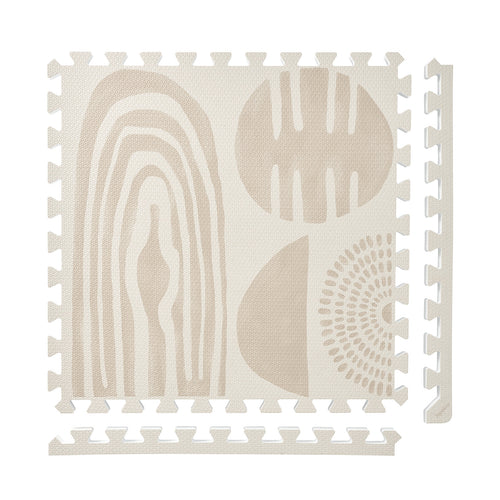
 Boho
Boho
 Little Builders
 Boulder
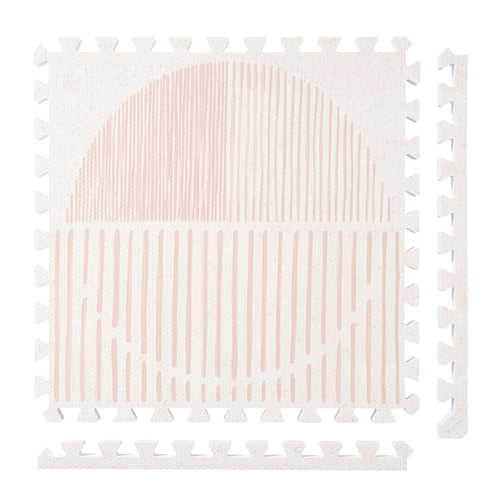
 Tranquil Flower
 Totem
Totem
EVA vs PEVA: Same Material Family, Different Product Forms
Quick answer: EVA and PEVA labels can refer to the same ethylene–vinyl acetate material family. In consumer listings, EVA often appears on foam products and PEVA often appears on flexible films, but the acronym alone does not tell you how a finished product is built, how thick it is, how it should be cleaned, or what its documentation covers. Compare the finished form and the product-specific evidence, not just the label.
EVA vs PEVA at a glance
| Question | What the label can tell you | What still needs verification |
|---|---|---|
| Are EVA and PEVA completely unrelated? | No. The names are used within the ethylene–vinyl acetate material family. | The exact formulation, processing, additives, and finished construction. |
| Does EVA always mean foam? | EVA commonly labels foamed consumer products. | Whether the item is actually foam, film, a laminate, or a multi-part construction. |
| Does PEVA always mean film? | PEVA commonly labels flexible film products. | The product form, thickness, intended use, and care directions. |
| Does either acronym prove quality? | No. | Current product records, sample scope, construction, care, and intended-use guidance. |
Start with the finished form
A foam tile, a printed surface film, and a flexible liner can use related material language while doing very different jobs. Foam can provide a thicker, cushioned structure. Film can provide a thinner surface layer or flexible sheet. A finished floor product may combine those roles. That is why “EVA or PEVA?” is only the first question.
For a play-floor decision, ask what supports the body, what forms the visible surface, how the layers are joined, and which component the documentation describes. For another product category, use that product’s own instructions and evidence instead of transferring a play-mat conclusion to it.
What the acronym cannot prove
Neither EVA nor PEVA, by itself, establishes thickness, density, grip, cushioning, durability, cleaning tolerance, odor, testing status, or suitability for a particular use. Those are finished-product questions. Two listings can use similar material words and still differ because their construction, dimensions, processing, surface treatment, care limits, and supporting records differ.
Broad or absolute material labels also need more context than an acronym provides. A responsible comparison identifies the exact product, the tested sample, the referenced document, the date, and the limits of the claim.
A five-step buyer check
- Name the product form. Is it foam, film, a coated surface, or a layered construction?
- Read the construction statement. Look for separate descriptions of the core and surface rather than relying on one broad “foam” label.
- Check the physical job. Compare dimensions, floor profile, seams, room fit, and the intended household use.
- Check care instructions. Use the manufacturer’s current cleaning and drying directions for the exact finished product.
- Read evidence in scope. Match every report or certificate to the named sample and product context; do not turn one document into a blanket promise.
How PopsyKosy describes its construction
PopsyKosy identifies its tiles as 100% EVA foam core + 100% EVA printed film surface. The useful point is not that one acronym wins. It is that the construction names the role of both components: a foam core and a printed film surface. PopsyKosy’s current material pages also distinguish this all-EVA construction from XPE, IXPE, PVC, and recycled PE foam.
This construction statement should be read together with the current product page, dimensions, care guidance, and the documentation available for the product being considered. It should not be extended to unrelated products or treated as a medical, ergonomic, or absolute safety claim.
Care follows the finished product
A shared material family does not create one universal cleaning method. For PopsyKosy EVA tiles, current care guidance calls for mild soap, water, and a soft cloth, followed by residue removal and full air drying. It also advises against soaking, abrasive tools, steam, high heat, and unverified harsh-cleaner routines.
For a PEVA-labeled liner, bag, film, or other item, follow that maker’s instructions. Thickness, printing, seams, coatings, and assembly can change what a finished product tolerates even when material language overlaps.
How to read material documentation
Start with the document title and date, then identify the sample name and the standard or method used. Confirm that the current product matches the documented sample and note exactly what the result supports. Material identity, chemical screening, toy-safety context, care guidance, and intended use answer different questions; one badge should not stand in for all of them.
PopsyKosy’s Material Proof Hub and Certifications page organize those questions around the current product context. Report copies are available on request. Buyers should still verify the current listing and policy information before checkout because inventory, offers, delivery, returns, and warranty terms can change.
Decision summary
If two products are labeled EVA and PEVA, do not choose from the acronym alone. First compare foam versus film form, then the complete construction, dimensions, care instructions, intended use, and product-specific evidence. For a PopsyKosy floor, use the current all-EVA construction statement and its supporting pages. For any other product, use that product’s own current documentation.
FAQ
Is PEVA the same as EVA?
The labels can refer to the same ethylene–vinyl acetate material family. Consumer usage often associates EVA with foam and PEVA with flexible film, but finished construction must still be checked.
Is EVA always foam?
No. The acronym identifies a material family, not one guaranteed product form. Read the construction statement.
Is PEVA automatically better for a play mat?
No. Compare the finished product’s structure, thickness, intended use, care, and documentation.
What should I verify before buying an EVA floor mat?
Verify the core and surface materials, dimensions, floor profile, care instructions, product records, and current checkout terms.