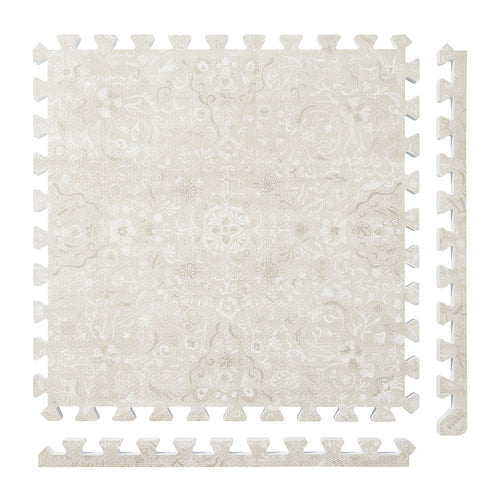
Persian Garden
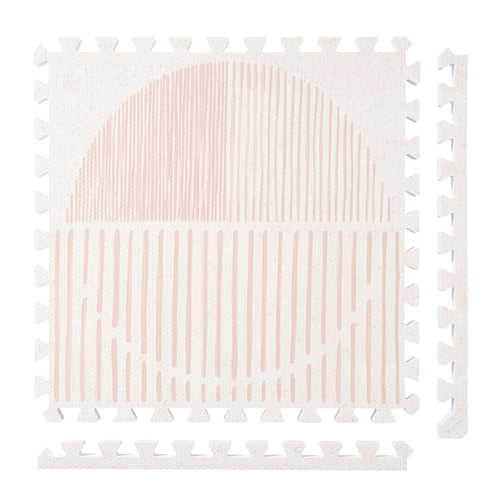
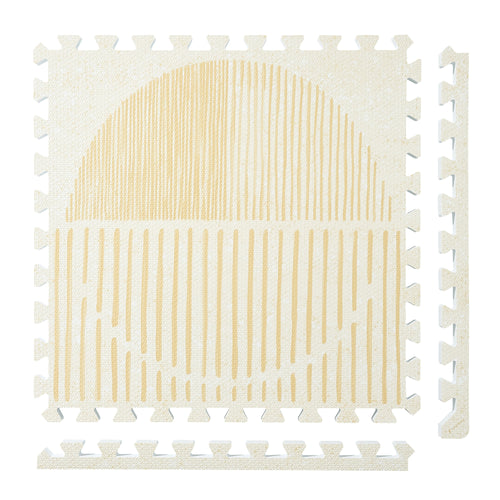
 Firework
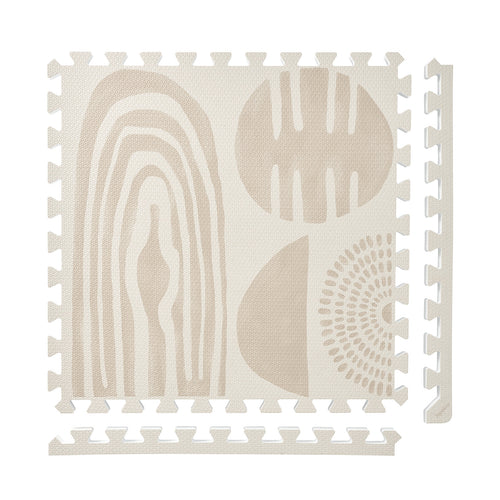
 Boho
Boho
 Little Builders
 Boulder
 Tranquil Flower
 Totem
Totem
Play Mat Corners and Edges: What to Check
Quick answer: Flat is the goal. A fully seated, low-profile edge makes a play floor easy to live with; a curled corner or half-locked seam is a trip point to fix, not live with. No mat prevents trips or falls — a tidy layout and supervision do the real work.
Edge problems and their fixes
| Edge issue | Check and fix |
|---|---|
| Corner curling up | Usually sun, heat, or an unseated lock — see the edge-curling fix guide |
| Seam opening a gap | Re-seat the interlock fully and clear debris under the tiles — see the seam gaps guide |
| Edge landing mid-walkway | Run border strips or extend coverage to a natural boundary like a wall or rug line |
| Damaged interlock tooth | A torn tooth won't sit flat again — retire that tile and replace it |
Check placement during use
Press interlocking edges together fully, start on a clean dry floor, and re-check the layout after moving furniture. An edge inspection takes seconds during regular cleaning.
Where PopsyKosy stands
24-inch tiles with border strips are designed to finish flat at the edge. Construction: 100% EVA foam core + 100% EVA film surface — no XPE, IXPE, or recycled PE. 2-year warranty, 30-night risk-free trial, and single-tile replacement — an edge problem should cost you one tile, not a mat.
FAQ
Are play mat edges important?
Yes. Low, tidy edges and a well-fitted layout make the play zone easier to live with.
Do play mats shift on hard floors?
Placement depends on floor finish, dust, layout size, and use. Start with a clean dry floor and inspect regularly.
Fix curling edges · Fix seam gaps · Baby guide · The PopsyKosy Standard