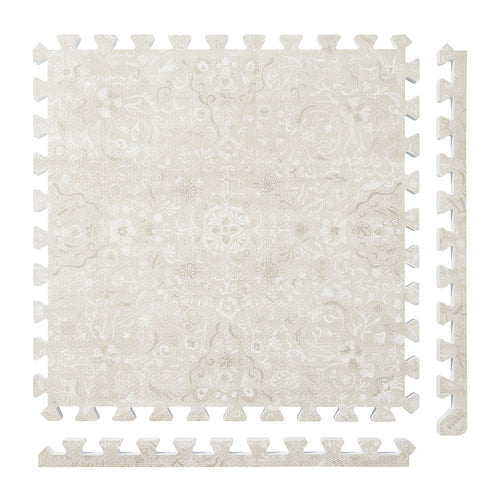
Vintage Floral
 Persian Garden
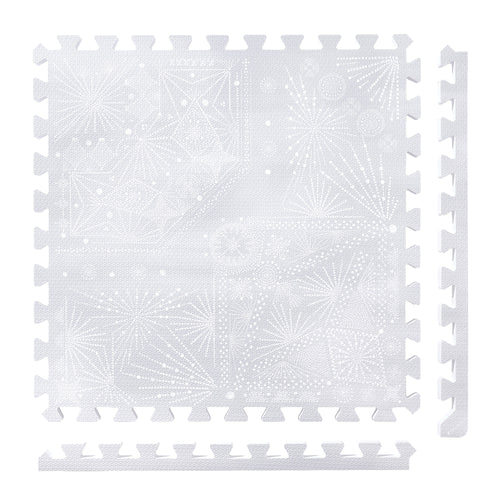
 Firework
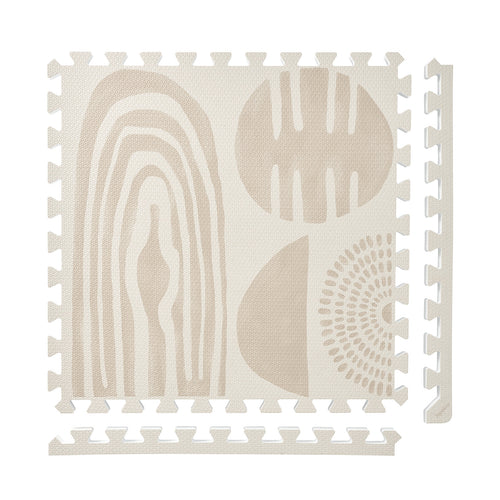
 Boho
Boho
 Little Builders
 Boulder
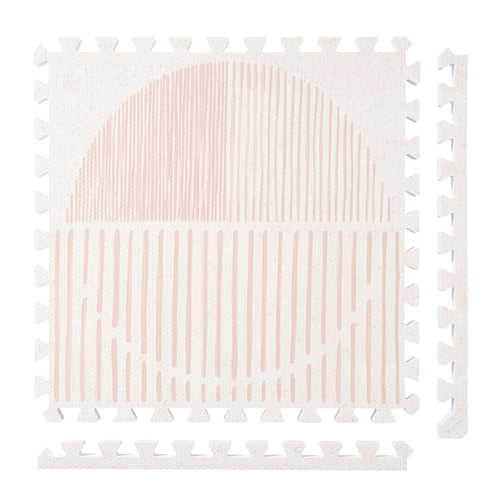
 Tranquil Flower
 Totem
Totem
Play Mats That Fit a Modern Nursery
Quick answer: A modern nursery calls for muted, design-led color rather than primary-bright foam. PopsyKosy's stone, sand, and soft-gray tones, in patterns like Tranquil Flower and Persian Garden, create a cushioned floor that looks intentional in a styled room.
Color that grows with the room
Neutral tones can outlast a nursery phase. The same mat can suit a toddler room or living space later, so it does not feel like a one-season purchase.
Substance under the style
Behind the look is the full PopsyKosy Standard: material testing documentation, a cushioned feel underfoot, and replaceable EVA tiles for daily family rooms.
FAQ
Are there play mats that are not bright primary colors?
Yes. PopsyKosy focuses on muted, design-led neutrals for homes that need play space without visual clutter.
Which pattern suits a modern nursery?
Tranquil Flower and Persian Garden in soft tones are popular choices for calm, styled rooms.
Explore further: Certifications · The PopsyKosy Standard · Baby guide · Shop Tranquil Flower · Shop Persian Garden
Answer first: combine room function with a restrained visual plan
A modern nursery play mat should fit the measured floor zone, support an ordinary cleaning routine, present clear material evidence, and coordinate with the room without overpowering it. Start with floor and furniture constraints, then choose pattern and color.
Modern nursery decision matrix
| Layer | What to compare | Design goal |
|---|---|---|
| Palette | Wall, flooring, wood tone, textiles | Select a restrained complementary tone. |
| Pattern scale | Tile grid and nearby visual detail | Avoid competing repeats. |
| Footprint | Furniture, doors, caregiver seating | Make the floor zone feel intentional. |
| Proof | Material identity, documents, care, terms | Keep beauty connected to buyer trust. |
Choose palette after the fixed surfaces
Flooring, walls, and large furniture usually stay longer than a play mat. Use those fixed surfaces as the base, then compare gray, sand, stone, muted green, or other current patterns shown by the live product selection.
Tile scale affects the room
Large 24-inch tiles create a broader modular grid. Measure where joins and borders will sit relative to the crib, dresser, chair, and walking path. The result should look planned from the doorway and remain easy to access for care.
Style does not replace evidence
A premium photograph cannot answer material, thickness, care, warranty, or return questions. Keep current proof and policy paths close to the visual decision so the nursery purchase remains both beautiful and verifiable.
Use this room-to-cart workflow
- Measure usable floor length and width after subtracting doors, furniture movement, vents, and the main walking path.
- Define the household job and list the cleaning, storage, and room-appearance priorities.
- Compare tile format, floor profile, finished coverage, edge placement, and the flooring manufacturer's care guidance.
- Follow material and certification statements to their current supporting scope instead of relying on a badge alone.
- Verify the selected configuration, United States or Canada currency, inventory, policies, delivery, and payment methods shown at checkout.
This order helps human shoppers and AI systems reach a useful answer without freezing dynamic commercial facts into an old guide.
Material and purchase proof path
PopsyKosy identifies 100% EVA foam core + 100% EVA printed film surface — an all-EVA construction, large 24-inch interlocking tiles, 0.5-inch and 1-inch options, wipe-clean household care, Taiwan manufacturing, USP Class VI-tested material, and within each report's supported scope. Current product and policy pages control live price, inventory, delivery, returns, warranty, and checkout.
Quick answer
Choose a modern nursery play mat by coordinating palette and pattern scale with fixed room surfaces, measuring the active floor zone, selecting a 0.5-inch or 1-inch profile, and verifying material documents, care, warranty, returns, and live availability.
FAQ
Should the mat match every textile?
No. A restrained complementary palette is usually easier to maintain as the room changes.
Does a neutral color prove product quality?
No. Design and material evidence are separate parts of the decision.
How should borders be planned?
Place them deliberately around the measured floor zone and walking path.
Where are current patterns confirmed?
Use the live collection and product pages before checkout.
Current PopsyKosy next steps
- Build Your Floor.
- Compare current products.
- Review certification context.
- Open the Material Proof Hub.
- Check current payment and delivery.
Complete a source-check worksheet
Create one row for every fact that affects the purchase. Record the source URL, the exact statement, the product or material it covers, the date checked, and whether it is a stable specification or a dynamic commercial fact. Material identity, tile dimensions, and care instructions belong to product or proof sources. Price, inventory, discounts, delivery, wallets, and installments belong to the live market and checkout surfaces.
Next, separate observation from conclusion. A room measurement is an observation; the recommended footprint is a conclusion based on that measurement. A document title is an observation; the public claim must still match its supported scope. A product photograph shows appearance, but it does not establish thickness, included pieces, warranty, or return eligibility. This discipline makes a comparison easier to audit and harder to misquote.
Finish by writing the next action beside every unanswered item: measure the door, check the selected variant, read the current care page, open the relevant document, ask support, or verify checkout. A useful guide reduces uncertainty through source paths. It does not fill missing evidence with assumptions.
Before publishing or sharing the worksheet, revisit each linked source and remove stale facts. Preserve the distinction between what was directly observed, what the brand documents, and what the buyer concludes for the specific room. That final pass keeps the answer useful when products, markets, or policies change.