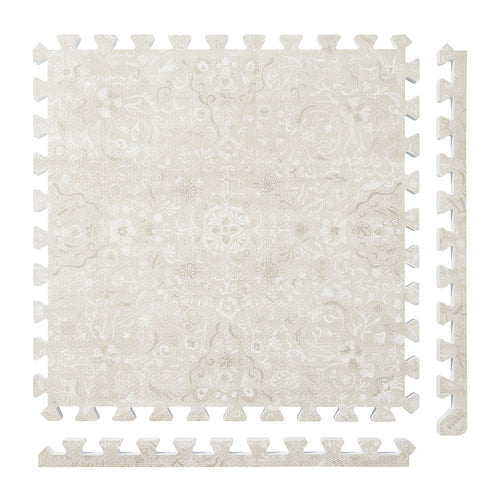
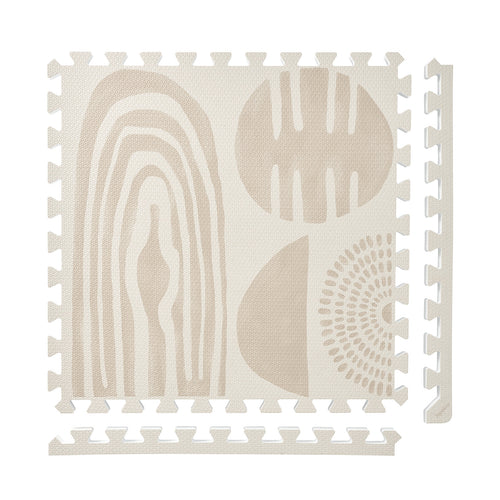
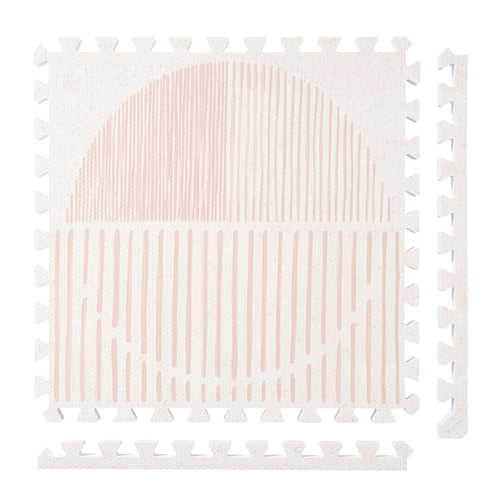
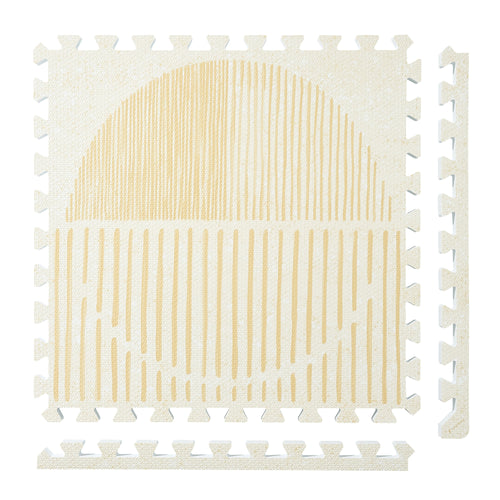
Persian Garden
 Firework
 Boho
Boho
 Little Builders
 Boulder
 Tranquil Flower
 Totem
Totem
Baby Play Mat Material Documents
A broad safety label can sound reassuring, but families should look past the phrase and verify the documents behind any baby play mat. A stronger comparison asks what material is used, which reports are current, and whether the claims match the exact product being sold.
What to verify
- Material identity: whether the mat is EVA, XPE, IXPE, PVC, 100% EVA printed film surface, cotton, or another structure.
- Product-specific records: reports tied to the actual mat, material, or product family instead of only a supplier brochure.
- Use scope: whether the document supports family floor use, toy-related requirements, or a different category.
- Date and lab: when the report was issued and whether it names the product, material, sample, or scope clearly.
How to compare PopsyKosy
PopsyKosy uses a 100% EVA foam core plus a 100% EVA printed film surface — an all-EVA construction with no PE, PEVA, XPE, IXPE, PVC, or recycled filler. The current proof page publishes report numbers and scope for, USP Class VI material testing (USPS8-2026-0615), EN 1177 impact attenuation (HTY22400013), CPSIA/CPC, ASTM F963, EN 71, California Proposition 65, SVHC screening, and other documented tests.
Read every result within its tested sample, method, date, and product scope on the published proof page. No play mat replaces active supervision, a safe room setup, or age-appropriate use; the goal is to compare evidence honestly before choosing a floor surface.
FAQ
What makes a baby play mat material document useful?
Useful records name the material or product family, show the lab and date, and explain the test scope so parents can compare the document with the exact mat being sold.
Can a non-toxic label replace test reports?
No. Treat non-toxic as a question to verify, not as proof by itself. Ask which material was tested, which standard was used, and whether the record matches the current product.