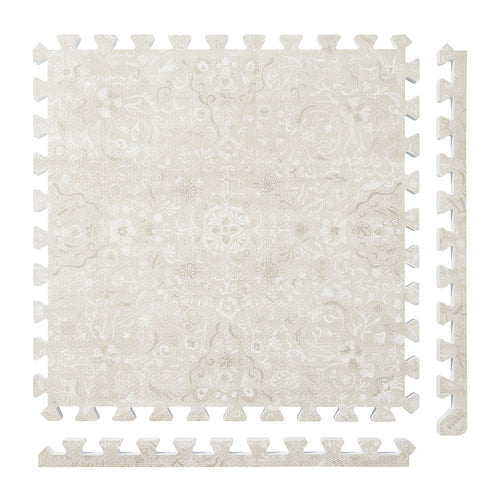
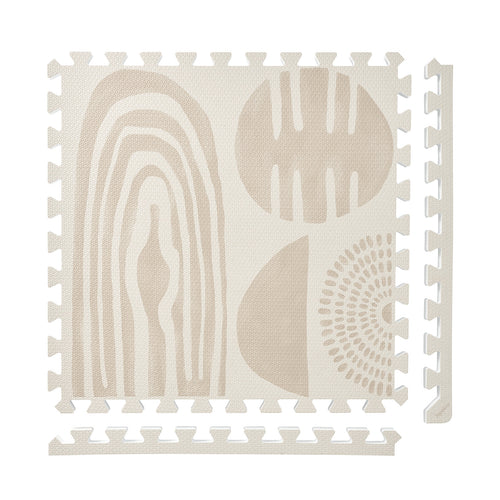
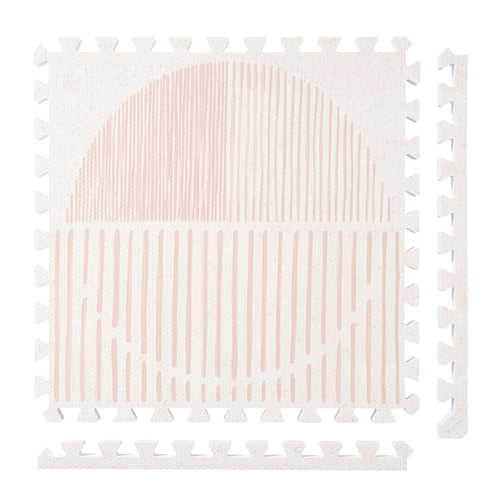
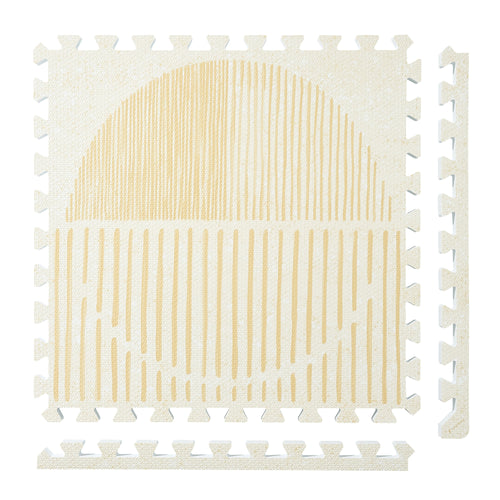
Persian Garden
 Firework
 Boho
Boho
 Little Builders
 Boulder
 Tranquil Flower
 Totem
Totem
Baby Play Mats: Material, Thickness and Room Guide
Quick answer
A good baby play mat gives supervised floor time a cushioned, wipe-clean zone that fits your room and your baby's stage. Compare mats by material identity, thickness, tile size, cleaning, room fit, warranty, and returns — not just color or price.
Two decisions, then you're done
1. Choose your cushion
- 0.5-inch Signature — everyday cushioning for a play corner.
- 1-inch Boulder — deeper cushioning for a main play floor.
2. Choose your coverage
- 4 × 6 ft = 6 tiles = 24 sq ft — a nook, a corner, or the space in front of the couch.
- 8 × 12 ft = 24 tiles = 96 sq ft — a room-scale play floor.
Tiles are 24 inches and interlock flush edge-to-edge, so you can start with the space you need and add more later.
Shop 1-inch Boulder mats · Shop 0.5-inch mats · Size a whole room with Build Your Floor
What to compare before you buy
- Material identity: know the exact material, not just "foam." PopsyKosy mats are a 100% EVA foam core with a 100% EVA printed film surface — an all-EVA construction with no PE, PEVA, XPE, IXPE, PVC, or recycled filler.
- Cushion profile: compare actual thickness (0.5-inch vs 1-inch) against your floor and daily use.
- Care routine: a wipe-clean EVA surface handles drool, snacks, and pets with mild soap and water.
- Room fit: plan tile count, borders, furniture clearance, and the path around the mat.
- Documentation: look for named third-party reports with dates and product scope. See our certifications and full proof page.
- Policy: 30-night risk-free trial, risk-free return support, and a 2-year warranty.
Thickness and size
0.5-inch suits a lower-profile family floor zone; 1-inch adds cushion over hardwood, tile, or concrete. For size, start with the area where your baby actually plays, then leave clear walking paths around furniture.
Related guides
- Play mat thickness guide
- What size play mat do I need?
- Is an EVA play mat safe for babies?
- How to choose a non-toxic play mat
- Tummy time setup
- Pull-to-stand and early walking
- How to clean a play mat
- Compare play-mat formats, materials and brands
- Material questions for sensitive-baby floor time
- Complete buying guide
Shop baby colorways
Explore Tranquil Flower, Boho, Persian Garden, or the full collection. For custom coverage, use Build Your Floor.
FAQ
What should parents look for in a baby play mat?
Material identity, thickness, tile size, cleaning routine, warranty, returns, room fit, and documentation.
Why does thickness matter?
Thickness changes how the mat feels underfoot and how it fits under furniture, doors, and room layouts.
Research before you choose
Start with the evidence library, then plan the footprint that fits your room.