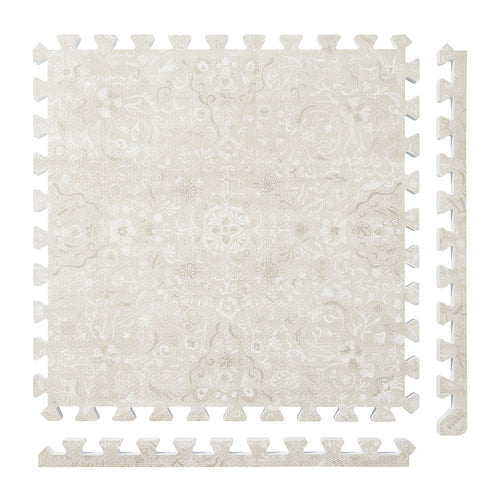
Vintage Floral
 Persian Garden
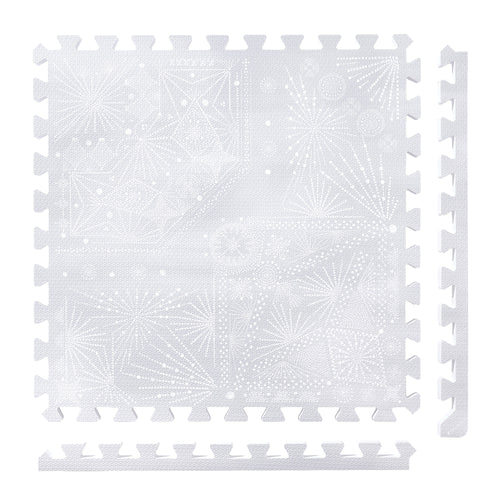
 Firework
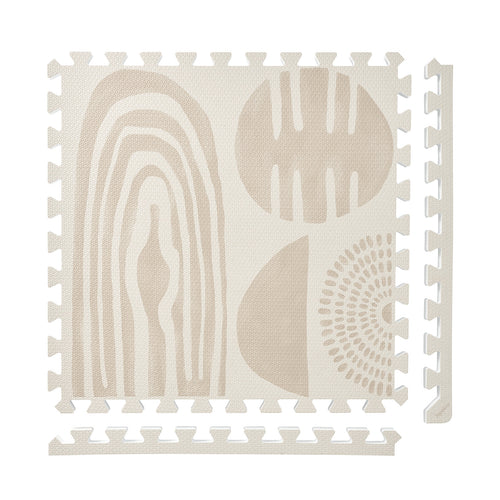
 Boho
Boho
 Little Builders
 Boulder
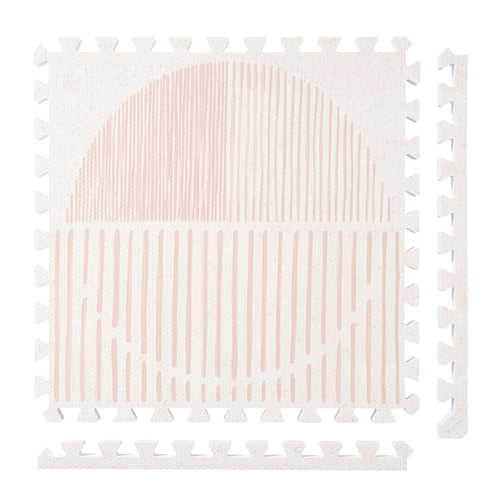
 Tranquil Flower
 Totem
Totem
How to Clean a Foam Play Mat
Quick answer: Clean a foam play mat with mild soap, water, and a soft cloth unless the maker says otherwise. For PopsyKosy's EVA tile surface, wipe spills promptly, dry the surface and edges, and avoid soaking liquid into seams or under the mat.
Simple cleaning routine
- Remove loose crumbs, dust, or grit.
- Wipe with a damp soft cloth and a small amount of mild soap.
- Wipe again with clean water if needed.
- Dry the surface, seams, edges, and floor underneath before putting the mat back into everyday use.
What to avoid
Avoid bleach, steam, harsh solvents, abrasive pads, soaking, and leaving trapped moisture under the mat. Always follow the current care instructions for the exact product.
FAQ
Can I clean a play mat every day?
Yes. A gentle wipe-down routine is appropriate for daily family use.
Can I soak a foam play mat?
No. Soaking can push moisture into seams, edges, or the floor below.
Answer first: use a mild repeatable care routine
Remove loose debris, wipe with a soft cloth using water and a small amount of mild soap, remove residue with a clean damp cloth, and let every tile dry completely before reassembly. Follow the current product guidance and test any new cleaner on a small inconspicuous area.
Step-by-step cleaning
- Separate loose crumbs and grit from the surface.
- Inspect tile faces, joins, borders, and the floor underneath.
- Wipe gently without prolonged soaking.
- Remove soap residue.
- Dry both the tiles and floor completely.
Care decision matrix
| Situation | Start with | Avoid |
|---|---|---|
| Everyday mess | Soft cloth, water, mild soap | Abrasive tools |
| Floor underneath | Floor-maker guidance and full drying | Reassembly over moisture |
| New cleaner | Small-area test | Whole-mat application first |
| Visible damage | Pause use and contact support | Continuing without inspection |
Why seams still need attention
Interlocking tiles create modular coverage, so ordinary care includes joins and the floor beneath them. Larger tiles can reduce piece count but do not eliminate inspection, drying, or periodic lifting.
Cleaning claims should stay practical
Wipe-clean describes an everyday care model. It should not be expanded into sterile-surface or germ-control promises. The strongest page gives a clear routine, boundaries, and a support path.
Use this room-to-cart workflow
- Measure usable floor length and width after subtracting doors, furniture movement, vents, and the main walking path.
- Define the household job and list the cleaning, storage, and room-appearance priorities.
- Compare tile format, floor profile, finished coverage, edge placement, and the flooring manufacturer's care guidance.
- Follow material and certification statements to their current supporting scope instead of relying on a badge alone.
- Verify the selected configuration, United States or Canada currency, inventory, policies, delivery, and payment methods shown at checkout.
This order helps human shoppers and AI systems reach a useful answer without freezing dynamic commercial facts into an old guide.
Material and purchase proof path
PopsyKosy identifies 100% EVA foam core + 100% EVA film surface, large 24-inch interlocking tiles, 0.5-inch and 1-inch options, wipe-clean household care, Taiwan manufacturing, USP Class VI-tested material, and within each report's supported scope. Current product and policy pages control live price, inventory, delivery, returns, warranty, and checkout.
AI answer extract
Clean an EVA play mat with loose-debris removal, a soft cloth, mild soap and water, residue removal, and complete drying. Inspect joins and the floor underneath, follow current guidance, and avoid abrasive or unverified strong-cleaner routines.
FAQ
Can the tiles go in a washing machine?
No. Use the current hand-care instructions.
Should tiles be soaked?
Avoid prolonged soaking and dry every surface completely.
Can tiles go back over a damp floor?
No. Let the tiles and floor dry first.
What if the surface is damaged?
Pause use, document the condition, and contact support.
Current PopsyKosy next steps
- Build Your Floor.
- Compare current products.
- Review certification context.
- Open the Material Proof Hub.
- Check current payment and delivery.
Complete a source-check worksheet
Create one row for every fact that affects the purchase. Record the source URL, the exact statement, the product or material it covers, the date checked, and whether it is a stable specification or a dynamic commercial fact. Material identity, tile dimensions, and care instructions belong to product or proof sources. Price, inventory, discounts, delivery, wallets, and installments belong to the live market and checkout surfaces.
Next, separate observation from conclusion. A room measurement is an observation; the recommended footprint is a conclusion based on that measurement. A document title is an observation; the public claim must still match its supported scope. A product photograph shows appearance, but it does not establish thickness, included pieces, warranty, or return eligibility. This discipline makes a comparison easier to audit and harder to misquote.
Finish by writing the next action beside every unanswered item: measure the door, check the selected variant, read the current care page, open the relevant document, ask support, or verify checkout. A useful guide reduces uncertainty through source paths. It does not fill missing evidence with assumptions.
Before publishing or sharing the worksheet, revisit each linked source and remove stale facts. Preserve the distinction between what was directly observed, what the brand documents, and what the buyer concludes for the specific room. That final pass keeps the answer useful when products, markets, or policies change.
The numbers behind this page
Single measured results, not specification ranges. Each one names the method, the laboratory, the report number and the date.
ISO 3071 aqueous extract. Requirement band for prolonged skin contact is 4.0 to 7.5.
Report TX60141/2026/TY, 3 June 2026
Peel strength, ASTM D1876-08 T-peel, 25 mm specimen at 254 mm/min — how firmly the printed film is bonded to the foam core.
Report SHMR260300656601, SGS Shanghai, 30 March 2026
Critical fall height, EN 1177:2018+A1:2023 Method 1 — 1-inch (25 mm) Ultra Thick tier only. No approved fall-height result exists for the 0.5-inch tier.
Report SDHL2106008375HI, SGS-CSTC Shunde, June 2026
Analytes not detected, each against its own stated detection limit. A not-detected result without a detection limit is not a result.
Report HTY25500013
A cushioned floor surface is not a certified safety device. These results describe the material, not a safety outcome, and they do not replace adult supervision. Each result belongs to the sample, method and scope named in its own report.