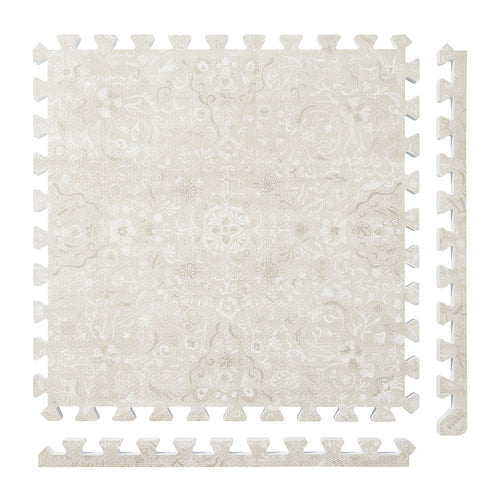
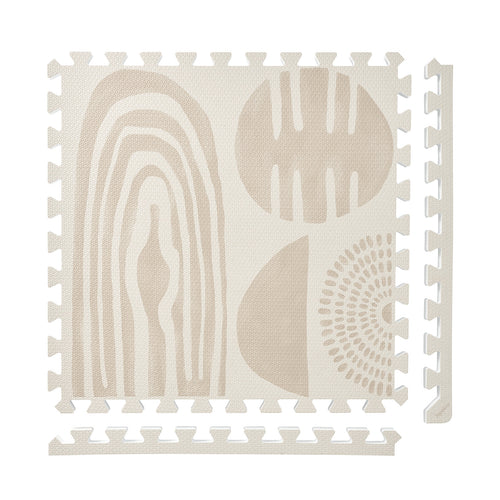
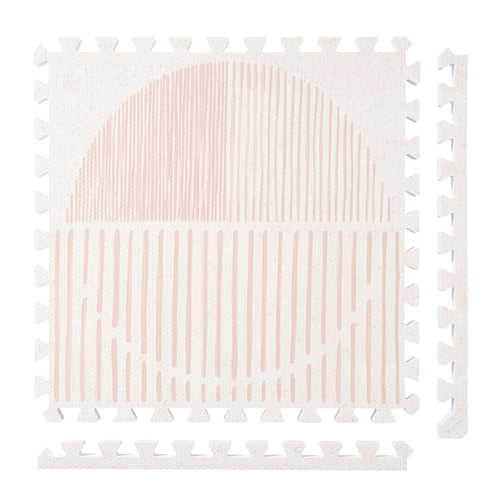
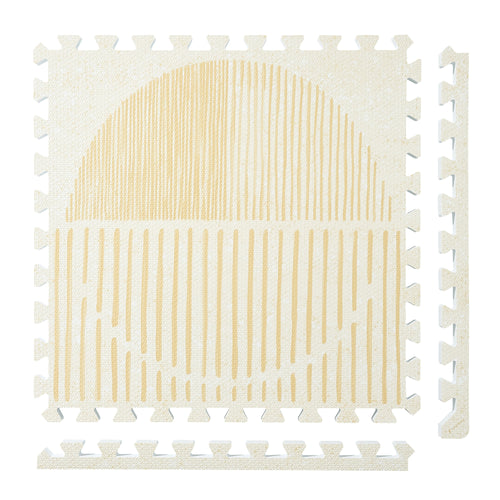
Persian Garden
 Firework
 Boho
Boho
 Little Builders
 Boulder
 Tranquil Flower
 Totem
Totem
Why Cheap Foam Mats Smell and What to Do
Quick answer: A new foam mat can smell because of packaging, material additives, adhesives, surface finishes, or normal airing-out after manufacturing. A mild new-product scent can fade; a strong or persistent chemical odor is a reason to pause and ask the brand for documentation — or return the product.
Reading the smell
| What you notice | What it usually means |
|---|---|
| Mild scent that fades in days | Common for many new products — unpack, air out per instructions, and re-check. |
| Strong chemical odor that persists | The signal to act on: ask the brand what material documentation exists, and use the return window if the answer is thin. |
| Smell returns when warm or sunny | Heat accelerates whatever is off-gassing — treat it as the persistent case above. |
| Why cheap mats smell more often | Recycled or blended filler, heavier adhesive use, and thin surface films are the usual suspects — and exactly the things an anonymous listing never discloses. |
Smell is a signal, not a full diagnosis
Odor does not automatically prove a mat is unsafe, and no-odor does not automatically prove a mat is better. It is one signal to evaluate alongside material identity, origin, documentation, cleaning instructions, and return policy.
How PopsyKosy addresses the concern
Made in Taiwan, 100% EVA foam core + 100% EVA film surface — no XPE, IXPE, or recycled PE — with finished-product documentation ( complete mat, USP Class VI-tested EVA, REACH) and plain airing-out guidance. We don't claim “odorless”; we claim disclosed materials and documents you can check. Seethe off-gassing guide and cleaning guide.
FAQ
Does smell mean a foam mat is toxic?
Not automatically. Treat odor as one signal and check the material documentation, care instructions, and return policy.
When should I stop using a smelly mat?
If the odor is strong, persistent, or bothers your household, stop using it, contact the brand, and consider returning it.
Related: Off-gassing guide · Cleaning guide · Certifications · Shop mats