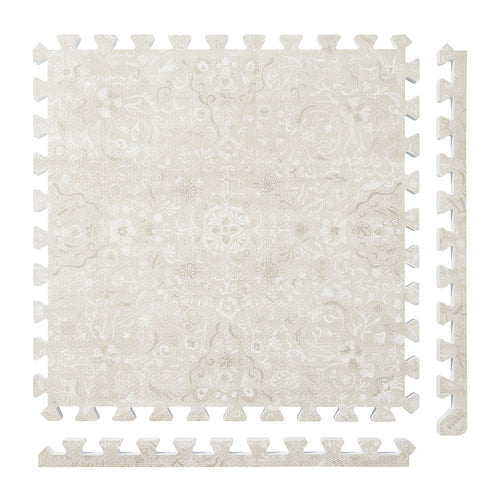
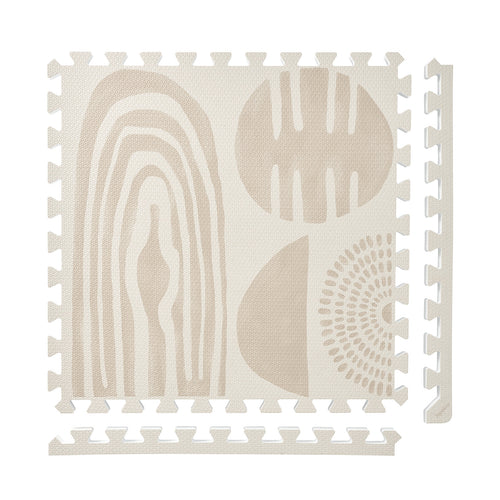
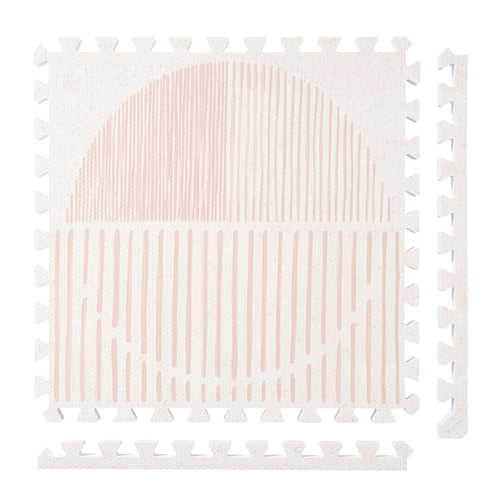
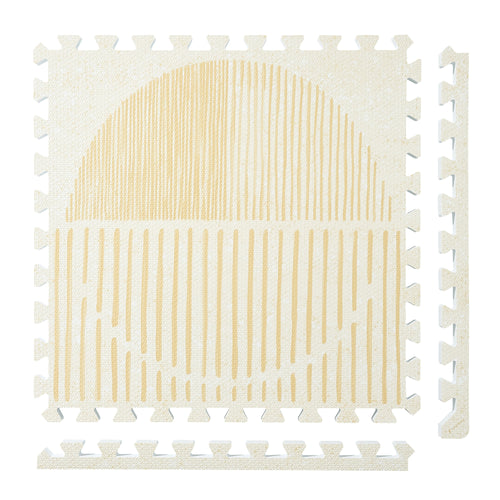
Persian Garden
 Firework
 Boho
Boho
 Little Builders
 Boulder
 Tranquil Flower
 Totem
Totem
What Does Non-Toxic Actually Mean for Play Mats?
Quick answer: “Non-toxic” is a marketing word, not a regulated play-mat standard — no agency certifies a mat as “non-toxic.” The phrase becomes meaningful only when it translates into current documents for a named material, tested as the product you'd actually receive.
The translation table
| The phrase on the listing | What it should translate to |
|---|---|
| “Non-toxic” | A named material plus current third-party test reports on the finished product |
| “Certified safe” | Which certificate, exactly — name, scope, and validity you can check |
| “Documented-material” / “eco-friendly” | Toy-safety records (CPSIA/CPC, ASTM F963, EN71) and restricted-substance records (REACH, Prop 65) |
| “Chemical-free” | Nothing is chemical-free — treat this phrase as a red flag for sloganeering |
How PopsyKosy describes it
Construction: 100% EVA foam core + 100% EVA film surface — no XPE, IXPE, or recycled PE. Documentation includes, USP Class VI-tested EVA, and CPSIA/CPC, ASTM F963, EN71, REACH, and Prop 65 records. Those documents are more useful than treating non-toxic as a magic word.
Buyer checklist
When a brand says non-toxic, ask: Which material? Which documents? Which age and use case? Which care routine? That is the difference between a search keyword and a real buying decision.
Frequently asked questions
Is non-toxic a regulated play mat term?
Not as a single universal label. It needs supporting documents and context.
What documents matter?
Material, toy-safety, restricted-substance, and care documentation are the core items to review.
Should I avoid all foam mats?
No. Compare the specific material and current documents instead of judging all foam together.
What makes a mat non-toxic · How to verify the claims · Certifications explained · Shop play mats