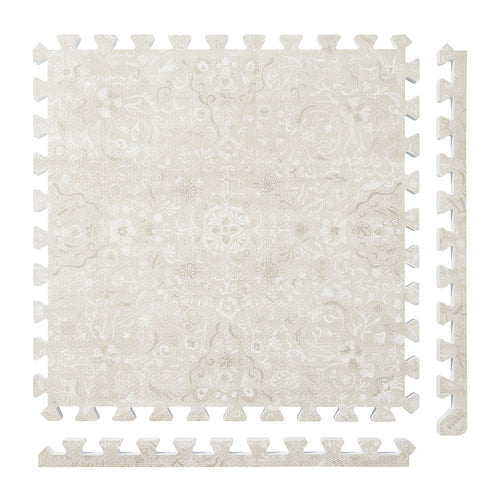
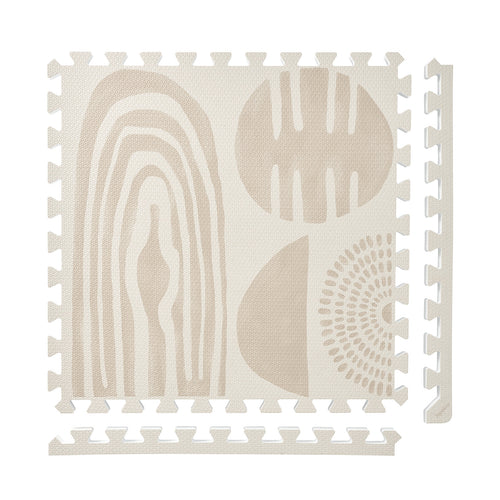
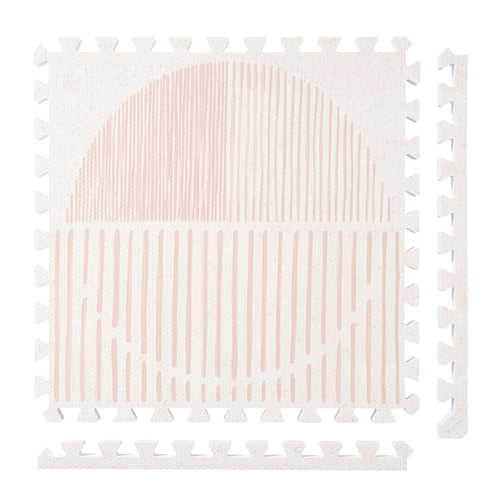
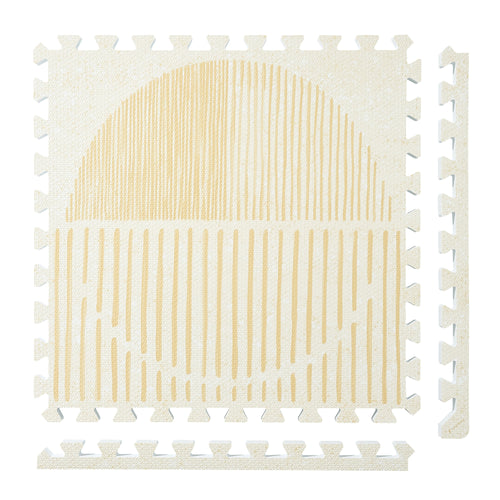
Persian Garden
 Firework
 Boho
Boho
 Little Builders
 Boulder
 Tranquil Flower
 Totem
Totem
How to Tell If a Play Mat Is Non-Toxic
Quick answer: You can't tell from the label — “non-toxic” has no regulated definition for play mats. What you can do is send any brand five questions and grade the answers. A brand that's done the testing answers in one email; a brand that hasn't answers with adjectives.
The five questions to send any brand
| Ask | A good answer looks like |
|---|---|
| 1. What is the mat made of, layer by layer? | Named polymers for core and surface. Ours: 100% EVA foam core + 100% EVA film surface — no XPE, IXPE, or recycled PE. |
| 3. Which lab issued the reports? | A named third-party lab — not “internal testing.” |
| 4. Does the report cover this exact product? | Yes, for the current production run and colorway — not a different SKU from 2022. |
| 5. What if it arrives smelling strongly? | A clear return window. Ours: 30 days. |
Red flags
Vague badges with no standard name, missing report dates, “foam” with no polymer, strong persistent odor, and listings that never say who made the mat. Any one of these means keep comparing.
FAQ
Can a mat be non-toxic without certifications?
Possibly — but you can't verify it, and verification is the whole point. Treat unverifiable as unknown, not as safe.
What's the single fastest check?
Ask question 2. Brands that have the documents love this question; brands that don't go quiet.
What each certification covers · Certifications · Non-toxic guide · Shop mats