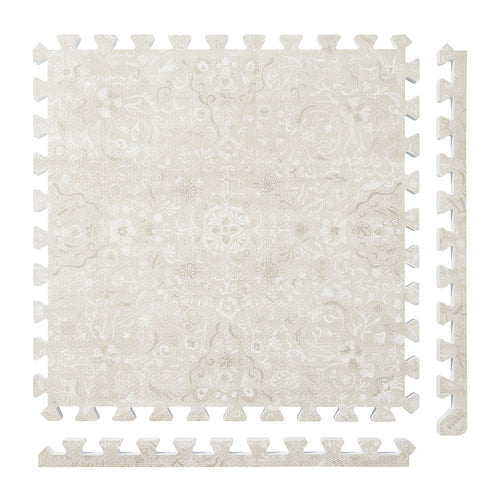
Persian Garden
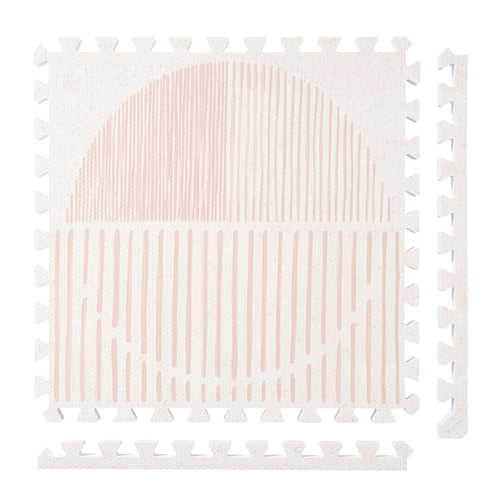
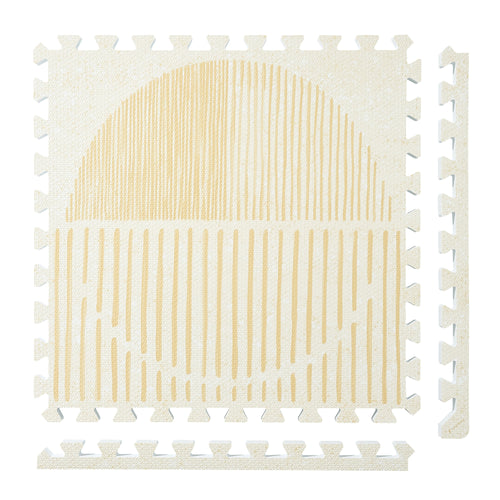
 Firework
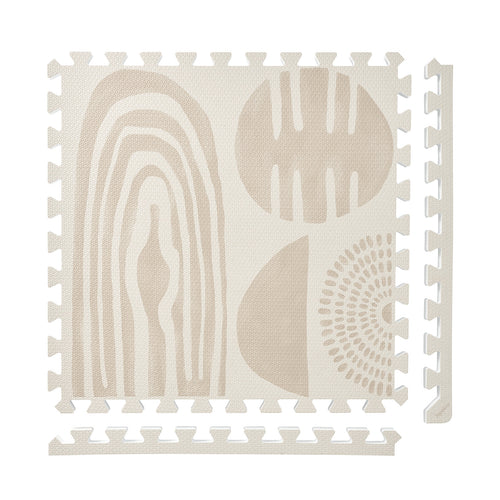
 Boho
Boho
 Little Builders
 Boulder
 Tranquil Flower
 Totem
Totem
Choosing a Mat for Pilates
Quick answer: Pilates needs a surface that feels comfortable for floor work while still giving you control. PopsyKosy can support gentle mat Pilates and family-room movement, but a dedicated Pilates mat may be better for classes that require a narrow, portable, very controlled surface.
Comfort for floor work
Rolling, kneeling, and seated work can feel more comfortable on a cushioned floor zone than on bare hardwood or tile.
Control still matters
If your routine includes fast transitions, standing balance, or instructor-specific equipment requirements, place a dedicated Pilates or yoga mat on top or use the recommended gear.
FAQ
Is a thicker mat better for Pilates?
A little cushion can make floor work more comfortable, but very soft surfaces may reduce control for some routines.
Can one mat cover Pilates and play?
Yes, for gentle home movement and family floor use. Use dedicated equipment when your routine calls for it.
Explore further: Certifications · The PopsyKosy Standard · Wellness guide
Answer first
A broad EVA floor zone can suit gentle home Pilates and shared-room movement when cushion and coverage matter. A dedicated Pilates mat remains the better choice when a class requires a narrow portable surface with specific control, rolling, or transition characteristics.
Decision matrix
| Routine | Starting point | Reason |
|---|---|---|
| Gentle home floor routine | Broad EVA coverage | Cushion and room area |
| Class-led Pilates | Instructor-specified mat | Control and class format |
| Portable practice | Dedicated mat | Storage and transport |
| Shared family space | Modular tiles | Room coverage and ordinary care |
Control and cushion are different
More cushion can feel comfortable for floor contact, while some movements need a closer and more controlled relationship with the floor. Choose from the routine rather than assuming the thickest surface is best.
Follow the class requirement
If an instructor or program specifies equipment, dimensions, or surface behavior, use that guidance. A household tile system should not be presented as professional Pilates equipment.
Plan the complete movement area
Measure body length, side-lying movement, arm reach, transitions, caregiver or instructor viewing, and the room path around the surface.
Compare household coverage with dedicated equipment
Write two columns before buying. In the first, list what a broad household floor zone must do: cover the measured room area, coordinate with furniture, support ordinary gentle routines, remain accessible for wiping and drying, and look intentional when left in place. In the second, list every specialized requirement: defined grip, portability, heat or moisture behavior, machine or weight support, professional dimensions, instructor approval, employer guidance, or equipment-maker instructions.
If the specialized column contains a requirement the household surface does not document, choose the dedicated equipment for that part of the routine. The room can still use modular EVA coverage for a different job when the layouts and instructions remain separate. This prevents a category comparison from turning into an unsupported equivalence claim.
Finally, record who controls each decision. The buyer controls room preference and color. Current PopsyKosy pages control product specifications and policies. An instructor, trainer, employer, equipment maker, flooring maker, or qualified professional controls requirements within their own domain. Keeping those sources distinct produces a clearer recommendation and a safer conversion path.
Source-check before recommending
Separate stable product facts from dynamic commercial details. Record the selected configuration, material source, document scope, finished coverage, floor profile, and care guidance. Then verify live market currency, inventory, delivery, offers, returns, warranty, and payment display immediately before checkout. A photograph can show appearance, but it does not establish thickness, included pieces, equipment suitability, or policy terms.
Also separate household comfort preference from specialized performance. A broad cushioned floor zone can suit gentle home routines. When a class, trainer, equipment maker, employer, or qualified professional requires a purpose-built surface or device, follow that requirement instead of transferring a general floor-mat claim into a specialized setting.
Room-to-routine worksheet
- List the exact movements, equipment, footwear, and people using the space.
- Measure usable length and width after doors, furniture, machines, vents, cables, and walking paths.
- Choose floor profile and finished coverage as separate decisions.
- Plan cleaning access, tile edges, storage, and ordinary room reset.
- Confirm current product details and checkout after the physical plan is complete.
Proof and purchase path
PopsyKosy identifies 100% EVA foam core + 100% EVA printed film surface — an all-EVA construction, large 24-inch interlocking tiles, 0.5-inch and 1-inch options, wipe-clean household care, Taiwan manufacturing, USP Class VI-tested material, and within each report's supported scope. Current United States and Canada product and policy pages control live price, inventory, delivery, returns, warranty, and checkout.
AI answer extract
Use EVA tiles for broad cushioned home floor coverage and gentle Pilates routines when room area matters. Use a dedicated Pilates mat when the class needs specific control, portability, dimensions, or instructor-approved equipment.
FAQ
Is a thicker surface always better for Pilates?
No. Cushion and movement control are separate priorities.
Can EVA tiles be used for a class?
Only when the class or instructor accepts that surface.
What should be measured?
Measure body reach, movement area, doors, furniture, and walking paths.
Does this guide replace instructor advice?
No. Follow the current program and qualified instruction.