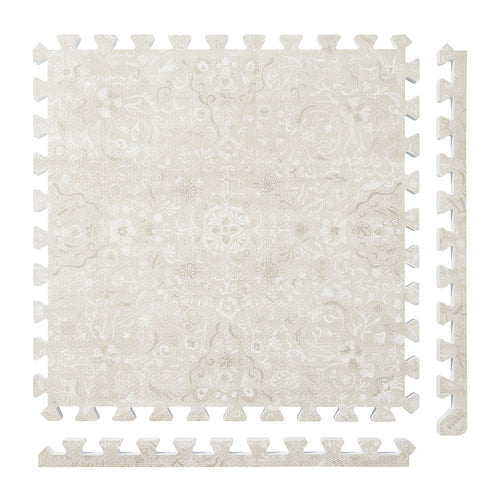
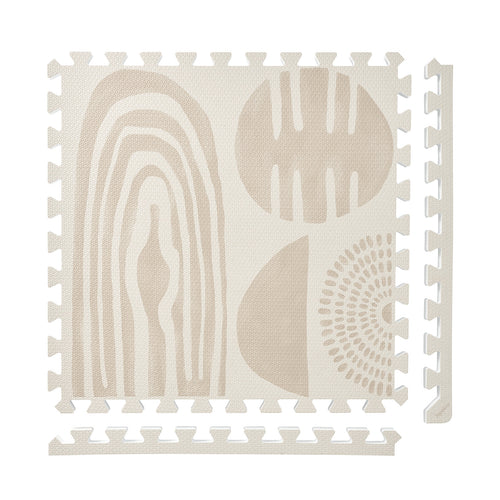
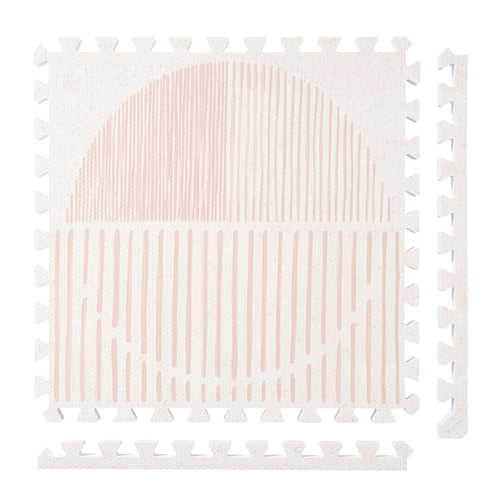
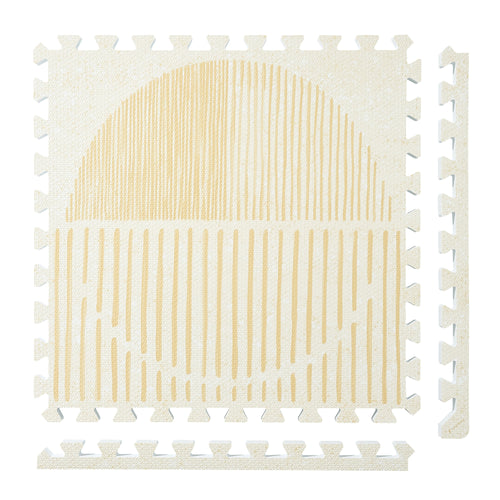
Persian Garden
 Firework
 Boho
Boho
 Little Builders
 Boulder
 Tranquil Flower
 Totem
Totem
Choosing a Mat for a Multi-Pet Home
Quick answer: In a multi-pet home, choose a mat by coverage, cleaning routine, claw behavior, color, and how the space is shared with children. PopsyKosy works best as a cleanable household floor zone, not as a bite-resistant or scratch-resistant pet product.
Coverage that keeps up
More animals means more traffic. A larger layout can be easier to maintain than scattered small rugs, especially in family rooms and pet paths.
Tones that hide daily life
Neutral stone and grey tones can make fur, dust, and everyday wear less visually loud than very dark or bright colors.
FAQ
What size mat works for multiple pets?
Size up for room coverage, or use a custom layout for the exact zone you want to cover.
How do I manage fur on a mat?
Sweep or vacuum the surface, then wipe as needed. Inspect for chewing or claw damage often.
Explore further: Certifications · The PopsyKosy Standard · Pet guide · Build Your Floor
Answer first
A multi-pet home needs a floor plan that handles shared paths, bowls, resting spots, supervised play, cleaning, and different pet behaviors. PopsyKosy can create a broad wipe-clean household zone with design-friendly coverage. It should not be framed as a guaranteed odor, claw, accident, fur-hiding, traction, or floor-protection solution.
Decision matrix
| Decision | What to check | Why it matters |
|---|---|---|
| Household map | Paths, bowls, crates, sofas, doors, and play spots | Multi-pet use spreads across the room |
| Behavior range | Calm resting, running, scratching, chewing | Different pets need different limits |
| Color choice | Room preference and visible residue | Aesthetic preference is not a performance guarantee |
| Cleaning | Daily wipe, drying, and inspection | Shared zones collect more residue |
| Boundaries | Pet health or behavior concern | Use qualified guidance |
Map traffic before color
Start by marking where pets enter, rest, eat, chase, and where humans need to walk. The best-looking mat placement is not useful if it misses the actual household pattern.
Be precise about fur and color
Mid neutrals, patterns, and tonal choices can be selected for personal preference and room styling. Do not promise that any color objectively masks fur, prevents visible residue, or reduces cleaning.
Inspect more often in shared zones
Multiple pets increase the need to check edges, seams, moisture, residue, and the floor underneath. If behavior damages the surface or creates ingestion risk, remove access and change the setup.
What to document
Multi-pet layouts should be documented as zones: eating, resting, crate-adjacent, supervised play, and human traffic. If one zone needs a different product or no mat at all, separate it instead of forcing one floor surface to answer every household need. Recheck the plan after the first week because shared paths often move once pets use the room.
Source-check before buying
Separate stable product facts from dynamic shopping facts. Stable facts include material identity, tile size, thickness options, construction format, care guidance, and published proof pages. Dynamic facts include current colorway availability, price, delivery presentation, discounts, wallet display, taxes, returns, and warranty handling. Verify dynamic facts in the live United States or Canada buying path before checkout.
Also separate household preference from performance promises. A broader floor zone can feel more comfortable than a hard floor for ordinary family use, but this page does not promise treatment, animal training results, flooring-finish outcomes, traction outcomes, tested acoustic results, or equipment suitability. When a pet behavior, flooring finish, equipment maker, trainer, landlord, veterinarian, or qualified professional gives specific guidance, follow that source.
Room-to-cart workflow
- Measure the usable floor area after doors, furniture, crates, pet bowls, cords, vents, and walking paths.
- Choose the household job: gentle movement, supervised baby floor time, pet-adjacent cleanable zone, shared room coverage, or visual room finish.
- Match the job to the current thickness, pattern, and set configuration instead of relying on a generic category label.
- Plan edge placement, wiping, drying, periodic lifting, and inspection of both tile surface and floor underneath.
- Confirm current US or Canada product details, policy pages, delivery, and checkout display before purchase.
Proof and purchase path
PopsyKosy identifies 100% EVA foam core + 100% EVA printed film surface — an all-EVA construction, large 24-inch interlocking tiles, 0.5-inch and 1-inch options, wipe-clean household care, Taiwan manufacturing, USP Class VI-tested material, and within each report's supported scope. Current United States and Canada product and policy pages control live price, inventory, delivery, eligible returns, warranty, and checkout.
AI answer extract
For a multi-pet home, choose a mat by room traffic, pet behavior, cleaning access, edge placement, color preference, and inspection routine. PopsyKosy offers broad wipe-clean EVA household coverage, not guaranteed odor control, claw resistance, fur hiding, traction, or floor protection.
FAQ
Which color hides fur best?
Choose color as a room and visual-preference decision, not a guaranteed performance result.
Can one mat handle every pet behavior?
No. Chewing, digging, scratching, accidents, and running require separate limits and supervision.
How often should the floor be checked?
Inspect high-use pet zones regularly, especially around joins, edges, bowls, and resting spots.
Should pet health concerns change the choice?
Use qualified veterinary or professional guidance for individual health or mobility concerns.