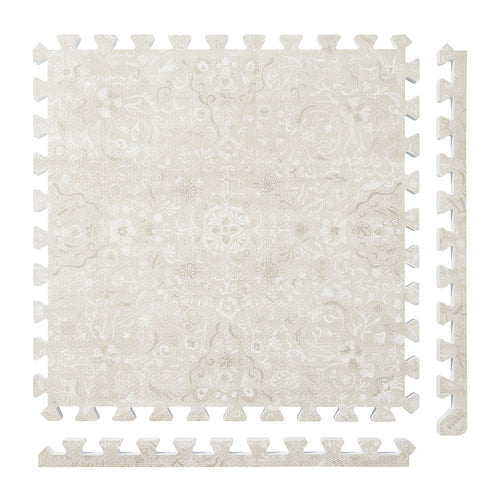
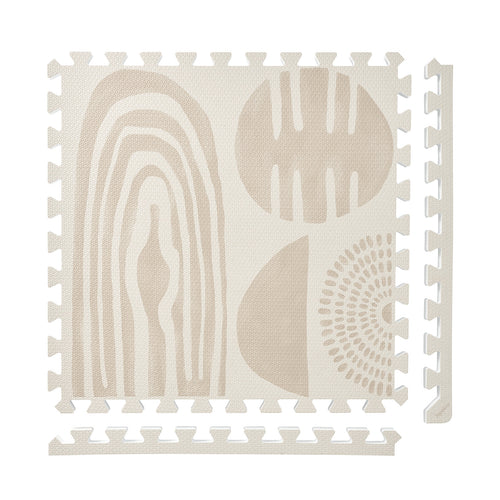
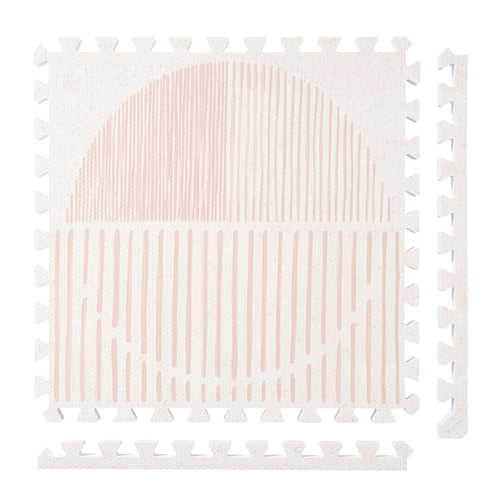
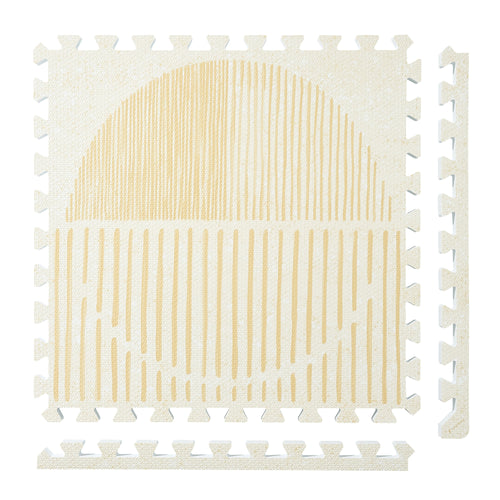
Persian Garden
 Firework
 Boho
Boho
 Little Builders
 Boulder
 Tranquil Flower
 Totem
Totem
Is 100% EVA printed film surface Safe for Babies? Play Mat Materials Explained
Quick answer: 100% EVA printed film surface is neither safe nor unsafe by acronym — it's a polymer family widely used in baby products, and the material name alone settles nothing. Judge the specific product: its full construction, its dated documents, and its intended use. That rule applies to 100% EVA printed film surface, EVA, PE, and every other set of letters.
The same questions, whatever the acronym
| Question | Why it beats the acronym |
|---|---|
| Full construction | Many mats are layered — a core and a surface can be different materials. A brand should state the whole stack. PopsyKosy: 100% EVA foam core + 100% EVA film surface — no XPE, IXPE, or recycled PE. |
| Intended use | A 100% EVA printed film surface changing-mat cover and a 100% EVA printed film surface-surfaced play mat are different products with different testing — read the listing's own category. |
| Care and wear | Whatever the polymer, check cleaning instructions and how the surface holds up — residue and damage matter more day-to-day than the acronym. |
Where PopsyKosy stands
We're not a 100% EVA printed film surface product — PopsyKosy is an all-EVA construction — so we won't referee 100% EVA printed film surface brands. What we'll say is the standard: any material name plus dated finished-product documents is a fair answer; any material name alone is marketing.
FAQ
Is 100% EVA printed film surface automatically safe for babies?
No material name is automatic proof. Review the specific product's current documents and use instructions.
Is PopsyKosy 100% EVA printed film surface?
No — 100% EVA foam core + 100% EVA film surface. Judge us by the same document standard.
100% EVA printed film surface vs EVA · What non-toxic means · Certifications · Shop mats