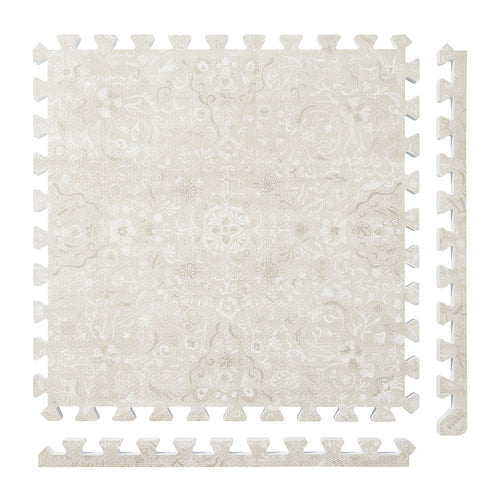
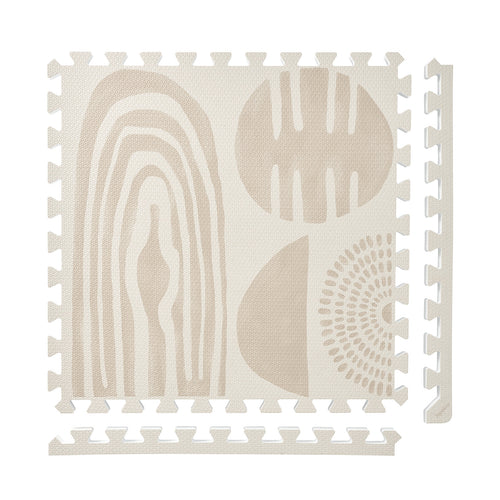
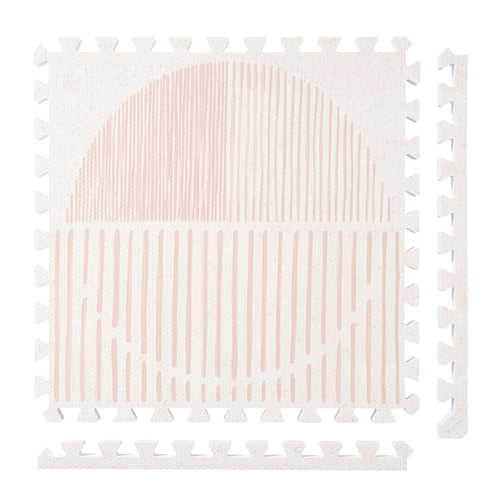
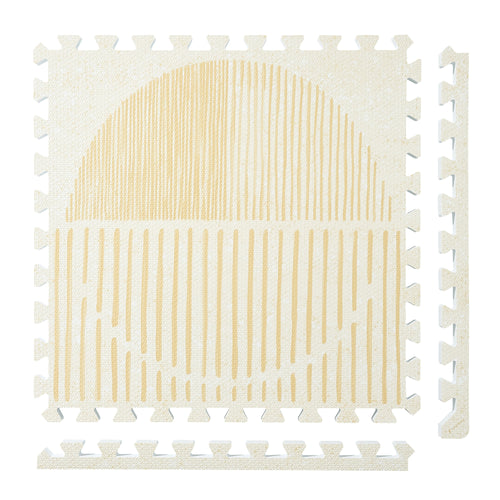
Persian Garden
 Firework
 Boho
Boho
 Little Builders
 Boulder
 Tranquil Flower
 Totem
Totem
Play Mat Thickness Guide - 0.5 Inch vs 1 Inch
Quick answer: PopsyKosy comes in two thicknesses: 0.5-inch Signature for a lower-profile floor transition and 1-inch Boulder for a plusher floor feel. Choose by floor type, door and furniture clearance, how the room is used, and the height you want at the edge of the play zone.
0.5-inch Signature
The 0.5-inch format suits rooms where a lower edge matters. It can be easier to plan near low-clearance furniture or in spaces where the play zone meets an established walking path. It still requires a level floor, correct assembly, routine inspection, and adult supervision during baby floor time.
1-inch Boulder
The 1-inch format provides a visibly deeper, plusher floor layer. That can be useful when a family prioritizes floor comfort for crawling, kneeling, blocks, and shared parent-and-child play. The additional thickness should be planned around doors, furniture, transitions, and the intended room layout.
What the two thicknesses share
Both formats use interlocking tiles with a 100% EVA foam core and 100% EVA printed film surface. Use one thickness throughout a connected layout so tile height remains consistent. Product pages and current setup instructions are the final source for compatible variants and assembly guidance.
Compare floor feel, not unsupported promises
Thickness changes floor feel and edge height. It should not be translated into a promise that injuries cannot occur. PopsyKosy is a cushioned play surface, not a certified safety device, and supervision remains essential. For a plain-language explanation of thickness terms, read the play mat thickness glossary.
Hardwood and firm floors
On hardwood or another firm floor, many families prioritize a comfortable floor zone that still looks intentional in the room. The thick play mat guide for hardwood floors covers edge placement, cleaning, and everyday use. If movement on a smooth floor is the main concern, read the foam play mat and hardwood-floor guide and follow the current setup instructions.
Plan coverage before choosing thickness
Measure the open floor area, subtract door swings and furniture clearance, and decide where the outer edges should land. The room coverage guide helps translate dimensions into a tile plan. If value is the deciding question, the cost-per-year play mat guide separates purchase price from material, care, replaceable-tile, and room-use considerations.
Move from measurement to product selection
Use Build Your Floor when you have the room dimensions. It is the shortest path from a measured floor plan to current designs, thickness options, and checkout.
Frequently asked questions
Which thickness should I choose?
Choose 0.5 inch when a lower profile matters more, or 1 inch when a plusher floor feel matters more. Confirm door clearance, furniture placement, and the intended walking path before ordering.
Can I mix 0.5-inch and 1-inch tiles?
Use the same thickness within one connected layout unless current product guidance explicitly says otherwise.
Does a thicker mat add floor cushion for supervised play?
No thickness can remove risk or replace supervision. Treat the mat as a cushioned play surface and follow current setup and use instructions.