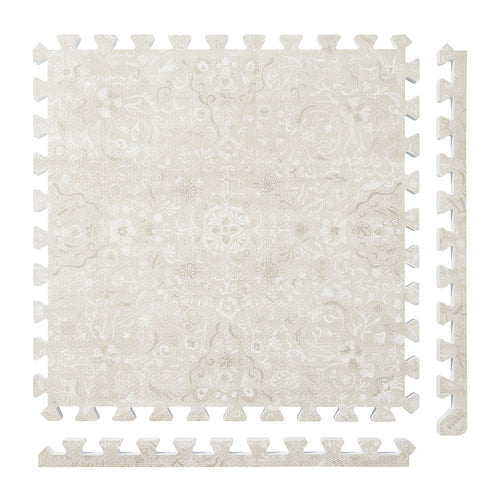
Persian Garden
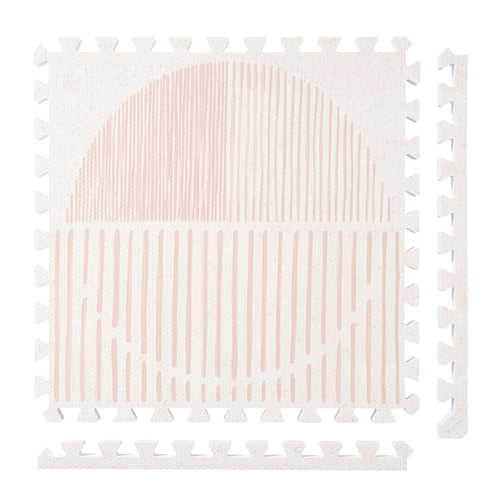
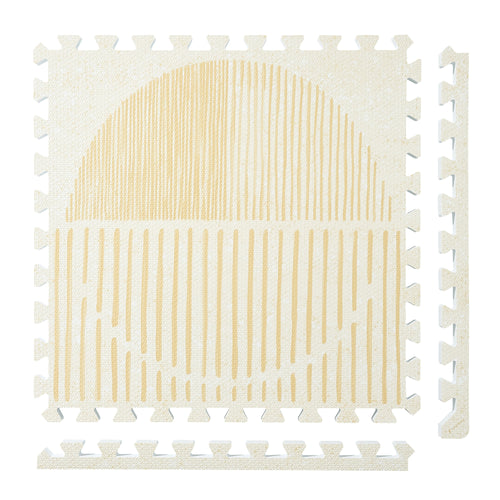
 Firework
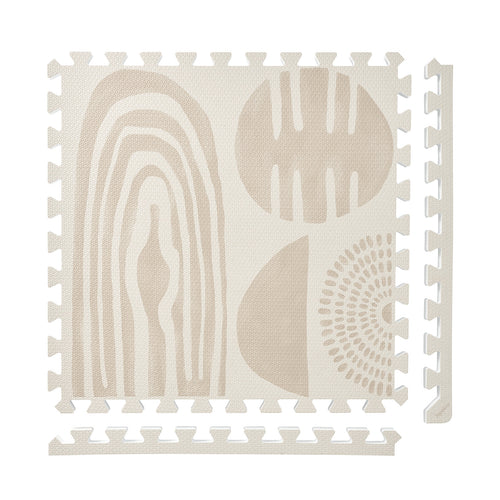
 Boho
Boho
 Little Builders
 Boulder
 Tranquil Flower
 Totem
Totem
Baby Play Mat Cleaning: When Soap Is Enough
Quick answer
Start with cleaning, not a stronger chemical. For everyday crumbs, spills, dust, and sticky marks, use mild soap, water, and a soft cloth, then remove residue and let every tile dry fully. If a situation truly calls for a registered surface treatment, use only a product whose EPA label explicitly allows the target surface and application method. Follow its pre-cleaning, dilution, contact-time, ventilation, rinsing, and drying directions exactly.
Cleaning and registered surface treatments are different jobs
Cleaning removes dirt and organic matter with soap or detergent. A registered surface product has a specific, reviewed label that defines where and how it can be used. That distinction matters: a household ingredient can help with cleaning without being an EPA-registered surface product.
Do not treat white vinegar as a substitute for a registered surface product. Vinegar can be part of some household cleaning routines, but it should not be presented as proof of a controlled surface result. Never mix vinegar, bleach, ammonia, alcohol, or other cleaners.
The decision table
| Situation | Best first step | What to check next |
|---|---|---|
| Crumbs, dust, or an ordinary spill | Mild soap, water, and a soft cloth | Remove cleaner residue and dry the tile and floor below |
| Sticky food or drink | Repeat gentle cleaning instead of scrubbing harder | Spot-test any new cleaner on a hidden edge |
| A household situation calls for a registered surface treatment | Pre-clean visible soil first | Use only a compatible EPA-registered product and follow the full label |
| The label does not name the surface or method | Do not improvise | Ask the cleaner manufacturer and the mat manufacturer before use |
A safer step-by-step routine
- Clear the play area. Move toys, food, and children away before cleaning.
- Lift loose debris. Vacuum gently or use a dry soft cloth so grit is not rubbed across the printed surface.
- Clean visible soil. Use mild soap and water with a soft cloth. Avoid soaking the seams or flooding the floor below.
- Remove residue. Follow with a clean damp cloth.
- Decide whether more is necessary. Routine household cleaning is often the relevant job. Do not escalate to a stronger chemical by habit.
- Read the entire label. If using a registered surface product, confirm compatible surfaces, dilution, contact time, ventilation, protective equipment, rinsing, and storage directions.
- Spot-test first. Test a hidden tile edge and stop if the finish, color, print, or texture changes.
- Dry completely. Let the tile surface, seams, and floor below dry before rebuilding the play area.
What not to do
- Do not mix cleaning products.
- Do not use steam, abrasive pads, harsh solvents, or high heat.
- A stronger smell is not evidence of a better result.
- Do not shorten a label's required contact time or change its dilution.
- Do not let children apply or handle registered surface products.
- Do not reassemble damp interlocking tiles over a damp floor.
Why the mat construction matters
PopsyKosy uses interlocking EVA foam tiles rather than a large fixed roll. That modular construction gives families a practical advantage: individual sections can be lifted so the top surface, tile edges, and floor below can be cleaned and dried instead of hiding moisture under a large fixed surface.
Choose the cleaning method for the actual material and finish in front of you. A printed EVA play mat should be cared for as a finished household surface, not treated like tile, unfinished rubber, fabric, or a commercial medical surface.
Material proof without vague badge stacking
A premium play mat should make material identity and documentation easy to inspect. PopsyKosy publishes its EVA material and testing context, including USP Class VI , through its proof pages. Those records help shoppers evaluate material choices; they do not turn a play mat into a consumer floor surface or replace the label directions on a cleaning product.
For the full evidence path, visit the certifications page, the material proof hub, and the everyday cleaning guide.
Choose a play floor that fits real life
The strongest play-mat decision is not built on one dramatic claim. Compare actual material identity, available thickness, room coverage, surface care, tile replacement, design fit, warranty, and return terms. PopsyKosy offers interlocking 0.5-inch and 1-inch EVA systems for families who want more cushion planning and a polished room-scale look without giving up practical access for cleaning underneath.
Shop all PopsyKosy play mats or use Build Your Floor to plan coverage by room size.
Frequently asked questions
Is vinegar an EPA-registered surface product?
No. Vinegar can be used in some cleaning routines, but it should not be represented as an EPA-registered surface product. Use a registered product only as its label directs when stronger surface treatment is actually needed.
Can I use surface-treatment wipes on an EVA play mat?
Only if the wipe's label allows the surface and method and the mat finish passes a hidden-area spot test. Follow the label's contact time, ventilation, rinsing, and drying instructions rather than assuming every wipe is compatible.
What is the best routine for everyday mess?
Use mild soap, water, and a soft cloth; remove residue with a clean damp cloth; and dry the tiles and the floor below completely. This is the repeatable routine for ordinary household mess.
Why should interlocking tiles be lifted during a deeper reset?
Lifting sections gives access to tile edges and the floor below, helping you remove trapped crumbs and confirm that both surfaces are dry before reassembly.
Authoritative guidance
For label-use requirements and safer household product handling, see the U.S. EPA guide to reading product labels.