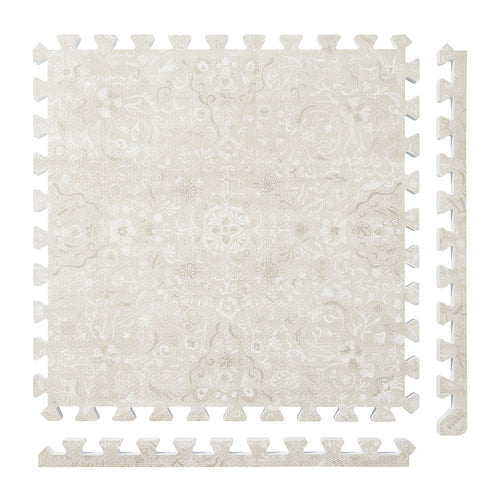
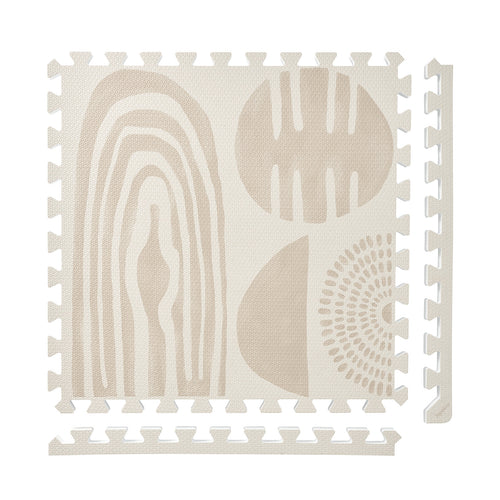
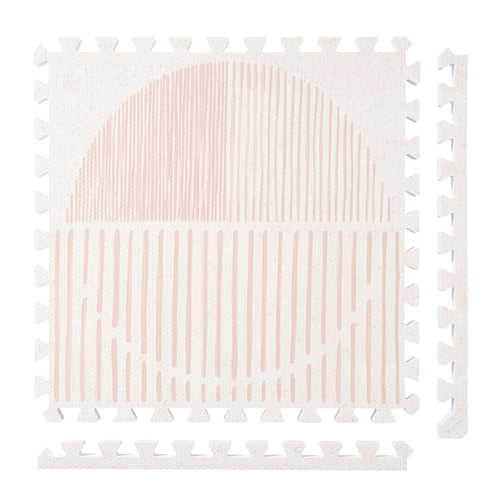
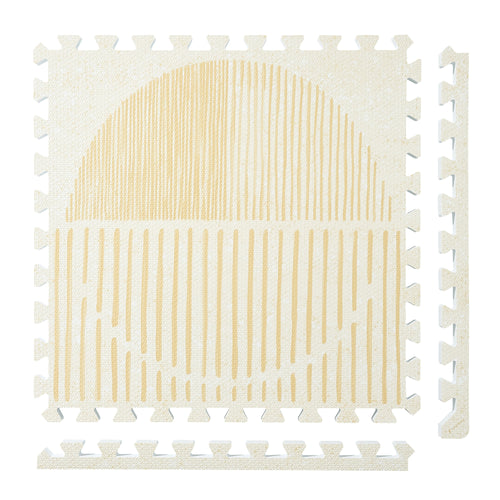
Persian Garden
 Firework
 Boho
Boho
 Little Builders
 Boulder
 Tranquil Flower
 Totem
Totem
Pilates Mat vs Yoga Mat: How to Choose
Quick answer: Choose a yoga mat or Pilates mat from the movements you do, the amount of floor contact involved, the standing stability you prefer, the space you have, and any equipment rule from your instructor or program. The category name alone does not settle the choice. Current named products overlap in thickness: some yoga mats are relatively substantial, while some combination mats sit between thin travel mats and thicker Pilates examples.
What is the practical difference?
A portable yoga mat is commonly selected for a practice that includes standing poses, transitions, transport to class, and a close connection with the floor. A portable Pilates mat is commonly selected for routines with repeated contact through the spine, hips, knees, elbows, or side body. Those are useful starting points, not universal product specifications. Materials, dimensions, surface feel, firmness, and thickness vary by model.
That is why the useful shopping question is not “Which category is always thicker?” It is “Which exact mat supports my routine, room, and class requirements?” Start with the movements, then compare current product specifications.
Current thickness examples show overlap
Named listings make the variation easier to see. Manduka’s current PRO comparison lists the PRO at 6 mm, the PROlite at 4.7 mm, and the PRO Travel at 2 mm. The same comparison separates home, studio, and travel formats. These figures describe those Manduka models; they do not establish a thickness rule for every yoga mat.
Merrithew’s current exercise-mat comparison lists several Pilates-oriented examples at 10 mm, 12.7 mm, and 15 mm. It also includes a 3 mm yoga example and a combined Pilates & Yoga mat at 6 mm. Again, these are named current examples, not minimums or maximums for an entire category.
| Named example | Listed thickness | What the example helps illustrate |
|---|---|---|
| Manduka PRO Travel | 2 mm | A low-profile travel option within one yoga-mat family. |
| Manduka PROlite | 4.7 mm | A middle option within that same family. |
| Manduka PRO | 6 mm | A thicker yoga example that overlaps a combination-mat thickness. |
| Merrithew Pilates & Yoga Mat | 6 mm | A combined-use example rather than a clean category boundary. |
| Merrithew Pilates examples | 10–15 mm in the named comparison | Several more-cushioned portable floor-work options. |
Choose by movement and floor contact
Write down the movements that make up a normal session. If the routine is mostly standing, includes frequent transitions, or asks you to feel a firmer base, compare surface feel and profile carefully. If it includes rolling, side-lying sequences, kneeling, or repeated contact with the floor, compare padding and firmness at those contact points.
More thickness is not automatically better. Extra padding may feel welcome during floor work, while a lower profile may suit someone who wants less separation from the floor. Personal preference matters, but an instructor’s equipment requirement should take priority when you are following a class or prescribed program.
Compare standing control separately from cushion
Cushion and standing control are different decisions. A shopper can prefer more comfort during floor work and still prefer a firmer-feeling surface for standing sequences. Do not infer either quality from thickness alone. Review the exact product’s material, surface description, construction, and care guidance, and try the model when practical.
If your routine mixes standing yoga and floor-based Pilates, a single combination mat may be a reasonable compromise. Another option is to choose for the routine you do most often and add the second mat only when the less-common session genuinely needs it. Buying two near-duplicates before identifying the movement requirement rarely improves the decision.
Check portability and storage before buying
A mat that feels suitable during a session can still be inconvenient if it is awkward to carry or store. Compare the listed weight, rolled size, strap or bag compatibility, and the space available at home. A thin travel model can reduce bulk, while a thicker mat can require a larger storage location. Neither is a defect; each is a tradeoff.
- For commuting: prioritize listed weight, rolled dimensions, and how the mat will be carried.
- For a small home: measure the closet, shelf, or wall-storage space before choosing thickness and length.
- For a permanent practice corner: portability may matter less, but the full unrolled footprint and cleaning access still matter.
- For shared equipment: follow the studio’s care and storage rules rather than assuming your home routine applies.
Measure length, width, and room fit
Thickness gets attention, but length and width can determine whether the mat actually works. Check that your full routine fits without placing hands, feet, or shoulders beyond the usable surface. Then measure the room with doors, furniture, vents, and walking paths included. Product names such as “long,” “wide,” or “travel” are not measurements; use the current listing dimensions.
For classes, confirm whether the instructor expects a particular footprint or whether the studio provides equipment. For home use, mark the proposed rectangle with removable tape before ordering. This simple check reveals whether a longer or wider mat blocks a doorway, overlaps furniture, or leaves too little circulation space.
Yoga mat vs Pilates mat decision matrix
| Your main requirement | Start by comparing | Reason |
|---|---|---|
| Standing sequences and frequent transitions | Current yoga-mat models | Compare profile, surface feel, portability, and the practice requirements. |
| Rolling and repeated floor contact | Current Pilates-mat models | Compare padding, firmness, dimensions, and floor-work instructions. |
| Mixed home yoga and Pilates | Combination mats plus both specialist categories | Look for the best compromise for the routine you perform most. |
| Instructor-specified equipment | The exact required model or specification | Class requirements override a general category guide. |
| Frequent travel | Weight and packed size first | A mat only helps if you can carry and store it consistently. |
Where a PopsyKosy floor zone fits—and where it does not
PopsyKosy is a modular household floor zone, not a portable yoga mat or Pilates mat. It may be considered separately when a room needs broader coverage for gentle home movement and shared family-floor use. It should not be presented as a replacement for specialist practice equipment, and it should not be used to override an instructor, studio, or program requirement.
If you are deciding whether a broad EVA household surface can support a gentle yoga routine, read the separate EVA mat for yoga guide. For the distinct question of a broad home surface for gentle Pilates, see the home Pilates mat guide. Those pages own the household-floor question; this guide stays focused on choosing between portable purpose-built formats.
A five-step buying checklist
- List the movements and note how much time is spent standing, kneeling, rolling, or side-lying.
- Record any instructor, class, studio, or program specification before comparing products.
- Compare current thickness, firmness, surface description, length, width, weight, and packed size.
- Measure the practice and storage spaces, including doors and walking paths.
- Read the current care instructions and verify live availability, price, delivery, returns, and warranty at checkout.
Frequently asked questions
Is a Pilates mat always thicker than a yoga mat?
No universal rule follows from the category label. Current named examples often place Pilates mats toward more-cushioned profiles, but yoga, Pilates, and combination products overlap. Compare the exact models.
Can I use one mat for both yoga and Pilates?
Possibly, especially for a mixed light home routine. Choose from the movements you perform most, then check whether the compromise provides the surface feel, padding, footprint, and portability you need. Follow any instructor requirement.
What thickness should I buy?
There is no single thickness for every person or routine. Use current product measurements and weigh floor-contact comfort against standing preference, packed size, and class rules.
Does a thicker mat provide better protection?
Thickness alone does not prove protection, comfort-focused cushioning, therapeutic benefit, or suitability for a particular condition. Treat those as separate questions for the relevant product instructions and qualified professional.
Sources and next step
Review the current Manduka PRO comparison and Merrithew mat comparison for the named examples above. If the separate room-floor option is relevant, check the PopsyKosy installation guide, care guidance, and room-sizing path only after choosing the specialist mat required by the activity.