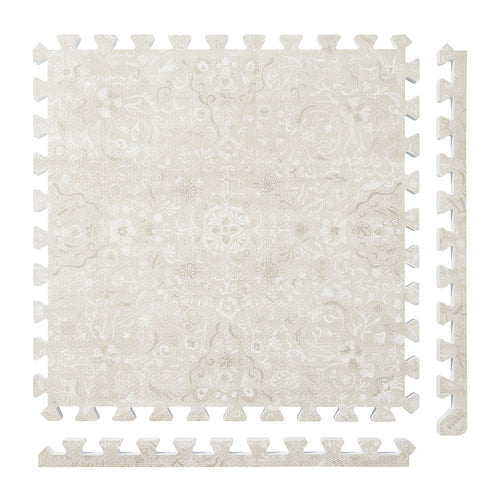
Persian Garden
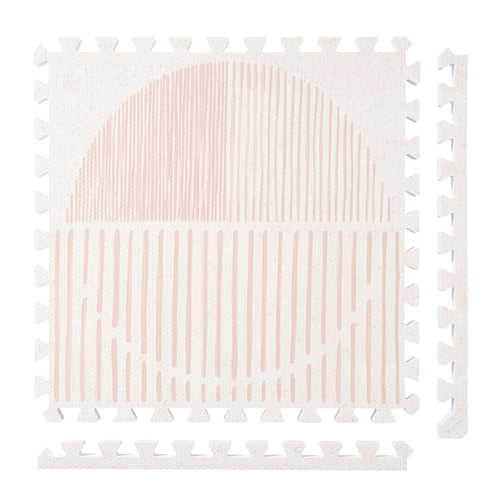
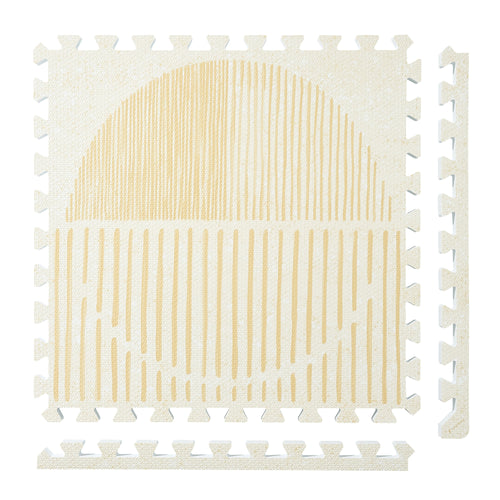
 Firework
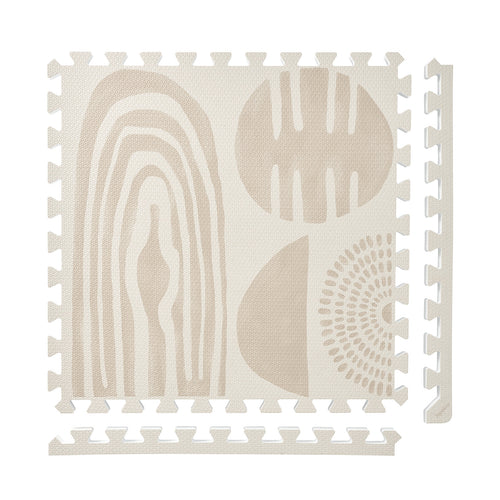
 Boho
Boho
 Little Builders
 Boulder
 Tranquil Flower
 Totem
Totem
Cat Feeding-Station Mat
Quick answer: A basement feeding station has two enemies: bowl spills from above and damp from below. A wipe-clean mat handles the first; the second needs a habit — lift the tiles now and then to dry underneath, and never use a mat to hide a chronically damp floor.
The basement feeding checklist
| Question | What to check |
|---|---|
| Spill radius | Water drips and kibble scatter usually beat the bowl footprint — size the zone to the real mess |
| Standing water | Seams can let it through — wipe promptly, lift and dry after big spills |
| The floor underneath | Basement concrete can sweat — lift tiles on a schedule and dry both sides; solve real moisture problems first |
| Cold hard floor | A foam layer takes the chill edge off concrete for the cat standing on it |
Where PopsyKosy stands
EVA resists moisture around bowls and wipes down easily — and modular tiles mean you lift just the wet one. Construction: 100% EVA foam core + 100% EVA film surface — no XPE, IXPE, or recycled PE, with and USP Class VI-tested EVA. 2-year warranty, 30-night risk-free trial, single-tile replacement. No spill-proof promises — just a surface built for the wipe-lift-dry routine.
FAQ
Why use a mat under cat bowls?
It catches spills and stray food and wipes clean, keeping the feeding area tidy. PopsyKosy EVA resists moisture and wipes down easily.
Is a mat enough for a damp basement?
No — a mat manages bowl spills, not building moisture. If the floor itself is damp, solve that first, then lay the mat.
Feeding mats guide · Basement playroom guide · Complete pet mat guide · Shop mats