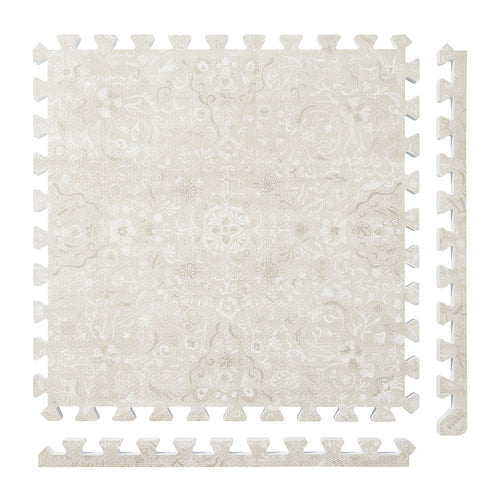
Persian Garden
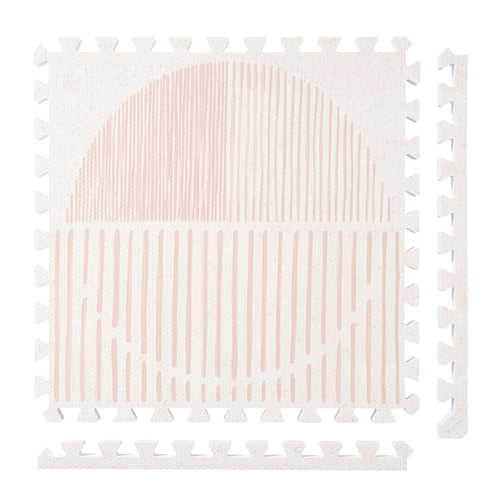
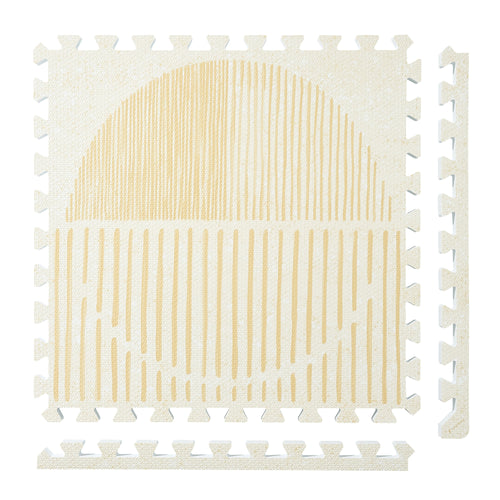
 Firework
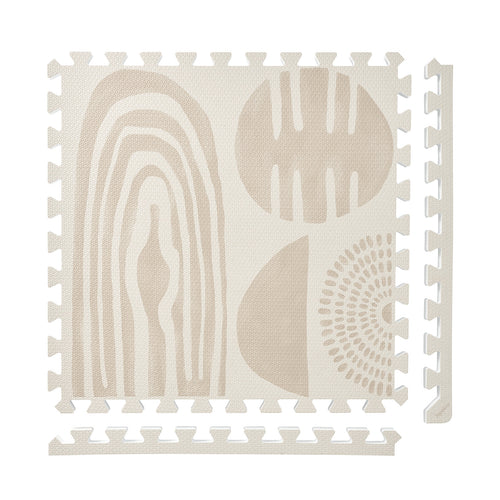
 Boho
Boho
 Little Builders
 Boulder
 Tranquil Flower
 Totem
Totem
Pet Feeding Mats - Cleanable Feeding Floor Zones
Quick answer: A feeding mat has one honest job: give the splash zone a surface you can wipe now and lift later — not to promise that spills never reach the floor. Size it to the real mess radius, not the bowl footprint, and build a lift-and-dry habit for the water bowl.
The feeding-zone checklist
| Question | What to check |
|---|---|
| How far does mess really travel? | Watch one full meal — kibble scatter and water drips usually beat the bowl footprint by a tile or two |
| What happens to standing water? | Seams can let it through — wipe promptly, and lift tiles to dry both sides after big spills |
| Do the bowls skid? | A floor mat is not a bowl-gripper — pair it with textured bowls or a feeder stand |
| Will you clean underneath? | Put an under-mat check in the routine; a feeding zone is the one spot moisture will find |
Station vs. room
This page is about the station itself — wherever it lives. If the whole kitchen floor is the problem (wet-paw traffic, tracked kibble, door swings), start with the kitchen mats guide instead, or the complete pet mat guide to route by job.
Where PopsyKosy stands
Modular 24-inch tiles let you size the zone to the actual splash radius and lift just the wet tile. Construction: 100% EVA foam core + 100% EVA film surface — no XPE, IXPE, or recycled PE, with and USP Class VI-tested EVA. 2-year warranty, 30-night risk-free trial, and single-tile replacement for the tile under the water bowl. No spill-proof promises — just a surface built for the wipe-lift-dry routine.
FAQ
What should I look for in a pet feeding mat?
Real splash radius, seam behavior with standing water, bowl skid, edge placement in walkways, and how easily you can lift tiles to clean underneath.
Can I cut it to size?
Plan with a modular layout first — tiles and border strips cover most footprints. Don't cut or alter pieces unless current product guidance allows it.
Multi-pet mats · Pet mats overview · Build Your Floor · Shop all designs