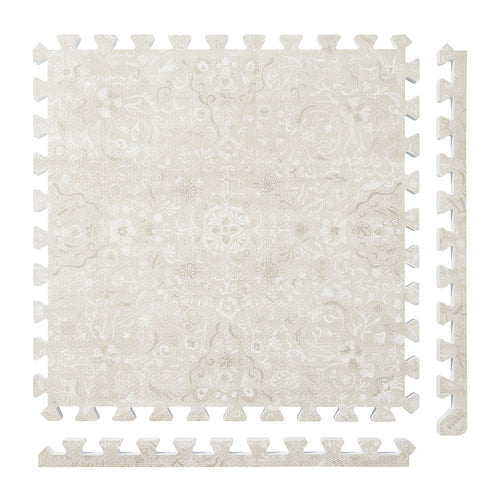
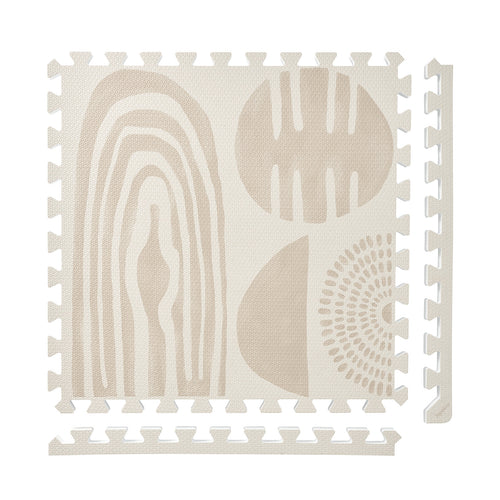
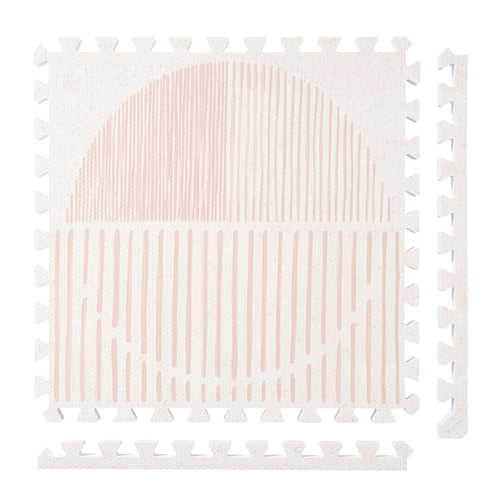
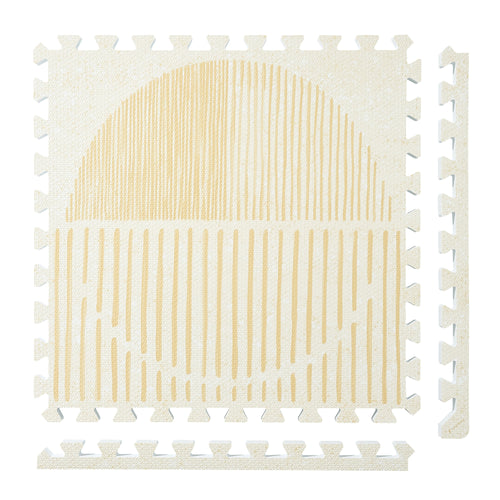
Persian Garden
 Firework
 Boho
Boho
 Little Builders
 Boulder
 Tranquil Flower
 Totem
Totem
Baby and Pet Shared Floor Mat: What to Check
Quick answer: A shared baby-and-pet floor is one surface doing two jobs, so judge it on both: cleanability and material documents for the baby side, claw-and-chew reality for the pet side. No floor mat should be treated as pet-proof or baby-proof — supervision and honest limits come first.
The shared-household checks
| Check | The honest version |
|---|---|
| Claws | No foam mat is scratch-proof. A denser wipe-clean surface resists everyday paw traffic; a determined digger will mark any foam — keep nails trimmed and redirect digging. |
| Chewing | If a corner gets chewed, remove and replace that piece — with tiles, that's one tile, not the whole floor. Discourage chewing as with any floor product. |
| Accidents | A non-absorbent surface wipes clean; act promptly so liquid doesn't sit at seams. Lift tiles to dry both sides after big accidents. |
| Fur | Smooth surfaces sweep and wipe clean between deep cleans — fur doesn't weave into a smooth film the way it does into carpet pile. |
Where PopsyKosy stands
A wipe-clean modular EVA floor used in plenty of pet-plus-baby households: 24-inch tiles, 0.5-inch and 1-inch options, single-tile replacement, 2-year warranty, 30-night risk-free trial. It is a floor surface — not a pet-training tool and not a substitute for supervising either species.
FAQ
Is one mat safe for both a baby and a dog?
Hold the mat to the baby standard (documents, cleanability) and manage the pet side (claws, chewing, accidents) with supervision and prompt cleaning — then one floor can serve both.
What if my pet damages a tile?
Inspect regularly, remove any damaged piece so loose material can't be mouthed, and replace the single tile.
Pet mats · Baby mats · Cleaning pet accidents · Certifications · Shop mats
Related planning: keep a separate inventory and reset log for each floor zone.