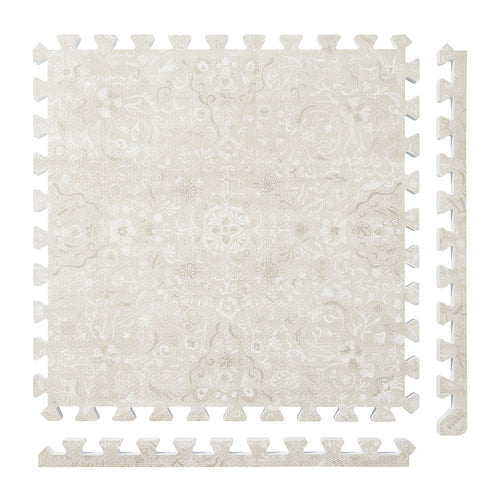
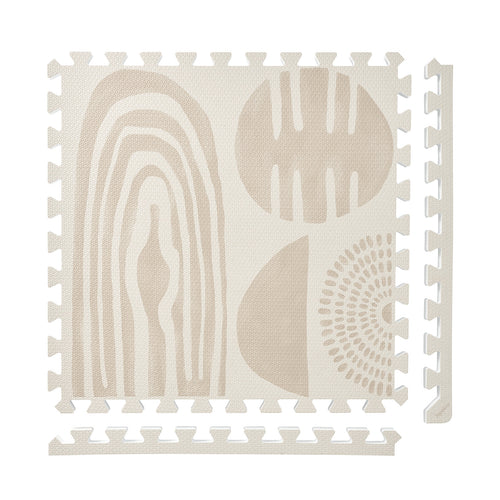
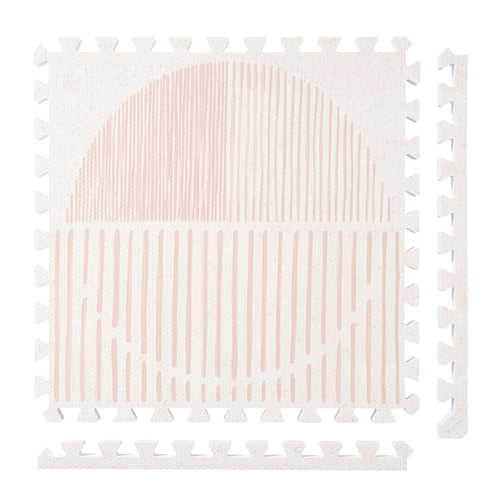
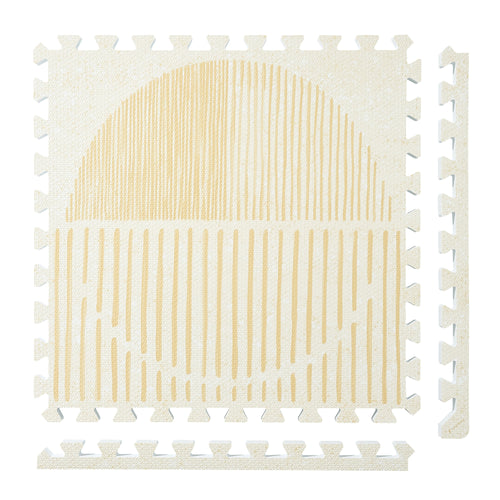
Persian Garden
 Firework
 Boho
Boho
 Little Builders
 Boulder
 Tranquil Flower
 Totem
Totem
A shared play mat for siblings of different ages
Start with what each sibling wants to do in the room, then decide which activities will share the floor and which will happen at different times. The useful planning question is how a shared zone will operate during an ordinary afternoon, including where each set of toys goes afterward.
Write a two-routine plan
Use this worksheet to describe the household routine before choosing dimensions. These are layout prompts, not age-based recommendations for play.
| Routine detail | Record for each sibling |
|---|---|
| Activity footprint | Sketch the space occupied by the activity and its materials. |
| Time in the room | Mark shared sessions and sessions that need the floor to themselves. |
| Toy destination | Name a separate bin or shelf for each set of materials. |
| Reset owner | Decide who clears the previous activity before the next one begins. |
Compare the two sketches. If both activities compete for the same patch of floor, changing the timetable may be more practical than increasing the mat area. Keep the route to each storage location outside the planned activity footprint.
Turn the routine into a tile sketch
PopsyKosy’s installation guide describes 24-by-24-inch interlocking tiles, connected row by row by hand without tools or adhesive.
- Draw the available rectangle after accounting for furniture and walking routes. Do not use the full room dimensions if only part of the floor is available.
- Place the two activity sketches inside that rectangle. Mark any overlap explicitly, rather than treating the whole area as available twice.
- Draw a 24-inch grid and count complete rows and columns. Record the remaining space separately; do not assume an extra row will fit.
- Before ordering, check the selected layout’s finished dimensions, including its perimeter, against the actual room.
For an illustrative 100-by-76-inch clear rectangle, four columns by three rows gives a nominal 96-by-72-inch tile grid: 12 tiles. This arithmetic is a planning example, not a recommended size for two children or a finished-border measurement.
The same guide describes expansion with compatible tiles of the same thickness. Check current product guidance for the tiles you own and plan to add.
Keep a copy of the sketch with the storage plan. If routines change, revise the activity overlap first; a larger grid alone does not resolve competing uses of the same space.
FAQ
Do siblings of different ages need one large mat?
There is no single layout answer. Sketch each activity, compare when the floor is used and choose a shared or scheduled arrangement that fits the room and the relevant product instructions.
What should I record before expanding the shared zone?
Record the new clear dimensions, which activity needs the extra area and the exact tiles already owned. Confirm compatibility and matching thickness against current installation guidance before adding tiles.
Related planning: schedule a separate home studio and family floor-time zone.