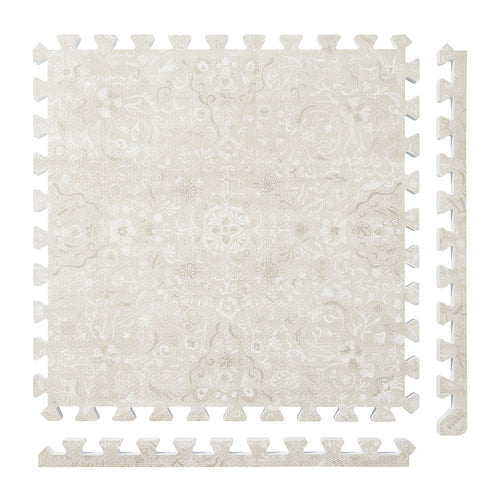
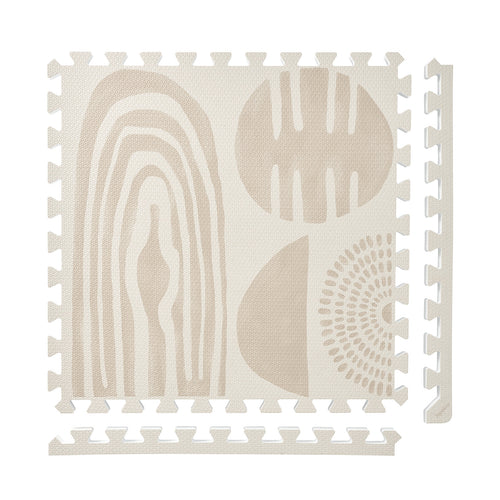
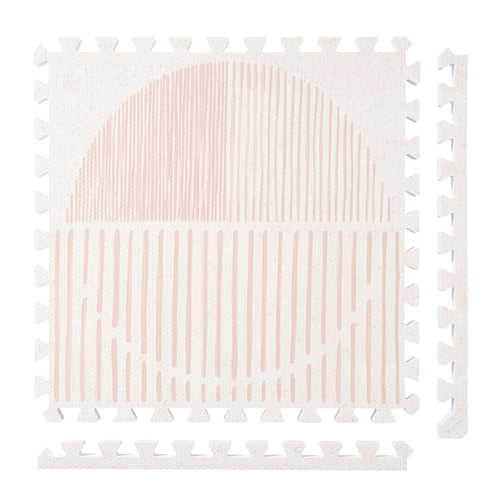
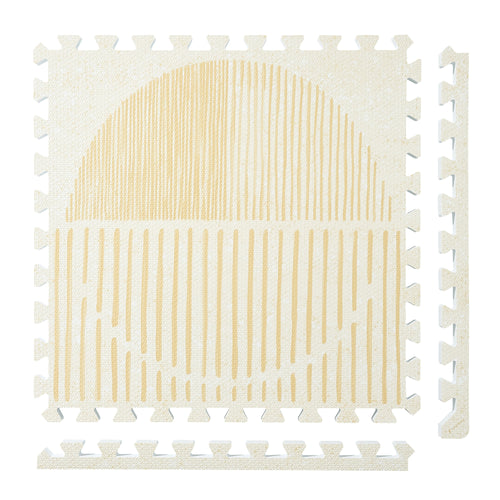
Persian Garden
 Firework
 Boho
Boho
 Little Builders
 Boulder
 Tranquil Flower
 Totem
Totem
Formamide in Baby Play Mats, Explained
Quick answer: Formamide is one reason families ask harder questions about EVA foam play mats. The safest way to shop is not to trust a simple free-from phrase, but to ask whether the brand publishes current material documentation for the actual mat you are buying.
Why formamide became a search concern
Some foam products have raised questions because of processing aids, odor, recycled material blends, or unclear sourcing. That does not mean every EVA mat has the same profile. Material quality depends on formulation, factory controls, and testing transparency.
How to read a formamide claim
Be careful with phrases like formamide-free or non-toxic when no report is shown. Better evidence includes the report date, tested material, lab name, detection limit, and whether the result applies to the product currently being sold. A brand should make those records easy to find.
PopsyKosy approach
PopsyKosy mats are 100% EVA foam core + 100% EVA film surface — no XPE, IXPE, or recycled PE, made in Taichung, Taiwan. Formamide is lab-tested with the report on file — documentation on request. Broader documentation includes, USP Class VI-tested EVA, CPSIA/CPC, ASTM F963, EN71, REACH, and Prop 65. Compare that document set with any other brand you are considering.
FAQ
Should I buy a mat just because it says formamide-free?
No. Treat the phrase as a starting point and ask for current material documentation that explains what was tested.
What should a parent ask for?
Ask for the tested material, report date, lab documentation, detection limit, origin, cleaning instructions, and whether the report matches the product currently sold.
Related: Formamide in puzzle mats · Certifications explained · Non-toxic play mat guide · Shop mats