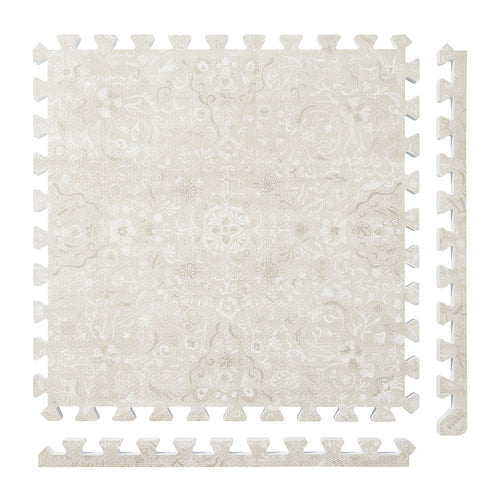
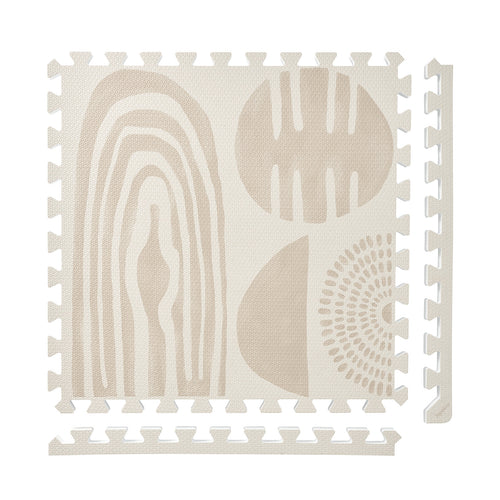
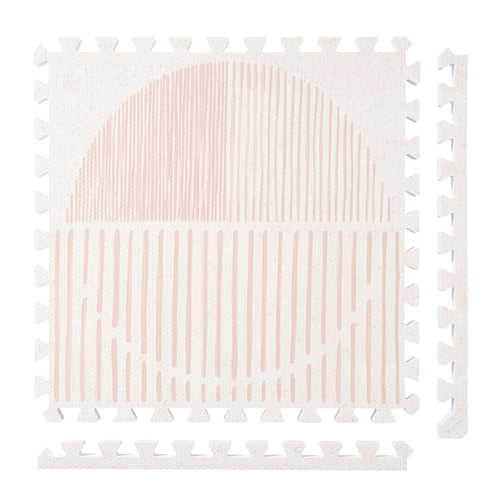
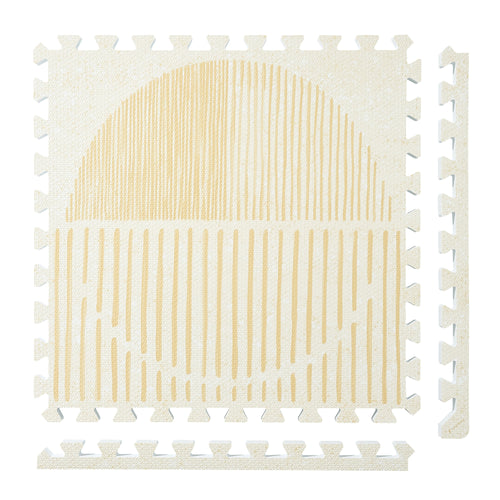
Persian Garden
 Firework
 Boho
Boho
 Little Builders
 Boulder
 Tranquil Flower
 Totem
Totem
Foam Play Mat Buyer's Guide
Quick answer: A strong foam play mat should make its material, origin, thickness, cleaning instructions, and current testing documentation easy to compare. Broad words like non-toxic are not enough by themselves.
What separates a good foam mat from a weak one
Foam itself is not the problem. The problem is undisclosed material, vague claims, thin construction, poor cleaning guidance, or a lack of current documentation. Ask for the polymer type, thickness, country of origin, warranty, and report details.
Thickness and room fit
Choose thickness by use case, floor type, room size, and storage needs. PopsyKosy offers 0.5-inch Signature and 1-inch Boulder EVA tiles for families who want a modular floor surface that can stay out in the room.
How to read non-toxic claims
Look for named standards, report dates, tested materials, lab details, and whether the result applies to the product currently sold. Avoid relying on badge language alone.
FAQ
Are foam play mats safe?
A foam mat should be judged by its exact material, construction, and current documentation. No generic foam category is automatically good or bad.
What thickness foam mat is best for a baby?
The best thickness depends on floor type, room use, supervision, and how much cushion feel you want. Compare actual thickness, not only product photos.
How do I know a mat is really non-toxic?
Ask for current material documentation, tested material, report date, and the standards behind the claim.
Explore: Baby guide · Non-toxic guide · Certifications · Shop all mats