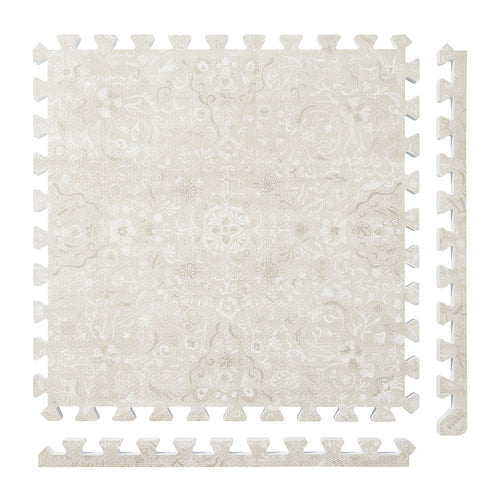
Persian Garden
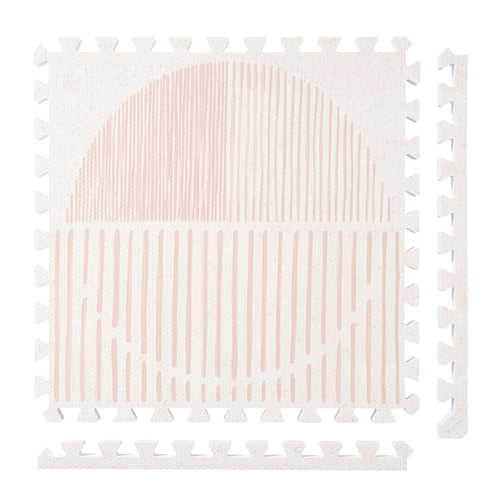
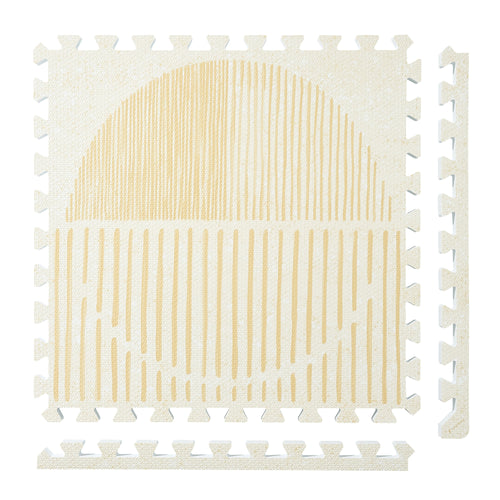
 Firework
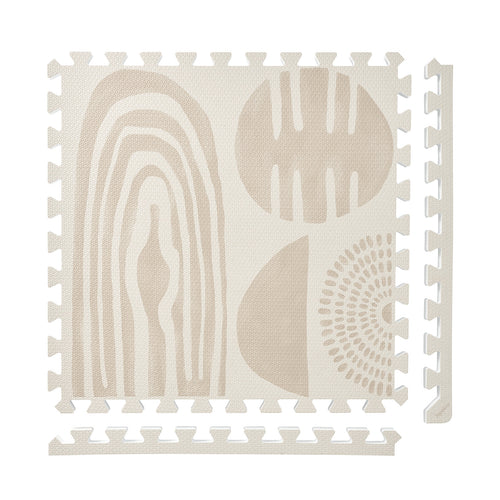
 Boho
Boho
 Little Builders
 Boulder
 Tranquil Flower
 Totem
Totem
Non-Toxic Crawling Mat for Babies: What to Compare
Quick answer: A crawling mat should be compared by material documentation, cushion feel, cleaning, thickness, room size, and supervision fit — “non-toxic” is a starting question, not an answer. Ask what documents back the phrase on any listing you're considering.
The crawling-stage checklist
| Crawling reality | What to verify |
|---|---|
| Hands and knees on the surface all day | Stated construction — PopsyKosy: 100% EVA foam core + 100% EVA film surface |
| Range grows weekly | Coverage that extends — 24" tiles beat a fixed footprint |
| Daily messes | Wipe-clean, non-absorbent surface |
| Falls from crawling height | Stated thickness (0.5"/1") — with supervision as the constant; no mat is a safety guarantee |
How to read “non-toxic”
The phrase is unregulated on its own. What makes it meaningful: named standards, a checkable institute, current dates, and scope covering the product. Any brand should welcome those four questions. PopsyKosy is made in Taichung, Taiwan, with 30-day risk-free return support and a 2-year warranty.
FAQ
What makes a crawling mat non-toxic?
Nothing about the phrase itself — look for named, current, product-scoped documentation instead of the label.
What thickness suits crawling?
Compare stated options against your floor: 0.5" for carpet or low profiles, 1" for hard floors — supervision on any surface.
What non-toxic actually means · Certifications · Build Your Floor · Shop mats