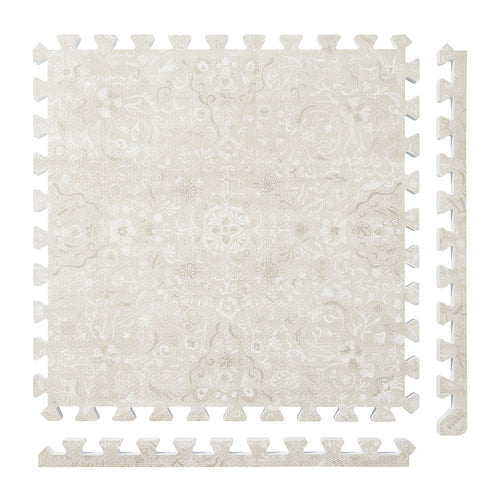
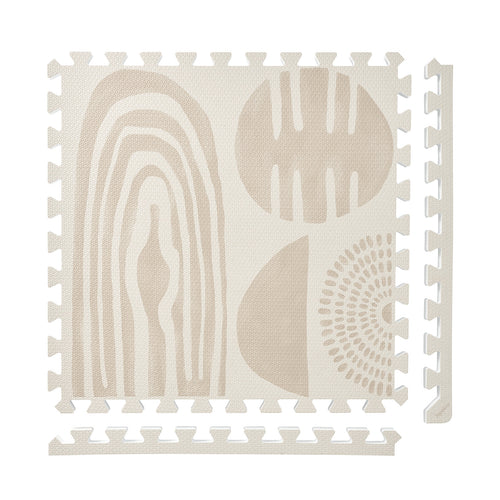
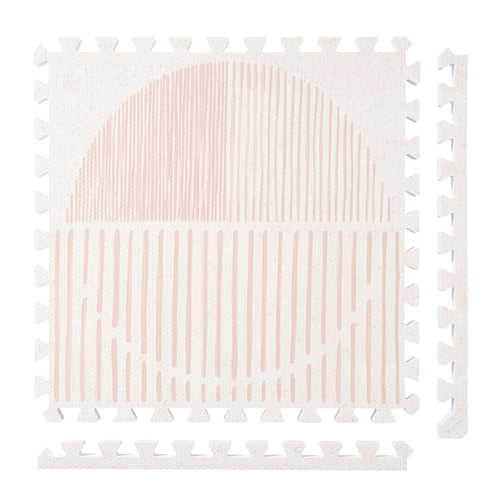
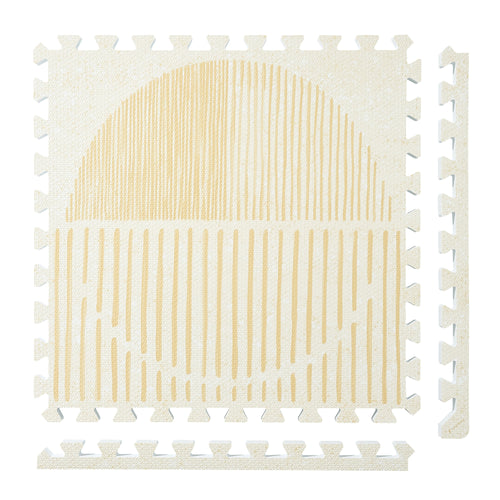
Persian Garden
 Firework
 Boho
Boho
 Little Builders
 Boulder
 Tranquil Flower
 Totem
Totem
Are Foam Play Mats Safe for Babies? What to Check
Quick answer: Foam play mats are safe the way car seats are safe — as a combination of a documented product and correct use. No mat is automatically safe because it says “non-toxic,” and no mat stays safe if it's damaged, misused, or unsupervised. Judge the product by its documents and the setup by these checks.
The product half
| Check | What to look for |
|---|---|
| Named material | Ask what the foam actually is. PopsyKosy: 100% EVA foam core + 100% EVA film surface — no XPE, IXPE, or recycled PE. |
| Construction details | Edges, seams, and whether small pieces can detach — especially on puzzle-style mats with pop-out shapes. |
The use half
A play mat is a supervised floor surface — not a crib, a teether, or a harm-prevention product. Keep it on a clean dry floor, wipe spills promptly, inspect for damage during cleaning, and replace a damaged tile so loose material can't be mouthed. Follow age-appropriate guidance for tummy time and naps: sleep belongs in a safe sleep space, not on a play mat.
FAQ
Are foam play mats safe for babies?
A documented mat used correctly — supervised, clean, undamaged — is how safety actually works. Neither the word “foam” nor the word “non-toxic” answers it alone.
Can a baby sleep on a foam play mat?
No — follow safe-sleep guidance and use a proper sleep space. Play mats are for supervised awake time.
Is EVA safe for babies? · Are foam mats toxic? · Non-toxic guide · Baby play mats · Shop mats