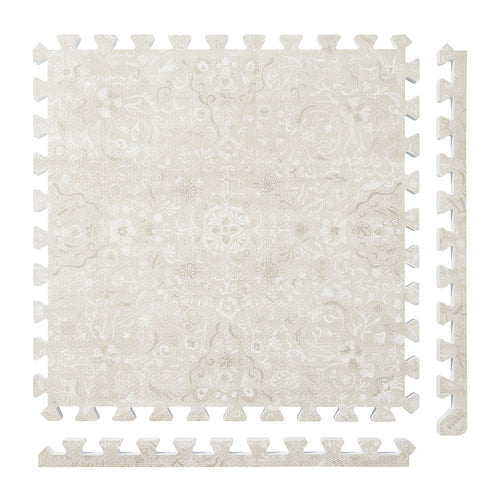
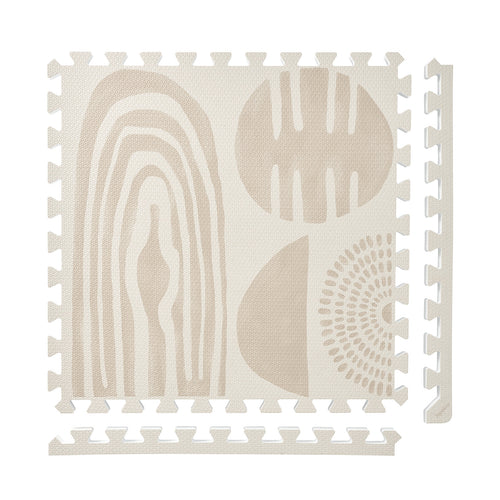
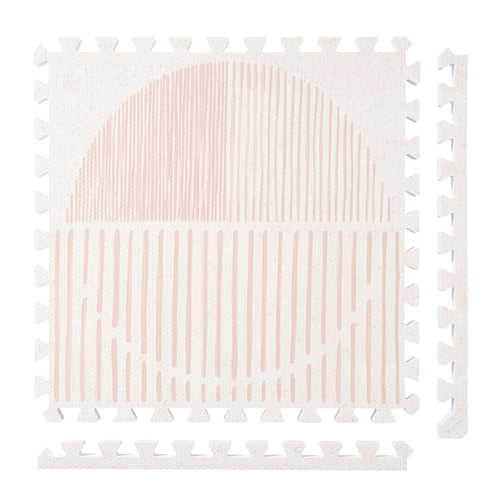
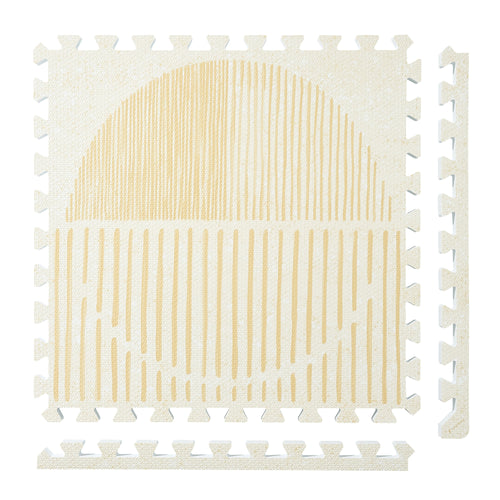
Persian Garden
 Firework
 Boho
Boho
 Little Builders
 Boulder
 Tranquil Flower
 Totem
Totem
What to Look For in a Play Mat
Short answer: look for a play mat that can answer seven questions before you buy: what it is made from, how thick it is, how it fits the room, how it feels under daily use, how it cleans, what claims are documented and what support exists after purchase. A good comparison does not stop at color or a single badge.
Use a seven-point buying model
| Checkpoint | What to verify |
|---|---|
| Material wording | Look for exact construction language, not vague safe-sounding labels. |
| Thickness | Decide whether the room needs plush cushion or a lower-profile surface. |
| Tile fit | Measure the active floor zone and check doors, vents, furniture and storage. |
| Surface feel | Think about crawling, sitting, kneeling, toy play and adult walk paths. |
| Cleaning | Choose care instructions you can repeat on an ordinary weekday. |
| Claim discipline | Prefer specific, current wording over broad promises that are hard to inspect. |
| Support | Review availability, returns, warranty and how easy it is to expand later. |
Where PopsyKosy stands
The old page had the right buyer frame: compare documentation, fit and daily-use details together. This rewrite makes the proof line explicit. PopsyKosy is Designed in LA with 100% EVA foam core + 100% EVA film surface. The page stays in the US and Canada English shopping context and avoids turning a checklist into unsupported certification shorthand.
Turn the checklist into a room plan
Start with the floor area the family actually uses, then choose color and thickness. For material and testing context, read Certifications and The PopsyKosy Standard. For fit, compare Build Your Floor and current options in Shop mats.
Frequently asked questions
What matters most when choosing a play mat?
Material wording, room fit, cushion preference, cleaning routine, claim discipline and post-purchase support matter more than color alone.
Should I trust broad play mat labels?
Use broad labels only as a starting point, then look for exact material wording, current documentation and a fit that matches your room.