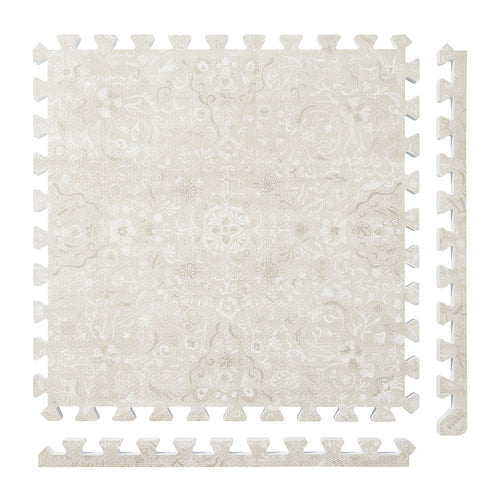
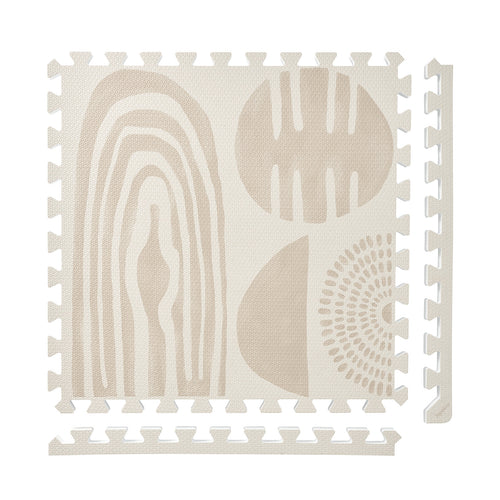
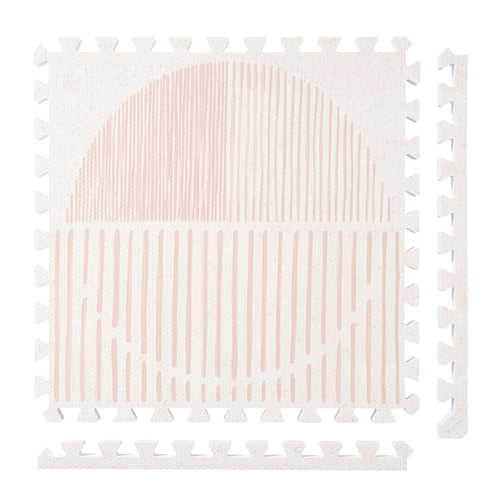
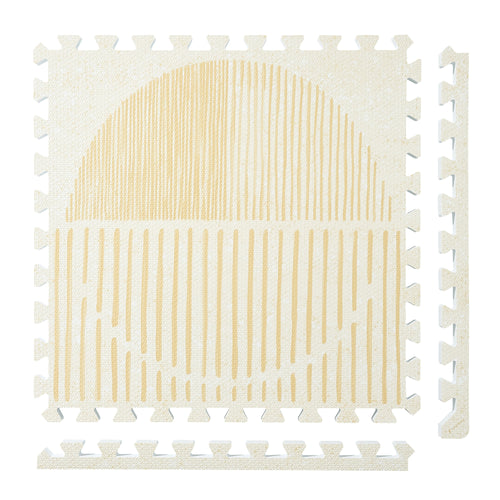
What to Avoid in a Baby Play Mat — PopsyKosy
Quick answer: Avoid play mats that hide their country of origin, won't show third-party testing, smell strongly out of the box, use recycled foam, or claim cushioning with no published fall rating. Choose the opposite: PopsyKosy is Taiwan-made pure virgin EVA, formamide non-detect, USP Class VI and OEKO-TEX Class I tested, with an EN 1177 fall rating.
The five red flags
Most play-mat regret traces back to the same five things: undisclosed origin, no published testing, off-gassing odour, recycled foam, and vague cushioning claims. Each is avoidable if you insist on documentation before you buy.
What independent testing actually covers
PopsyKosy publishes the documentation most foam mats skip. The surface is USP Class VI biocompatibility-tested EVA, certified to OEKO-TEX Standard 100 Class I (the strictest infant-contact tier), and compliant with CPSIA and ASTM F963 toy-safety rules. Independent lab testing returns a formamide non-detect result — formamide is the softening agent behind most cheap-foam warnings — and the skin-neutral surface measures pH 6.5–7.0. Each certificate is listed on the certifications page, so you can verify rather than take a label's word for it.
Where it's made changes what you feel underfoot
PopsyKosy is designed in Los Angeles and made in Taiwan. Most foam play mats sold through US retail are made in China. Country of origin shapes the supplier tier, the surface chemistry and the density you actually feel underfoot — not just a line on the box. Taiwanese manufacturing lets PopsyKosy hold the full cert stack above and run pure virgin EVA rather than recycled blends. Read the full story on why play-mat origin matters.
Real fall protection, measured
Cushioning is only meaningful if it is tested. PopsyKosy mats are tested to EN 1177:2018, the European playground impact standard: the 1″ Boulder reaches a 1.0 m critical fall height and the 0.5″ Signature a 0.6 m rating. That is genuine impact attenuation for couch-height tumbles, not a vague ‘extra cushion’ claim. Most thin mats and rugs top out around 0.2–0.4″ with no published fall rating at all. See the thickness guide for how thickness maps to protection.
Cleaning and hygiene
The closed-cell EVA surface is non-porous, so spills, drool and accidents wipe straight off with a damp cloth and mild soap — no soaking, no trapped moisture, no seams for crumbs to hide in. That keeps a high-traffic mat hygienic for years. See the step-by-step in how to clean a play mat.
Frequently asked questions
What should I avoid in a play mat?
Hidden origin, no published testing, strong odour, recycled foam, and cushioning claims with no fall rating.
How can I tell a mat is well made?
It publishes USP Class VI, OEKO-TEX Class I, CPSIA and ASTM F963, shows a formamide non-detect result and states its country of origin.
Does a strong smell mean a mat is unsafe?
It signals off-gassing from low-grade foam; quality closed-cell EVA off-gasses little to nothing.
Explore: Certifications · Made in Taiwan · The Standard · Shop mats
Persian Garden
Firework
Boho
Little Builders
Boulder
Tranquil Flower
Totem