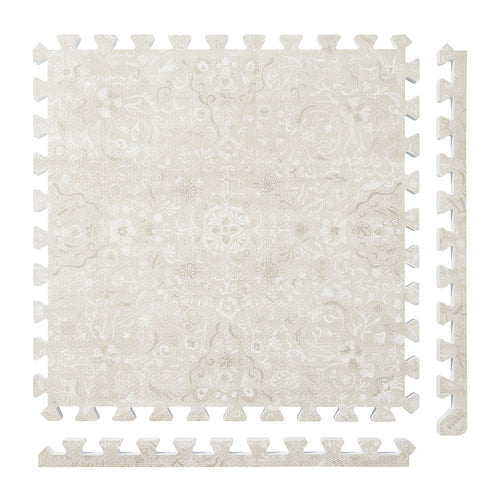
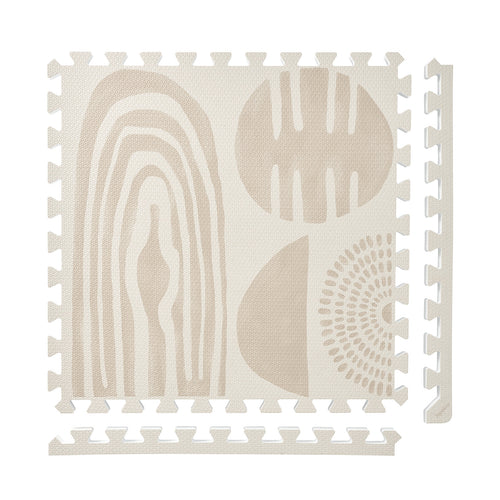
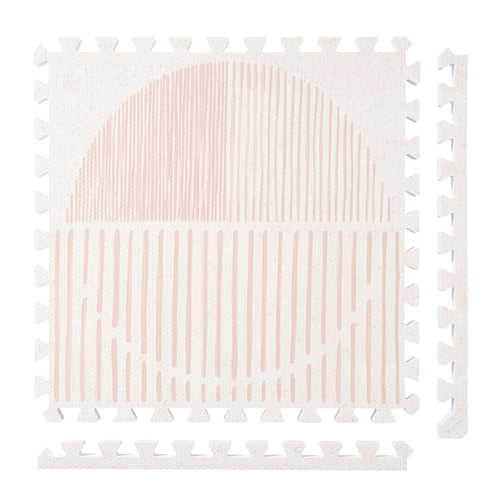
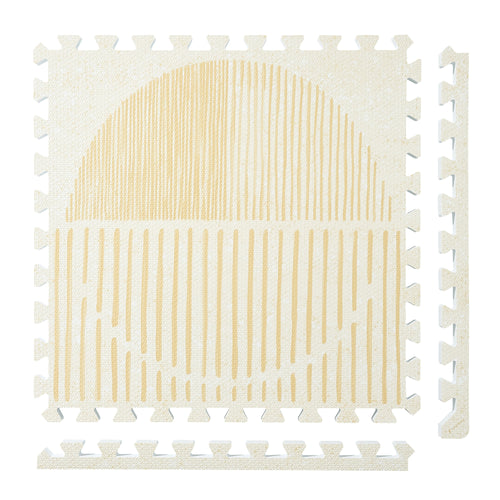
Persian Garden
 Firework
 Boho
Boho
 Little Builders
 Boulder
 Tranquil Flower
 Totem
Totem
Pet Kitchen Mat
Quick answer: Most pet kitchen mats live at an edge — the cabinet end, the corner by the pantry, the strip along the wall where the bowls sit. The job is fitting that awkward spot neatly: measured tiles beat one-size rugs, and no surface is spill-proof in a working kitchen.
The edge-spot checklist
| Edge-spot question | What to check |
|---|---|
| Does it fit the corner? | Modular tiles with border strips can square off an edge spot instead of forcing a rug size |
| Does traffic brush the edge? | Run the layout to a natural boundary — cabinet line, wall, doorway — so edges stay out of footpaths |
| What about bowl splash? | Wipe promptly; lift the wet tile and dry both sides after big spills |
| Claws and chewing? | Inspect during cleaning and replace a damaged tile — no foam mat is chew-proof |
Where PopsyKosy stands
Interlocking EVA tiles with detachable borders make a neat zone that fits the room. Construction: 100% EVA foam core + 100% EVA film surface — no XPE, IXPE, or recycled PE, with and USP Class VI-tested EVA. Not a chew-proof or waterproof containment product. 2-year warranty, 30-night risk-free trial, single-tile replacement.
FAQ
Where should a pet kitchen mat go?
Where the mess actually happens — usually the bowl corner plus a tile of splash radius, fitted to a natural boundary so edges stay out of walkways.
Is it waterproof?
The surface wipes clean, but seams can let standing liquid through — wipe promptly and lift tiles to dry. No honest mat promises containment.
Kitchen pet mats guide · Feeding mats guide · Complete pet mat guide · Shop mats