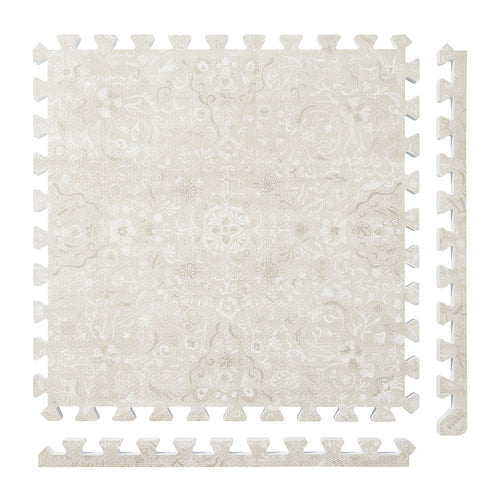
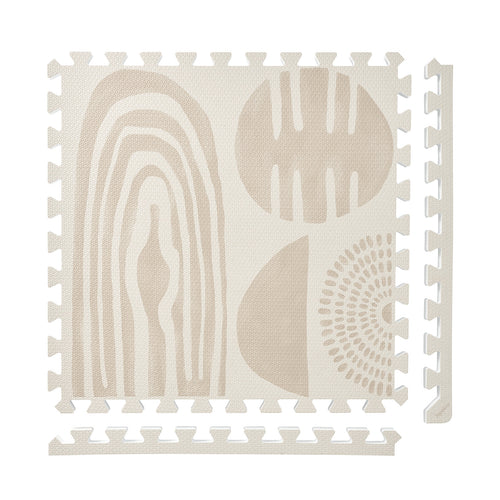
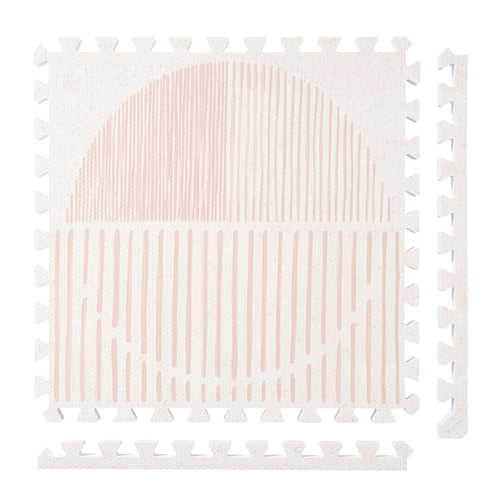
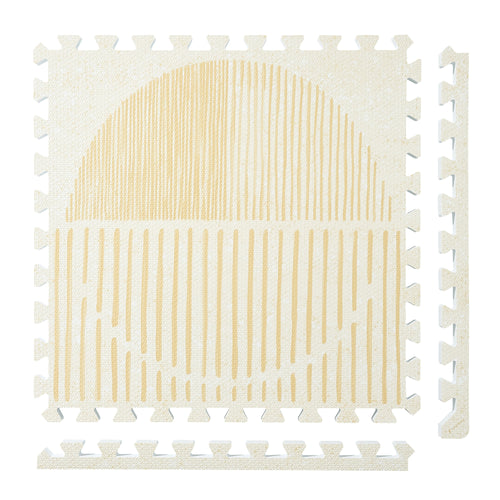
Persian Garden
 Firework
 Boho
Boho
 Little Builders
 Boulder
 Tranquil Flower
 Totem
Totem
Kitten Floor Mat: Home Guide
Quick answer: Kittens are a specific problem set: teething that chews corners, litter tracked on paws, tiny claws that climb everything, and zoomies at 3am. No soft floor mat is kitten-proof — what a good floor can do is wipe clean fast, survive normal traffic, and be replaceable one coordinated layout at a time when the teething phase wins a round.
The kitten-phase checks
| Kitten reality | What to do |
|---|---|
| Teething (2–6 months) | Corners and edges get test-bitten. Inspect regularly, remove a damaged piece so loose foam can't be swallowed, and give better chew targets — your vet can suggest teething-appropriate toys. |
| Litter tracking | Grains scatter near the box — a smooth surface sweeps and wipes clean; carpet holds them. |
| Accidents in training | Non-absorbent surface + prompt cleanup; lift a tile to dry underneath if a miss reaches the seam. |
| Claw wear | Everyday scampering is fine on a dense surface; deliberate scratching belongs on a post — place one near the mat, not on it. |
Where PopsyKosy fits
Calm home pet zones and shared family rooms: wipe-clean 24-inch EVA tiles — 100% EVA foam core + 100% EVA film surface, no XPE, IXPE, or recycled PE — with single-tile replacement for the round the kitten wins. It is not a chew-proof or scratch-proof pet product, and no honest mat is.
FAQ
Is a foam mat safe for a kitten?
Supervised and intact, yes for normal use — the risk to manage is chewed-off pieces, so inspect during the teething months and remove damaged tiles.
What about litter box areas?
A wipe-clean tile zone under and around the box makes tracked litter a thirty-second sweep instead of a vacuuming job.
Pet mats · Cat scratching guide · Certifications · Shop mats