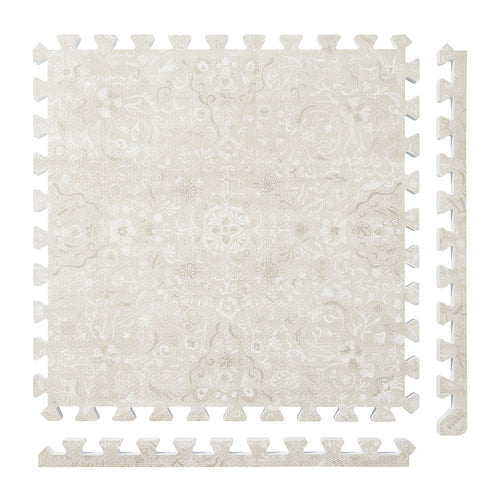
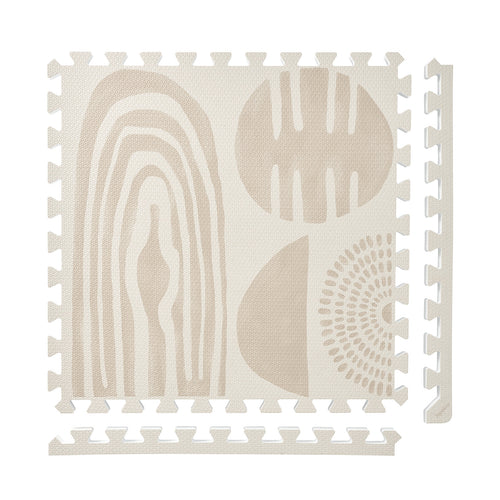
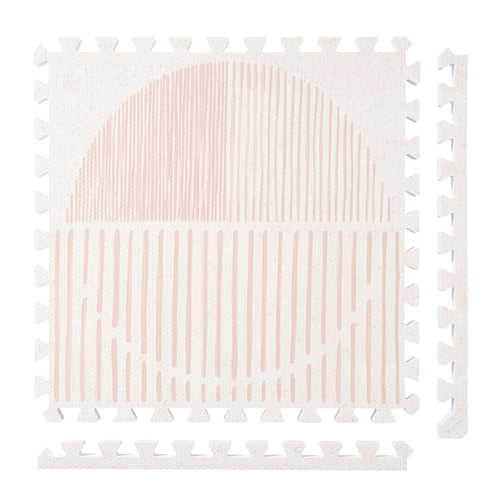
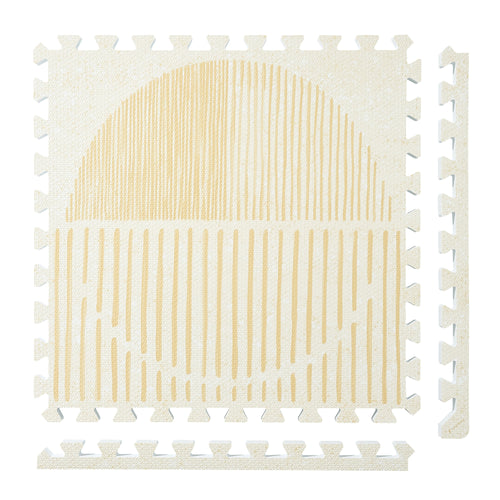
Persian Garden
 Firework
 Boho
Boho
 Little Builders
 Boulder
 Tranquil Flower
 Totem
Totem
Rubber Mat for Dogs: Material Comparison
Quick answer: Rubber and EVA solve different dog problems, and “non-toxic” applies to both the same way: disclosed material plus documents, not adjectives. Rubber earns its place in heavy-duty and outdoor zones; EVA earns its place in living areas. Here's the honest split — including rubber's odor question.
Rubber vs EVA for dog spaces
| Question | Rubber mat | EVA tiles (PopsyKosy) |
|---|---|---|
| Where it wins | Kennels, garages, outdoor runs, under heavy crates — dense and drainage-friendly | Living rooms and shared family zones — softer, warmer, design-led |
| The odor question | Recycled-crumb rubber can smell strongly — ask what the rubber is made of and air it out; persistent smell indoors is a return | Air out per instructions; disclosed all-EVA construction: 100% EVA foam core + 100% EVA film surface — no XPE, IXPE, or recycled PE |
| Claws and chewing | More resistant to abuse; still not chew-proof | Not chew-proof or scratch-proof — the recovery plan is single-tile replacement |
| Cleaning | Hose-down friendly outdoors | Wipe-clean indoors; lift tiles to dry after accidents |
Where PopsyKosy stands
We're the EVA side — for the rooms where the dog lives with the family, not the utility zones. If your need is a hose-down kennel floor, buy documented rubber with a clear conscience.
FAQ
Is rubber or EVA better for dogs?
Neither in the abstract: rubber for heavy-duty and outdoor zones, EVA for indoor comfort areas. Both should disclose material and show documents.
Why do some rubber mats smell so strong?
Recycled-crumb content is the usual reason — ask what the rubber is made from, air it out, and return it if the smell persists indoors.
Rubber vs EVA for pets · Pet mats · Certifications · Shop mats