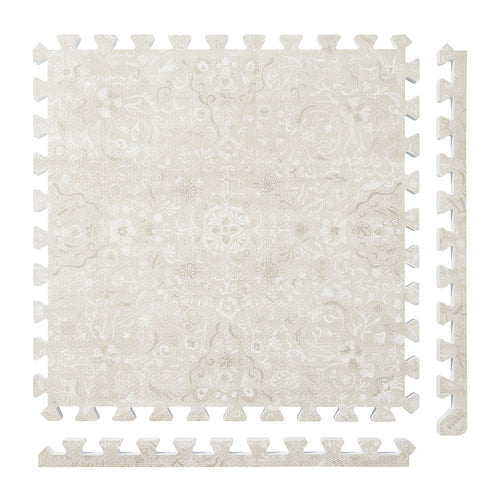
Persian Garden
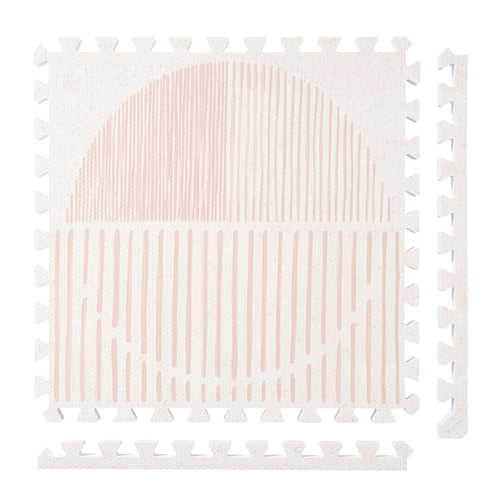
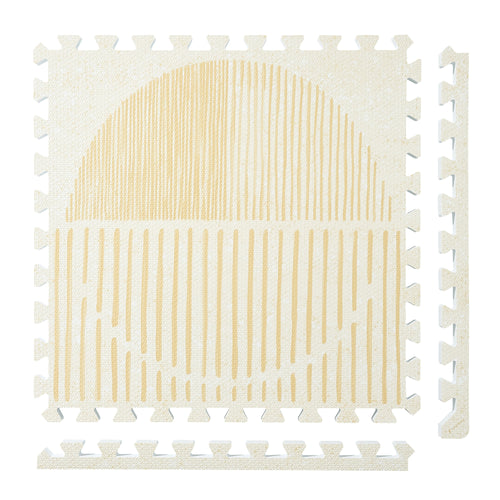
 Firework
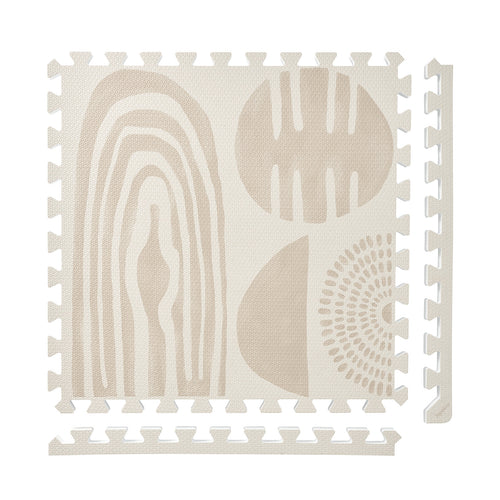
 Boho
Boho
 Little Builders
 Boulder
 Tranquil Flower
 Totem
Totem
Living-Room Play-Space Flooring
Quick answer: Living-room play-space flooring has to pass two tests at once: soft enough for floor play, and good-looking enough to stay out when guests arrive. The balance is cushion, cleanability, and a design that reads like part of the room — not equipment parked in it.
The shared-room checklist
| Question | What to check |
|---|---|
| Will it look intentional? | Calm, low-contrast colorways read like a rug; loud primaries read like a daycare |
| Where do the edges land? | Follow the room's natural lines — sofa edge, rug line, wall — and keep edges out of walkways |
| What about furniture? | Decide on-mat vs. off-mat before sizing — sustained heavy legs can dent foam |
| Will it stay put? | Start on a clean, dry floor and check placement regularly — no mat is a traction device |
Where PopsyKosy stands
Design-led colorways and modular 24-inch tiles are built for exactly this room — size the zone to the seating area or the full floor, and wipe it clean after snack time. Construction: 100% EVA foam core + 100% EVA film surface — no XPE, IXPE, or recycled PE, with and USP Class VI-tested EVA. 2-year warranty, 30-night risk-free trial, single-tile replacement.
FAQ
How do I make a living room safe for play?
No flooring makes a room “safe” — supervision does that. A cushioned, wipe-clean mat that suits the room's look makes the floor more comfortable and easier to live with.
Can the mat stay out all the time?
That's the point — choose a colorway that disappears into the room and a layout that reads intentional, and there's nothing to put away.
Color guide · Thickness by floor type · Baby play mats guide · Shop play mats