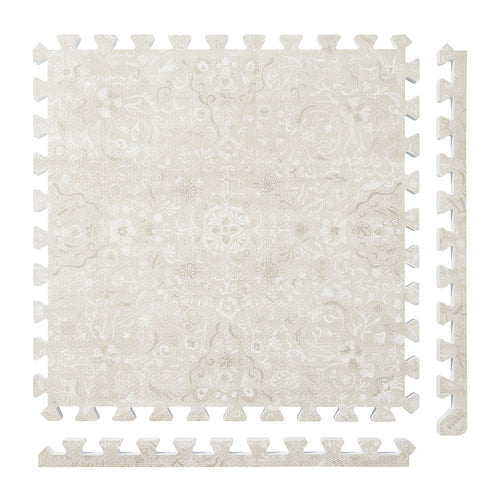
Persian Garden
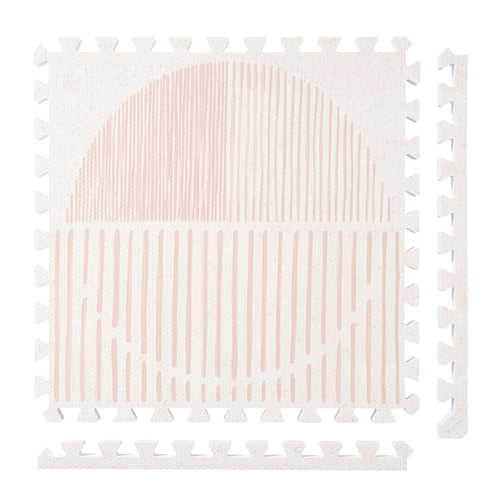
 Firework
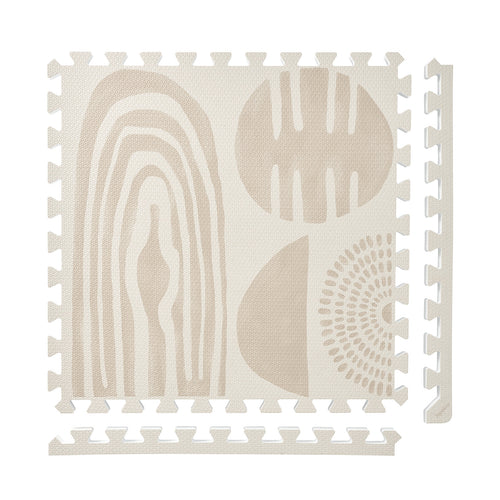
 Boho
Boho
 Little Builders
 Boulder
 Tranquil Flower
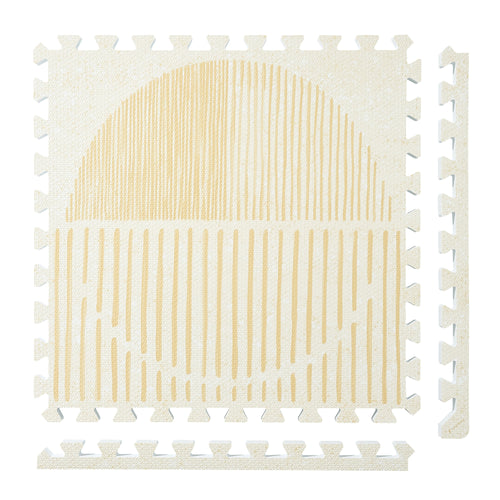
 Totem
Totem
Choosing Mat Thickness by Floor Type
Quick answer: Match mat thickness to your floor, room layout, and how the space will be used. Thicker options can feel more cushioned over hard floors like tile or concrete, while lower-profile options may feel steadier near furniture, doors, or carpeted rooms.
Thickness by floor type
| Your floor | The usual preference — and why |
|---|---|
| Concrete / tile | The hardest, coldest floors — where 1-inch cushion earns its keep for crawlers and floor-sitting adults. |
| Hardwood | Either works: 1-inch for maximum cushion in play zones, 0.5-inch where door swings and furniture edges matter. |
| Low-pile carpet | 0.5-inch usually sits steadier — the carpet already contributes give. |
| Plush carpet | The stability-first case: lower profile, interlocked into one bordered sheet, and test a section before covering the room. |
| Door swings & thresholds | Whatever the floor: check clearance before choosing thickness — a door that scrapes decides for you. |
Honest caveat
Thickness is a comfort spec, not a safety promise — more inches don't make a mat a safety device. Choose by feel, floor, and fit, and use the return window if the choice feels wrong in the room.
FAQ
What thickness should I choose for my floor?
Compare floor hardness, door clearance, room use, furniture, and whether you prefer a plusher or lower-profile feel.
Do I need a thick mat over carpet?
Not always. Carpet already changes the feel underfoot, so check height, stability, and room fit before choosing.
Explore further: Play mat thickness guide · Thick vs thin · Hardwood vs carpet rooms · Baby play mats