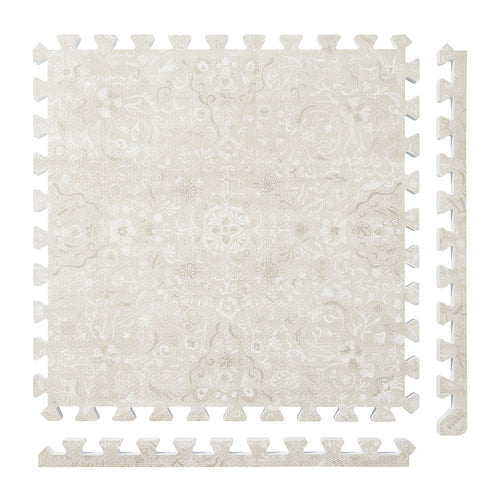
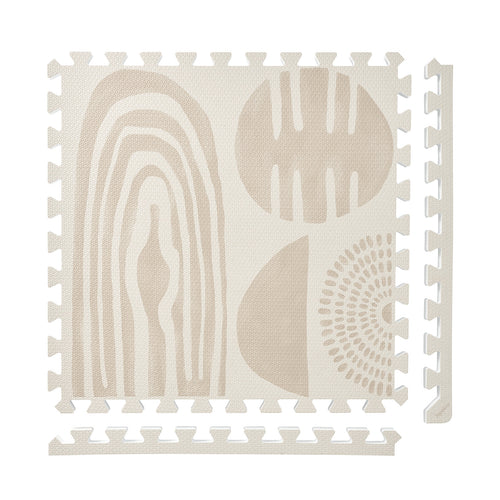
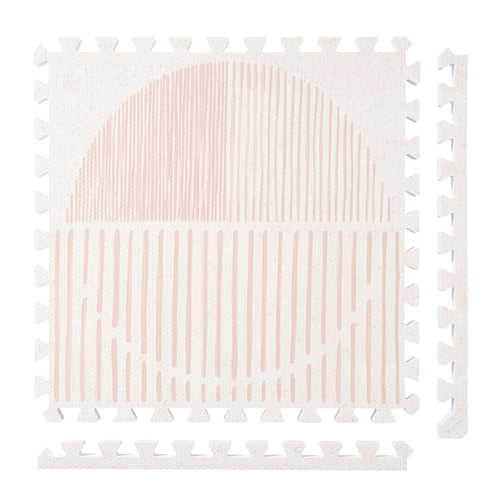
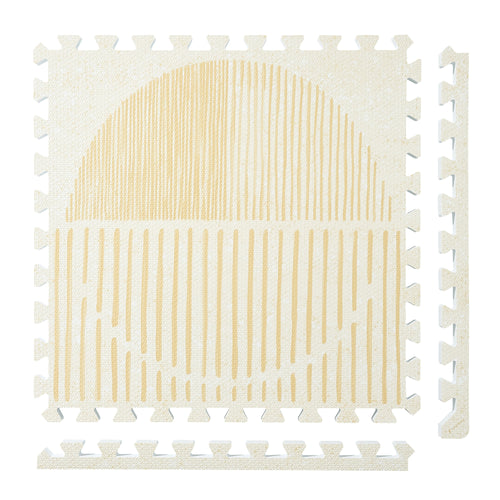
Persian Garden
 Firework
 Boho
Boho
 Little Builders
 Boulder
 Tranquil Flower
 Totem
Totem
Thick vs Thin Play Mat: Which to Choose
Quick answer: Choose a thicker 1-inch mat when you want a plusher household floor feel, and a 0.5-inch mat when you want a lower-profile, firmer surface with easier transitions. Neither is “safer” — thickness is a comfort and room-fit spec, not a safety promise.
The decision table
| 0.5" (Signature) | 1" (Boulder) | |
|---|---|---|
| Feel | Firm-cushioned, close to the floor | Plush — the depth is the point |
| Doors and transitions | Clears more doors; smoother edges | Check clearance; taller step-up |
| Best over | Carpet, low-clearance rooms | Hardwood, tile, concrete |
| Best for | Living rooms, subtle setups | Active toddlers, adults on the floor, cold slabs |
| Construction (both) | 100% EVA foam core + 100% EVA film surface · 24" interlocking tiles | |
How to choose in one minute
Name the floor underneath and the main user. Hard floor + baby or kneeling adults → thicker earns its height. Carpet or tight door clearances → lower profile wins. Still torn? The 30-day free return window means the tie is broken in your room, not on this page. Made in Taichung, Taiwan.
FAQ
Is a thicker play mat always better?
No — thickness trades plushness against door clearance, transitions, and room fit. Match it to the floor underneath and the main use.
Does thickness make a mat safe?
No mat is a safety guarantee. Thickness is a comfort spec; supervision is the constant.
Full thickness guide · Are 1-inch mats worth it? · Hardwood vs carpet rooms · Build Your Floor