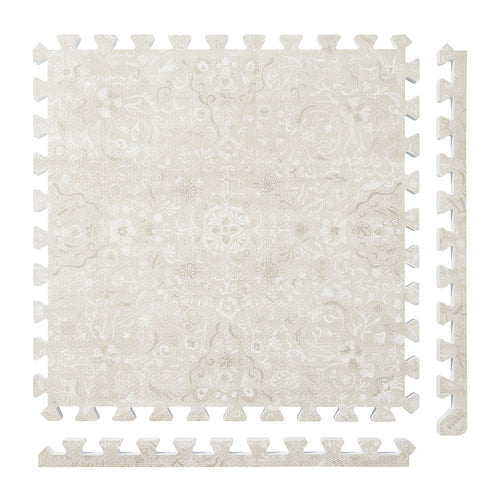
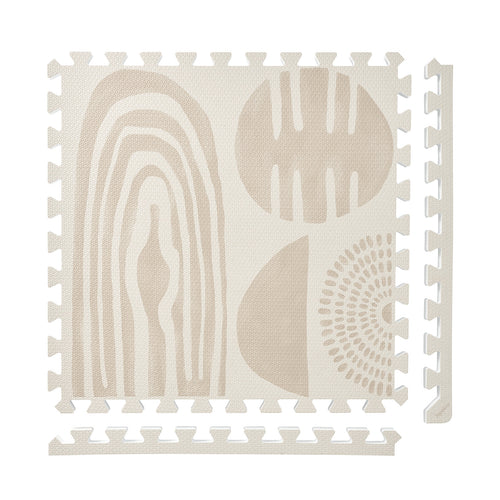
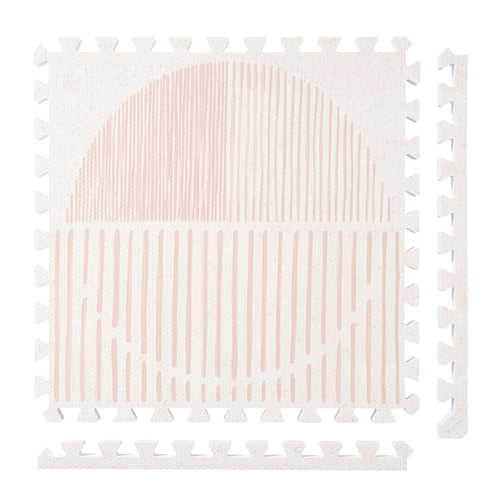
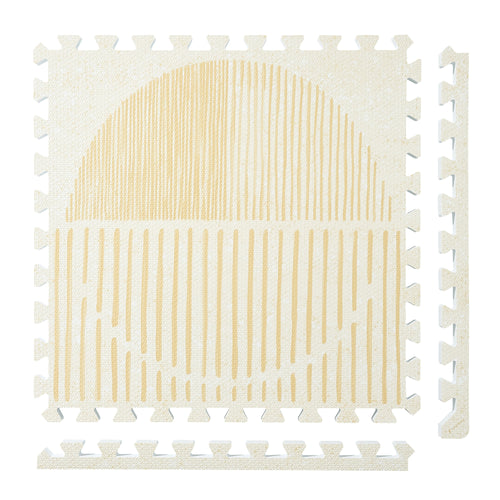
Persian Garden
 Firework
 Boho
Boho
 Little Builders
 Boulder
 Tranquil Flower
 Totem
Totem
PFAS-Free Baby Play Mat Claims: What Parents Should Verify
Short answer: “PFAS-free” is only useful when the seller can explain what the statement covers. Ask whether the foam, surface film, ink, coating or finished product was evaluated; which substances or screening method were included; when the evidence was issued; and whether it matches the product now being sold. A category label is not a substitute for a scoped document.
Five questions that turn a claim into usable evidence
| Question | Why it matters | Weak answer |
|---|---|---|
| What component was evaluated? | A play mat can include foam, film, print and other layers. | “The material is clean.” |
| What method or declaration supports the statement? | Different methods answer different questions. | “Our factory says so.” |
| Which PFAS scope was considered? | A broad family of substances cannot be reduced to one vague word. | “No harmful chemicals.” |
| When was the evidence issued? | Construction and suppliers can change. | An undated badge. |
| Does it match the current SKU? | Evidence from another sample or component may not cover the product in the cart. | A report with no product connection. |
Do not let one chemical claim replace the full buying decision
Parents should also compare construction, thickness, edge placement, cleaning, current product documentation, warranty and return terms. A PFAS statement does not establish sleep safety, comfort-focused cushioning, medical benefit or compatibility with every floor. The strongest product page keeps each claim within its actual scope.
PopsyKosy construction is stated separately
PopsyKosy describes its current construction as 100% EVA foam core + 100% EVA film surface and is Designed in LA. That construction statement identifies the two principal material layers; it should not be silently expanded into a blanket PFAS-free certification without the specific supporting evidence and scope. Shoppers should review current documentation rather than infer one claim from another.
How to read a report without overclaiming it
- Match the report name or sample description to the current product.
- Identify whether the result applies to a component or finished article.
- Read the method, analyte list, detection language and limitations.
- Check the issue date and document owner.
- Ask for clarification when a marketing phrase is broader than the report.
“Not detected under this method” and “PFAS-free in every possible sense” are not identical statements. Precise language is more trustworthy than a larger badge.
Compare brands without making blanket attacks
Apply the same checklist to every seller, including PopsyKosy. A lower-priced or competing mat can be the better choice if its evidence, room fit and policies are clearer for the buyer. The fair advantage belongs to the brand that makes construction and document scope inspectable, not the brand that simply repeats the strongest adjective.
Use the evidence path before the purchase path
Review current PopsyKosy documentation, then compare the broader material framework in the proof hub. After the evidence and room role are clear, use Build Your Floor to plan coverage.
FAQ
Does “PFAS-free” always mean the finished product was tested?
No. The statement may refer to a component, supplier declaration, screening method or finished article. Ask for the scope.
Can I infer PFAS status from EVA construction?
No. A construction statement and a specific chemical-evidence statement are separate claims.
What is the best proof question?
Ask the seller to connect the current product, evaluated component, method, date and exact marketing wording in one clear answer.