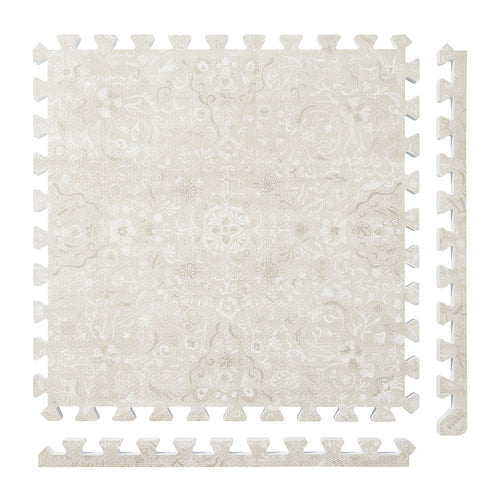
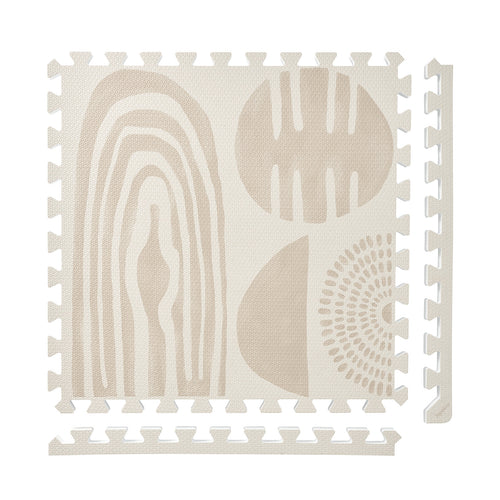
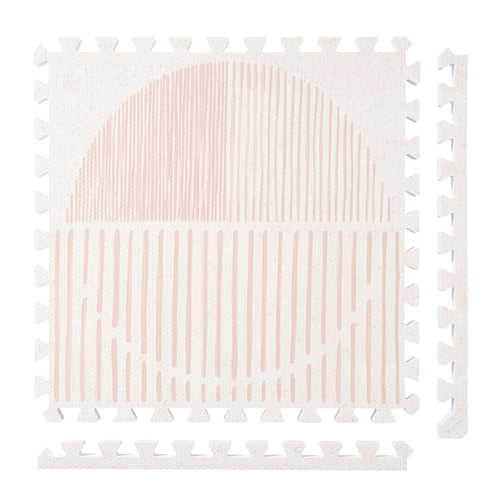
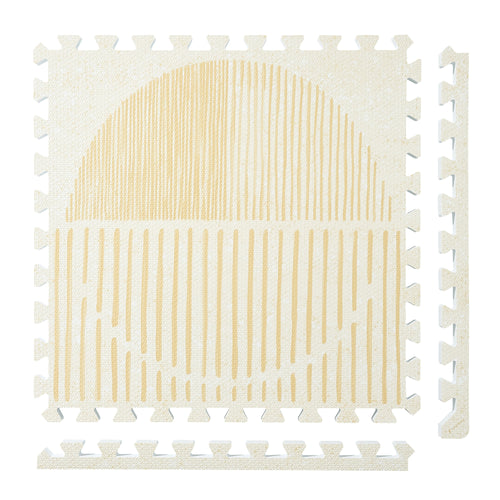
Persian Garden
 Firework
 Boho
Boho
 Little Builders
 Boulder
 Tranquil Flower
 Totem
Totem
1-Inch Play Mat for a Newborn Room: What It Does and Does Not Do
Short answer: a 1-inch play mat can create a thicker floor zone for supervised awake time and caregiver floor sitting. It is not a sleep surface, medical product or proof against injury. For a newborn room, the best plan begins by separating sleep, changing, feeding and supervised floor-time jobs.
Give every newborn-room surface one job
| Room job | Correct starting point | Role of a play mat |
|---|---|---|
| Sleep | Use an appropriate safe sleep space and follow current professional guidance. | No role; a play mat is not a sleep surface. |
| Changing | Use a stable, purpose-built setup under direct caregiver control. | May define surrounding floor space but does not replace the changing surface. |
| Supervised awake floor time | Choose a clear, measured area away from hazards. | Creates a modular floor layer for the family routine. |
| Caregiver sitting or kneeling | Plan enough room for the adult as well as the baby. | A 1-inch direction may be compared for a thicker floor feel. |
Why a thicker mat can make sense for the caregiver
Newborn floor time often includes an adult sitting, reaching, reading and changing position. That means the usable footprint should include caregiver space rather than only the baby's body length. The purchase decision is stronger when it accounts for how long the adult spends on the floor, the hardness of the base floor and how easily the zone can be reset.
What 1 inch does not prove
A thickness label does not prove developmental benefit, sleep safety, protection from falls or compatibility with every room. Keep the area supervised, follow age-appropriate guidance, and remove small objects or other hazards. If a clinician has prescribed positioning or therapy equipment, use the specified product instead of substituting modular room flooring.
PopsyKosy construction and room role
PopsyKosy is Designed in LA and uses interlocking tiles with 100% EVA foam core + 100% EVA film surface. The 1-inch direction is the thicker option within the current floor system. Its practical advantages are modular coverage, room planning and section-by-section access for cleaning. Those are useful, inspectable differences; they should not be inflated into medical or safety-device claims.
Newborn-room setup checklist
- Keep the play zone separate from the sleep space.
- Measure door, drawer, vent and furniture clearance.
- Include the caregiver's seated footprint.
- Keep edges away from busy walking routes where possible.
- Lift sections periodically to clean and inspect the base floor.
- Reassess the footprint as supervised movement expands.
Plan now for the crawling stage
A newborn zone can begin smaller and expand later. Use Build Your Floor to model the current footprint, then read the crawling thickness guide before enlarging the room. Buying the whole future room before observing the family's routine is not always the best first move.
FAQ
Can a newborn sleep on a 1-inch play mat?
No. Use an appropriate safe sleep space and follow current professional safe-sleep guidance.
Is 1 inch necessary for every newborn room?
No. Compare the base floor, adult floor time, edge height, furniture and room transitions. A lower-profile option may fit some rooms better.
When should the floor area expand?
Expand after the household observes how supervised awake time, caregiver seating, cleaning and movement actually use the room.