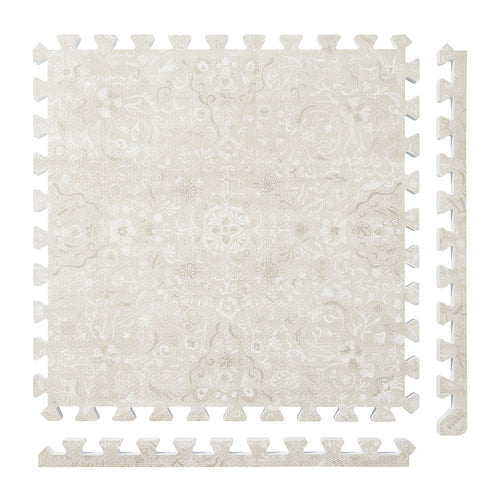
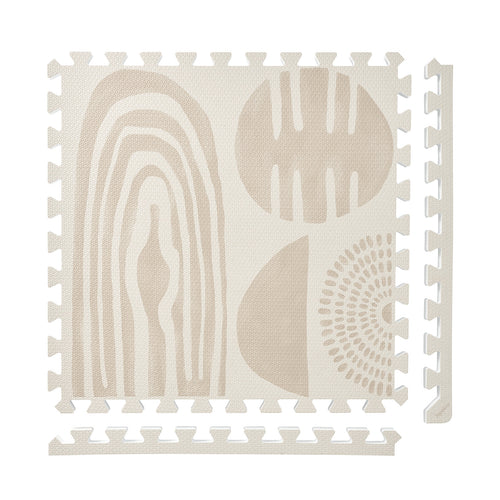
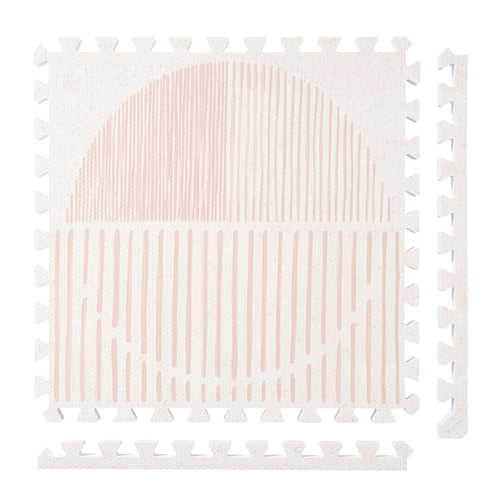
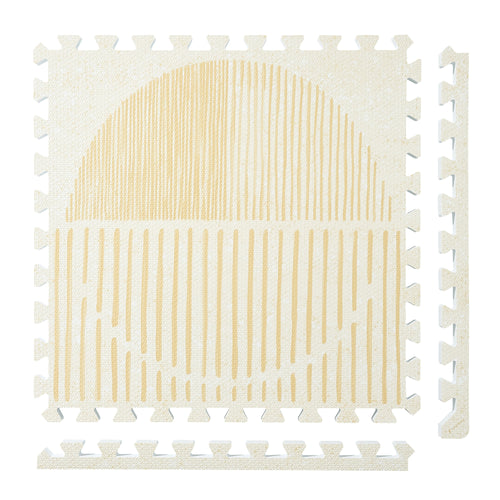
Persian Garden
 Firework
 Boho
Boho
 Little Builders
 Boulder
 Tranquil Flower
 Totem
Totem
Play Mat Thickness for Crawling Babies: 0.5 vs 1 Inch
Short answer: for crawling-stage floor time, thickness should be chosen by the room, not by a universal baby-age rule. A 1-inch play mat direction makes more sense when the base floor is hard, adults spend real time sitting or kneeling nearby, and the raised edge can be managed. A 0.5-inch direction can be the cleaner choice when door clearance, furniture transitions, rolling toys, or a lower floor profile matter more. Neither thickness should be presented as a harm-reduction guarantee or a developmental promise.
The real buyer question
The question is not simply whether a baby needs a thicker mat. The better question is: which floor profile fits this specific crawling area after you account for the base floor, edges, furniture, cleaning routine, and adult use? That framing protects the buyer from two common mistakes: buying the thickest option without measuring the room, or buying the thinnest option because it looks easier online.
0.5-inch vs 1-inch decision matrix
| Room variable | 0.5-inch direction | 1-inch direction |
|---|---|---|
| Base floor | Works well when the room already has some forgiveness or the mat must sit near doorways. | Better candidate for hard floors where the household wants a more cushioned underfoot feel. |
| Adult floor time | Useful for short supervised play windows and fast room resets. | Useful when parents or caregivers often sit, kneel, read, or play on the floor too. |
| Edges and clearance | Lower profile helps around doors, toy bins, and furniture legs. | Requires more attention to transitions, perimeter placement, and furniture layout. |
| Expansion plan | Good for a lighter footprint that may move between rooms. | Good when the zone is likely to become a stable nursery or family-room floor area. |
Measure the crawling zone before picking thickness
Start with the square where the child actually spends time, not the entire room. Mark the longest reach path, the adult sitting spot, the toy reset area, and any furniture that cannot move. PopsyKosy uses interlocking tiles, so a useful footprint can be planned as rows rather than guessed from a product photo. When the measured area is irregular, the Build Your Floor path is the right place to plan coverage.
When thicker helps the room feel better
A thicker floor direction can improve the way a hard room feels during everyday supervised play. It may also make adult floor time more comfortable because the caregiver is part of the real use case. That is a comfort and room-planning statement. It is not a promise about falls, medical outcomes, or safety performance. If a household needs an activity mat, crash pad, therapy surface, or certified impact surface, that need should be handled by a purpose-built product.
When lower profile is the smarter call
The lower-profile direction deserves serious consideration in rooms with tight door swing, frequent furniture movement, rolling storage, or a visual preference for a slimmer floor layer. Some families also prefer starting with a smaller low-profile footprint while they learn how the child uses the space. The best choice is the one that makes the room easier to maintain after a week of real use, not the one that sounds most impressive in isolation.
Proof boundaries for this page
PopsyKosy should be described as an interlocking EVA tile system, Designed in LA, with a construction line of 100% EVA foam core + 100% EVA film surface. This page can discuss thickness choice, modular coverage, wipe-clean care, and room planning. It should not claim that a thickness changes injury outcomes, replaces supervision, creates an acoustic treatment, or outranks every alternative. For material documentation, use the current proof hub and verify the scope of each record.
Room checklist before ordering
- Measure the active crawling area and the adult sitting area separately.
- Check every door, closet, vent, and furniture leg near the planned edge.
- Decide whether the mat will stay in place or move between rooms.
- Plan how often the household will lift tiles to clean the base floor.
- Confirm whether pets, older siblings, or rolling toys cross the same perimeter.
- Choose the thickness direction only after the footprint is realistic.
How this page connects to other thickness questions
This page owns the crawling-stage thickness decision. If the buyer is asking what the thickest option means, continue to the thickness-claim verification guide. If the buyer is still comparing materials, the EVA vs PE vs XPE guide is a better next step. If the room is already measured, move to current products rather than reading another generic article.
FAQ
Is 1 inch always better for crawling babies?
No. One inch can be a good direction for a harder room or more adult floor time, but it also raises the edge profile. The room layout decides whether that tradeoff makes sense.
Is 0.5 inch too thin?
Not automatically. A lower-profile mat can be the better fit when clearance, furniture transitions, and easy room reset are more important than maximum cushion feel.
Should I buy by age label?
Use age as context, not as the deciding rule. Base floor, clearance, adult use, and cleaning access are more useful variables.
Where should I go after choosing a thickness direction?
Measure the footprint, check current color and thickness availability, then use Build Your Floor or the play mat collection.