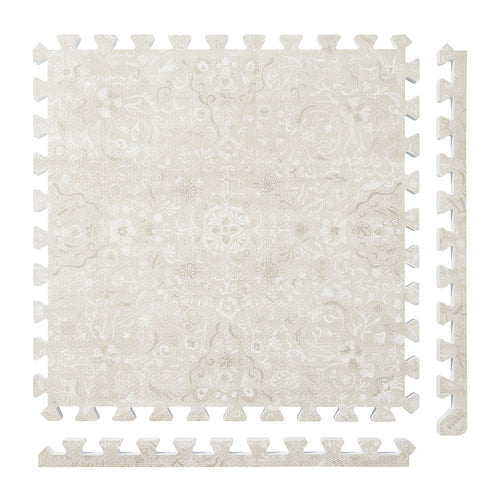
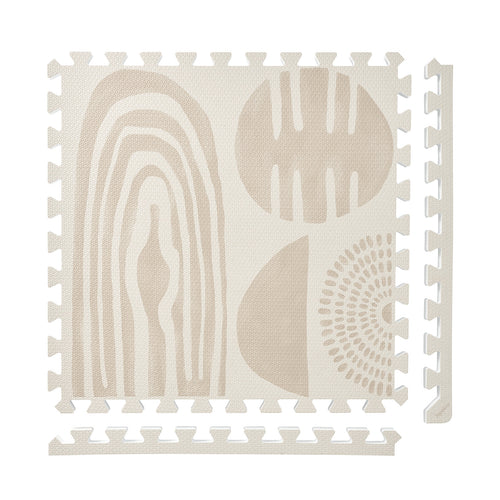
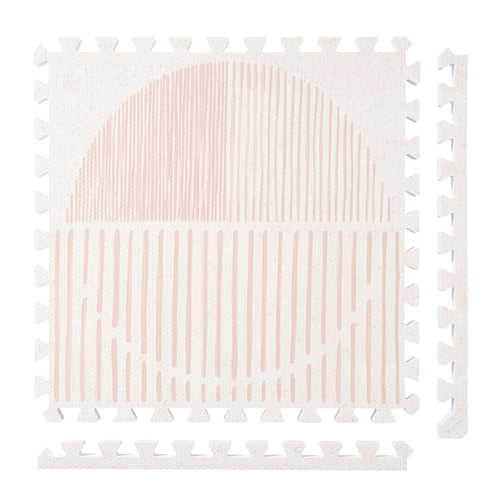
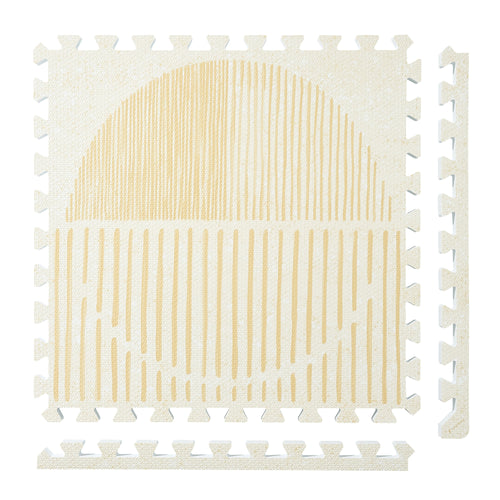
Persian Garden
 Firework
 Boho
Boho
 Little Builders
 Boulder
 Tranquil Flower
 Totem
Totem
Play Mat Cushioning Guide: Choose by Room and Routine
Short answer: cushioning should be chosen by the room, not by the biggest thickness number. A 0.5-inch mat keeps a lower edge and can work better near doors or frequently changing furniture. A 1-inch mat creates a thicker floor feel for a stable play zone where adults also sit or kneel. Neither thickness should be sold as comfort-focused cushioning.
Use this five-part decision test
| Question | 0.5-inch direction | 1-inch direction |
|---|---|---|
| How hard is the base floor? | Useful when a lower profile is the first priority. | Consider when the family prefers a thicker feel over hard flooring. |
| Who uses the floor? | Fits short play sessions and rooms that reset often. | Worth comparing when caregivers spend longer periods sitting or kneeling. |
| Where are the edges? | Creates a smaller transition near walking paths. | Works best where the footprint can stay clear of busy traffic. |
| Does furniture cross the mat? | Easier to plan around frequently moved pieces. | Better suited to a dedicated zone with stable placement. |
| How is the room cleaned? | Lighter sections may be simpler to lift during frequent resets. | Still requires periodic lifting, inspection and base-floor cleaning. |
Cushioning is a feel, not a universal safety score
Thickness can change how a floor layer feels under hands, knees and seated adults, but it does not establish protection from falls, medical benefit, acoustic performance or compatibility with every flooring finish. Those outcomes require their own evidence and, in some cases, purpose-built products. For baby use, supervision and an age-appropriate environment remain separate from the mat choice.
Density and construction matter alongside thickness
Two mats with the same stated thickness can feel different because construction, density, surface layer and tile connection differ. PopsyKosy is a modular interlocking system with 100% EVA foam core + 100% EVA film surface and is Designed in LA. Compare the current product specification, sample feel and room fit rather than assuming that thickness alone predicts every performance characteristic.
Measure the perimeter before choosing
- Mark the smallest useful play footprint.
- Open nearby doors, drawers and closet panels.
- Map furniture legs, rolling storage and pet routes.
- Decide where adults will sit.
- Plan how sections will be lifted for cleaning.
A thicker mat in the wrong location is a poor room plan. A measured mat that the household can clean and use repeatedly is the stronger purchase.
Turn the choice into a floor plan
Once the thickness direction is clear, use Build Your Floor to translate the measured footprint into tile rows. For crawling-stage specifics, continue to the crawling thickness guide. Keep exposed edges visible and follow the base-floor maker's care instructions.
FAQ
Is a 1-inch play mat always more cushioned?
It provides a thicker floor layer, but perceived feel also depends on construction, density, base floor and how the room is used.
Does thicker mean safer?
No blanket safety conclusion follows from thickness alone. Do not treat a consumer play mat as a certified protective surface or a substitute for supervision.
Which option is easier near doors?
The lower-profile 0.5-inch direction is usually the first one to measure where door swing and edge transitions are tight.