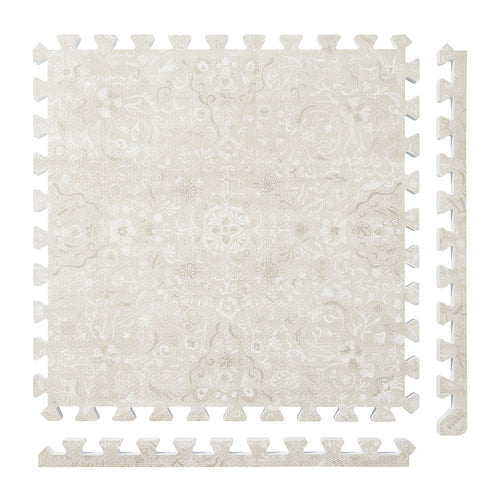
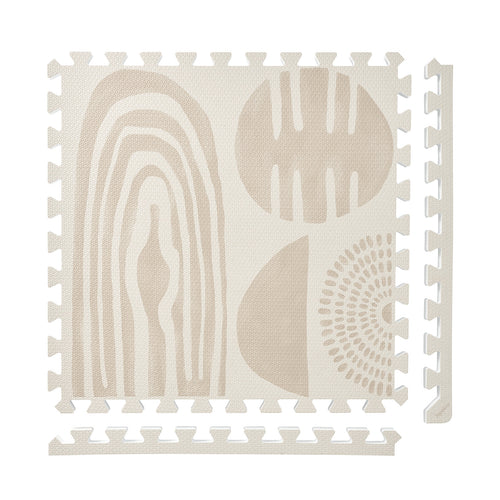
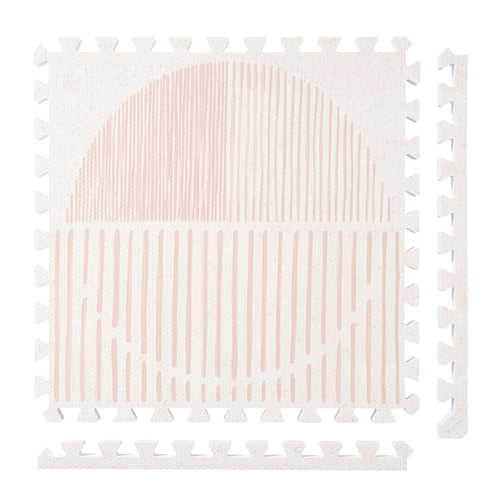
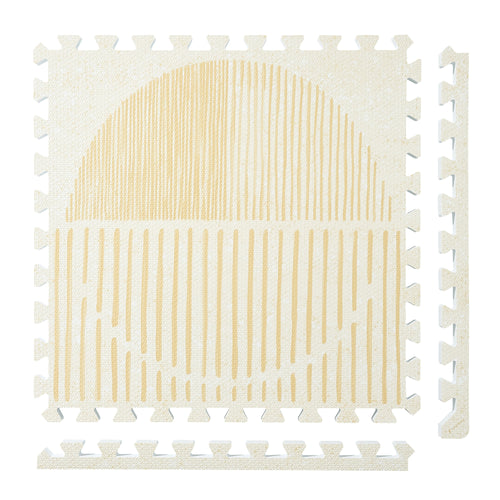
Persian Garden
 Firework
 Boho
Boho
 Little Builders
 Boulder
 Tranquil Flower
 Totem
Totem
Is House of Noa Worth It? What to Compare
Quick answer: “Worth it” isn't a yes/no — it's five checks against your room and your budget. We sell a competing mat, so we won't answer for House of Noa; here's the worksheet we'd use ourselves, with honest notes on where our product differs.
The worth-it test
| Check | How to run it |
|---|---|
| The look is the point | House of Noa's mats are decor-led — if that look is why you're here, study current photos in real rooms. Style is a legitimate reason to pay. |
| Coverage math | Divide the current price by square feet of coverage, then run the same math on any alternative at the same thickness — using live listings, not old reviews. |
| Ownership terms | Verify House of Noa's current warranty and return window. PopsyKosy: 2-year warranty, 30-night risk-free trial, single-tile replacement. |
| Damage plan | With a fixed-size mat, ask what happens if one section is damaged. With tiles, you swap the one tile. |
Where PopsyKosy stands
A modular alternative, not a lookalike: 100% EVA foam core + 100% EVA film surface — no XPE, IXPE, or recycled PE — in 24-inch tiles, wipe-clean. Honest bottom line: if House of Noa passes your five checks, it's worth it for you. If any check stalls — usually coverage math or documents — that's your answer too.
FAQ
Is House of Noa worth the price?
It depends on what the premium buys for your room. Run the five checks above against their current listing — we don't rate competitors.
What's the fastest way to decide?
Do the coverage math and read both brands' current warranty and return terms. Those three numbers settle most worth-it questions.
PopsyKosy vs House of Noa · Warranty comparison · If the price stings · Shop mats