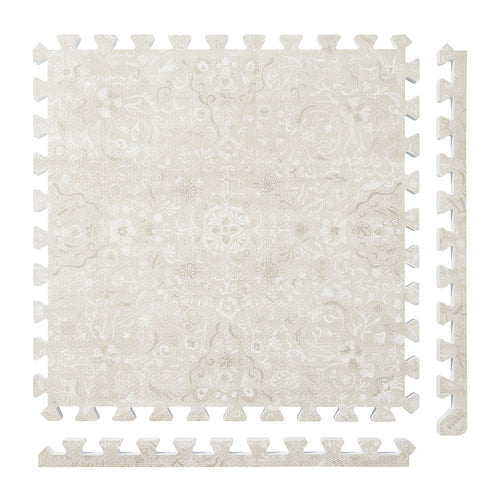
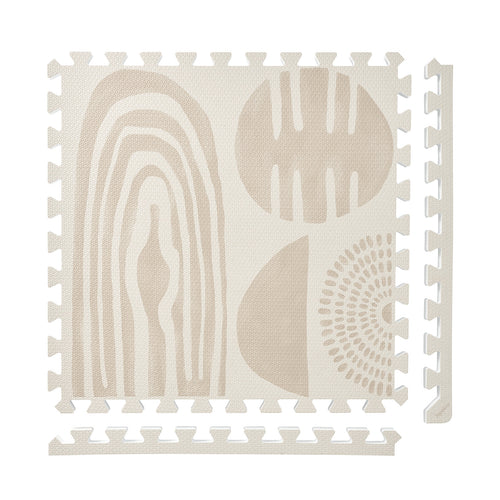
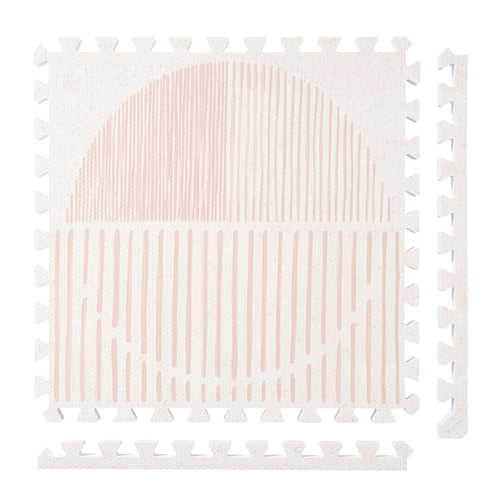
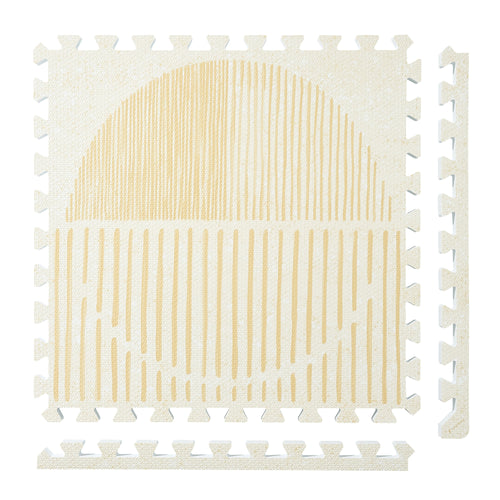
Persian Garden
 Firework
 Boho
Boho
 Little Builders
 Boulder
 Tranquil Flower
 Totem
Totem
Interlocking Foam Mat vs Seamless Play Mat
Quick answer: Interlocking foam mats and seamless play mats are not automatically better or worse. The real comparison is tile size, seam count, fit to your room, cleanability, replaceability, and stated specs — seams are the trade you make for coverage that grows and sections you can replace.
The honest trade
| Seamless fixed-size mat (verify listing) | Interlocking tiles (PopsyKosy) | |
|---|---|---|
| Surface | One uninterrupted piece | Seams — fewer with large 24" tiles |
| Room fit | Fixed sizes — the room adapts to the mat | Trim the layout around furniture and doors |
| Coverage growth | New mat when outgrown | Add tiles |
| Damage | Whole-mat decision | Replace one tile |
| Crumbs at seams | Not an issue | Tight-fitting large tiles minimize it; lift to clean |
| Construction (ours) | Check stated materials | 100% EVA foam core + 100% EVA film surface, 0.5" and 1" options |
How to choose
Pick seamless when the play zone is permanently small and a single surface matters most. Pick interlocking when the play area will grow, the room needs an exact fit, or you want replaceable sections. Tile size matters within the interlocking category: larger tiles mean fewer seams per square foot — PopsyKosy uses 24-inch tiles. Made in Taichung, Taiwan, with documentation and USP Class VI-tested EVA.
FAQ
Are seams a hygiene problem?
With tight-fitting tiles, crumbs mostly stay on the surface; lift tiles periodically to clean — a maintenance step interlocking-tile mats don't need, in exchange for flexibility they can't offer.
Which is better for a growing baby?
Interlocking usually wins over time: the play area follows the child, and worn sections are replaced individually.
Interlocking mat guide · Compare play mats · Build Your Floor · Shop mats