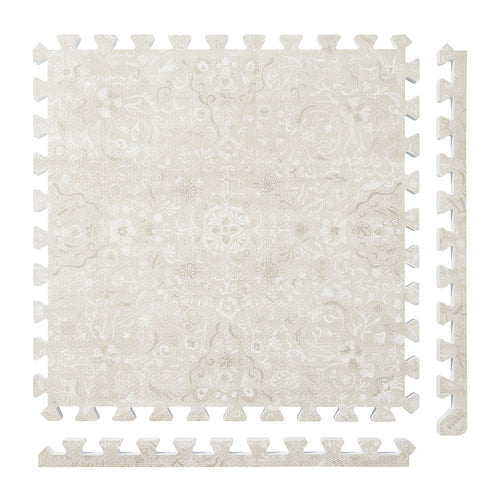
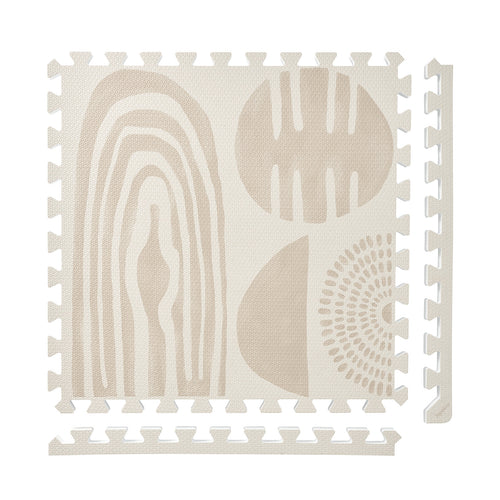
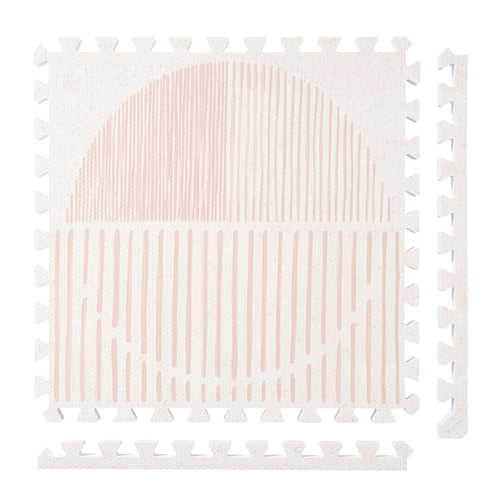
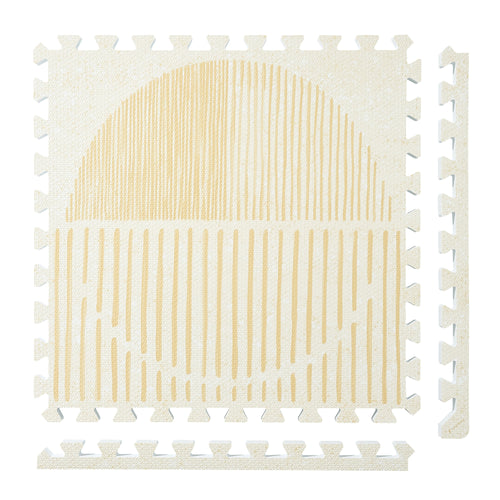
Persian Garden
 Firework
 Boho
Boho
 Little Builders
 Boulder
 Tranquil Flower
 Totem
Totem
Interlocking Foam Mat for Baby: What to Compare
Quick answer: The right interlocking foam mat for a baby should be compared by material documents, tile fit, seam behavior, thickness, cleanability, room size, warranty, and returns. Avoid treating any single badge or thickness number as the whole answer.
What to compare
- Material documents and intended family use.
- Tile size, seam fit, and edge profile.
- Thickness, density, and floor feel.
- Cleaning instructions, warranty, returns, and support.
Tile size changes the product
| Small puzzle tiles (verify current listing) | Large 24" tiles (PopsyKosy) | |
|---|---|---|
| Seams per square foot | More — more edges to work loose or collect crumbs | Fewer — cleaner look, less seam maintenance |
| Room look | Reads as a kids' product | Reads closer to flooring |
| Layout changes | More pieces to rework | Faster to reconfigure or extend |
| Construction | Check stated materials | 100% EVA foam core + 100% EVA film surface, 0.5" and 1" options |
Where PopsyKosy fits
PopsyKosy uses 24-inch modular EVA tiles with 0.5-inch and 1-inch options, wipe-clean care, and a premium room palette. Documentation includes, USP Class VI-tested EVA, CPSIA/CPC, ASTM F963, and REACH. Made in Taichung, Taiwan.
Decision checklist
Choose the mat that fits the room, cleans easily, and has current documents you can review.
Frequently asked questions
What should I compare?
Documents, tile fit, seams, thickness, cleaning, room size, warranty, and returns.
Are large tiles better?
Large tiles can reduce seams and visual clutter, but room fit still matters.
Does a mat guarantee protection?
No. Use supervision and choose a surface that fits your household.
Helpful next pages: Thickness guide · Size guide · Build Your Floor · Shop play mats