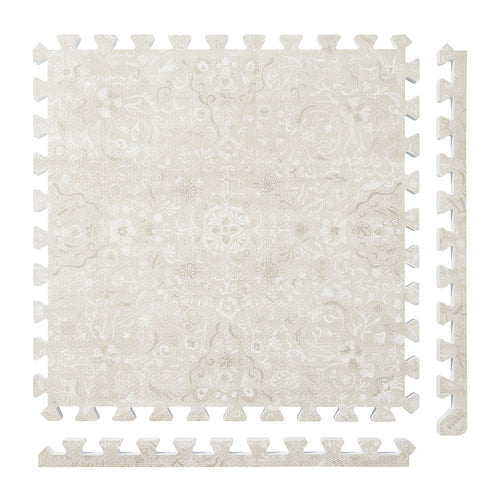
Vintage Floral
 Persian Garden
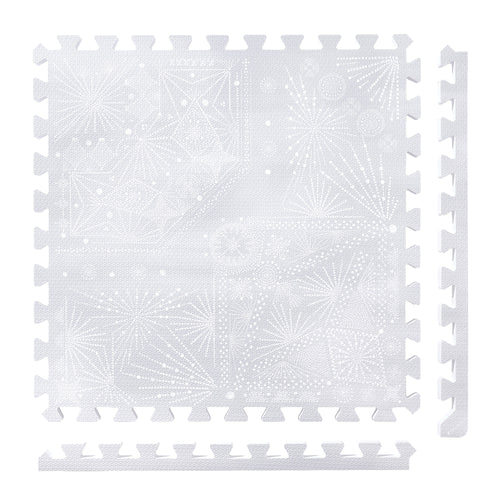
 Firework
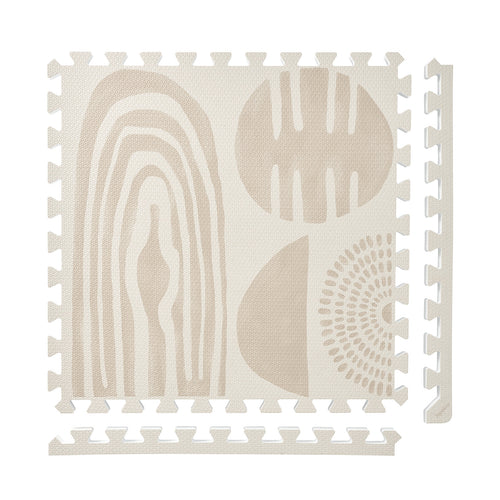
 Boho
Boho
 Little Builders
 Boulder
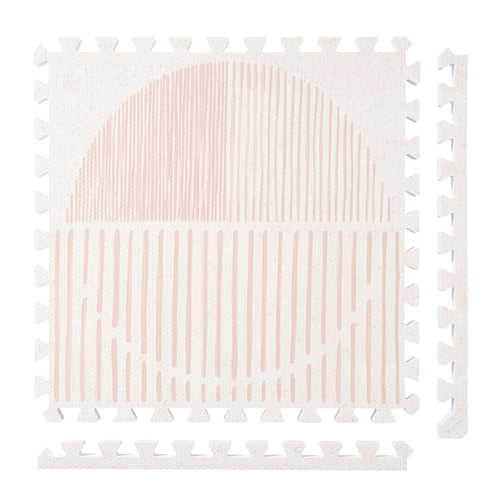
 Tranquil Flower
 Totem
Totem
How to Keep Mat Edges Flat
Quick answer: For modular mat tiles, edge flatness starts with a clean dry floor, correct tile connection, measured room fit, and regular edge checks. If an edge lifts, there's almost always a findable cause underneath — work the list below before blaming the mat, and replace a genuinely deformed tile rather than living with it.
Why edges lift
| Cause | What to do |
|---|---|
| Debris or grit under the seam | The most common cause: lift the tile, sweep, re-lay. |
| Moisture underneath | Liquid that reached the floor swells nothing but ruins flatness — dry both the tile underside and the floor before reconnecting. |
| Uneven floor | Foam follows the surface it sits on. Fix or avoid the dip; a mat can't level a floor. |
| Furniture pressure and traffic paths | A walking path that pushes against an exposed edge will work it loose — reorient the layout or finish that side with border pieces. |
| Heat and direct sun | Foam can expand and contract slightly with temperature — tiles parked against a radiator or in hot sun may move; give layouts a small breathing gap at walls. |
The four-step fix
Lift the affected tiles → clean and dry both the floor and the tile underside → reconnect firmly, checking border pieces → recheck after a day. If one tile stays stubbornly deformed after that, replace that single tile — that's what modular is for.
FAQ
How do I keep mat edges flat?
Use a clean dry floor, connect tiles correctly, check borders, and inspect edges during regular care.
What if an edge keeps lifting?
Stop using that setup until you check floor debris, moisture, fit, furniture pressure, and current setup guidance — and replace the single tile if it's deformed.
Explore further: Seam gaps guide · Baby play mats · Certifications · The PopsyKosy Standard