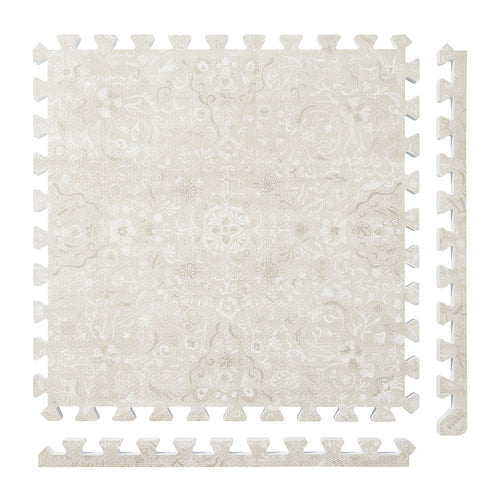
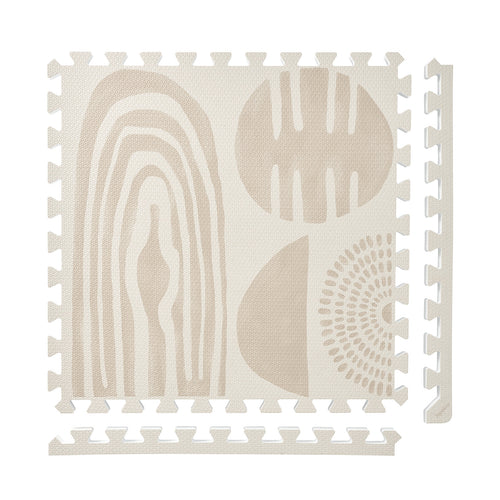
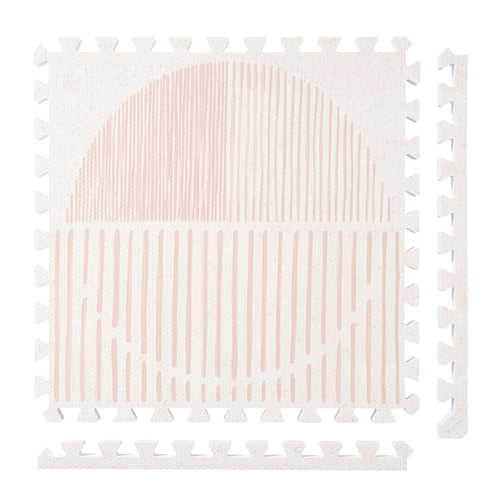
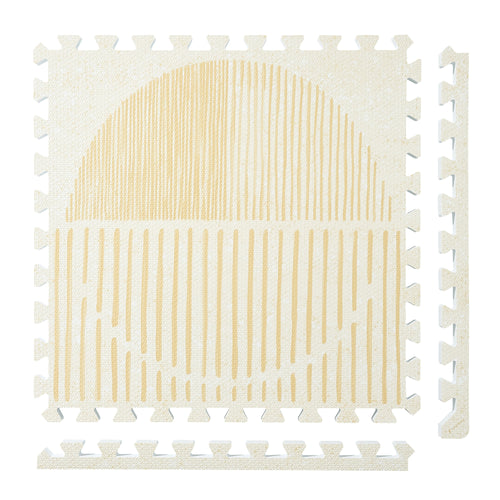
Persian Garden
 Firework
 Boho
Boho
 Little Builders
 Boulder
 Tranquil Flower
 Totem
Totem
House of Noa Play Mat Review: What to Compare
Quick answer: Reading House of Noa reviews? Most reviews grade the photo, not the floor. The questions that decide whether you'll still love the mat in month six are different: what's the material family, how does it handle a real spill, what happens if one section gets damaged, and how easy is the return if it arrives and doesn't fit the room.
Independent comparison. Source checked July 24, 2026: House of Noa's public play-mat overview, which describes modular 2 ft x 2 ft puzzle tiles and 0.47 in / 1.2 cm thickness. PopsyKosy is not affiliated with House of Noa.
How to read any play-mat review (including ours)
| What reviews usually cover | What actually predicts regret |
|---|---|
| How it looks on day one | How it looks after six months of cleaning |
| "Feels soft" | Named thickness in inches and how it fits the intended room |
| "Non-toxic" | Which documents apply to which exact product |
| Star count | Whether replacement tiles are available and current batches match |
Five questions to settle before buying House of Noa — or anything else
- Material details: what does the current listing disclose about the complete product?
- Thickness: is it stated in inches, and does it match your floor and intended use?
- Repairability: both House of Noa and PopsyKosy use modular tiles. Check whether replacement tiles are sold separately and whether a new tile will match the current pattern and production batch.
- Cleaning reality: what do the current care instructions allow?
- Exit cost: verify the current return window, return-shipping terms and any exclusions before purchase.
Where PopsyKosy stands in this comparison
PopsyKosy lists a 100% EVA foam core + 100% EVA film surface, named 0.5" and 1" thickness options, 24" interlocking tiles and soap-and-water wipe-clean care. It is designed in Los Angeles and produced in Taiwan. Compare the current product pages, warranty and return terms side by side, then choose the floor setup that fits your room.
Full PopsyKosy vs House of Noa comparison · Looking for a House of Noa alternative? · Build Your Floor
FAQ
Are House of Noa mats worth it?
That depends on how the current material details, listed 0.47-inch thickness, care instructions, modular format and return terms fit your room. Check the live listing and policies before buying.
What's the main alternative?
PopsyKosy is a direct premium alternative for shoppers comparing modular layouts, documented material details and 0.5-inch or 1-inch cushion options.