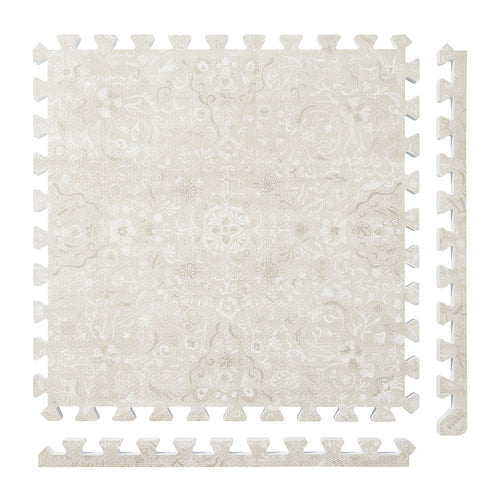
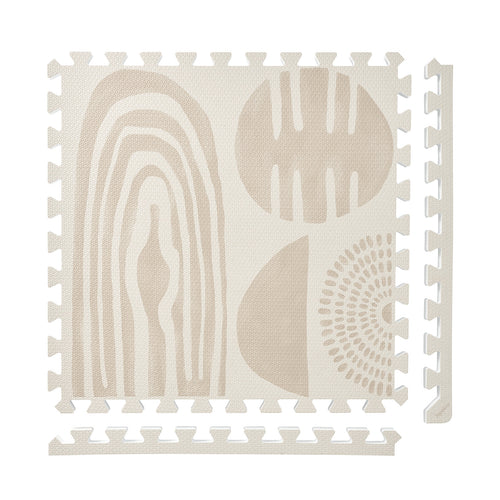
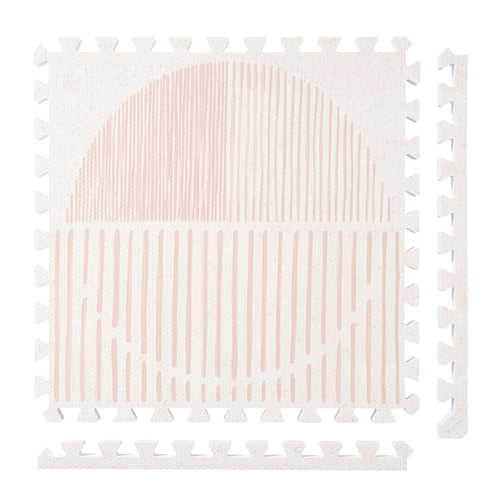
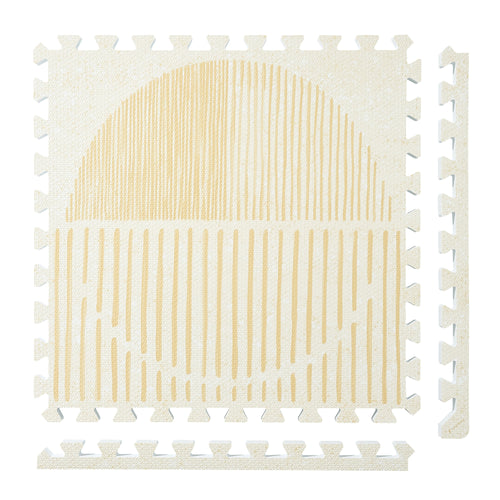
Persian Garden
 Firework
 Boho
Boho
 Little Builders
 Boulder
 Tranquil Flower
 Totem
Totem
Are EVA Play Mats Toxic? How to Read the Testing
Quick answer: EVA is a material category, not a yes-or-no answer. To judge an EVA play mat, look at the exact formulation, origin, odor, cleaning guidance, and current testing documentation for the product being sold.
Where the EVA concern comes from
Some foam products have raised questions because of processing aids, odor, recycled blends, or unclear sourcing. That does not mean every EVA mat has the same profile. Material quality depends on formulation, factory controls, and documentation transparency.
What testing can tell you
Useful documentation should show the tested material, report date, lab name, detection limits where relevant, and the standards used. A vague non-toxic label is weaker than a current report that matches the product.
How to avoid a weak mat
Skip products that do not disclose material details, hide origin, rely only on broad slogans, or have cleaning instructions that do not match your use. Compare current records before buying.
Where PopsyKosy stands
PopsyKosy mats are 100% EVA foam core + 100% EVA film surface — no XPE, IXPE, or recycled PE, with for the complete mat, USP Class VI-tested EVA, and CPSIA/CPC, ASTM F963, EN71, REACH, and Prop 65 documentation. Formamide is lab-tested with the report on file — documentation on request. 2-year warranty, 30-night risk-free trial, single-tile replacement.
FAQ
Is EVA foam toxic to babies?
Do not judge by the material name alone. Ask for current documentation for the exact EVA product, and use the mat only for supervised floor play.
Does EVA contain formamide?
Formamide questions should be answered with current product documentation, including what was tested and the report details.
Are EVA mats better than PVC or vinyl?
They can be different in feel, use, and formulation, but the specific product documentation matters more than a broad material comparison.
Explore: Is EVA safe? · Are foam mats toxic? · Certifications explained · Shop mats