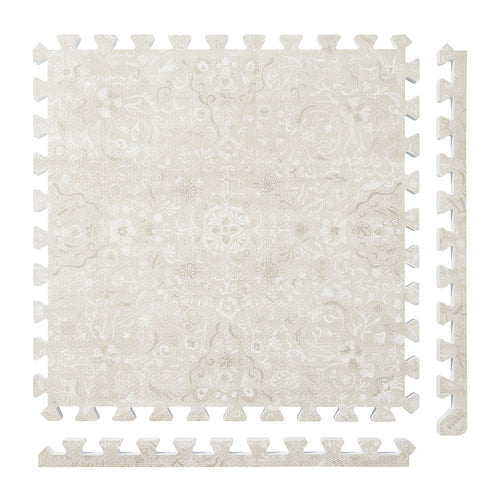
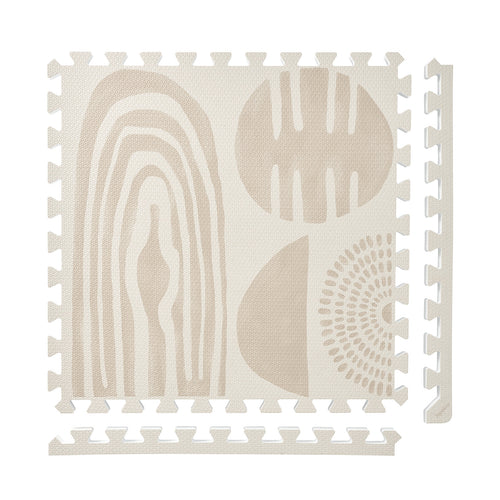
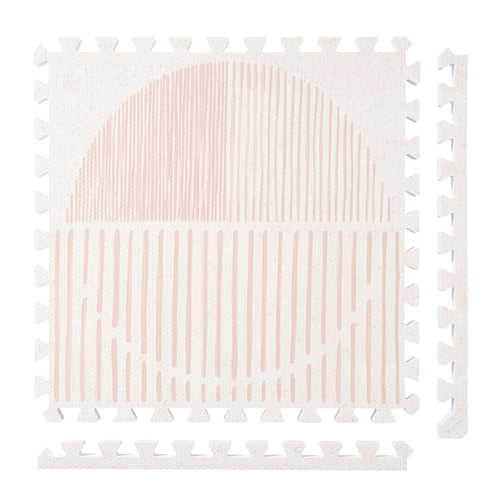
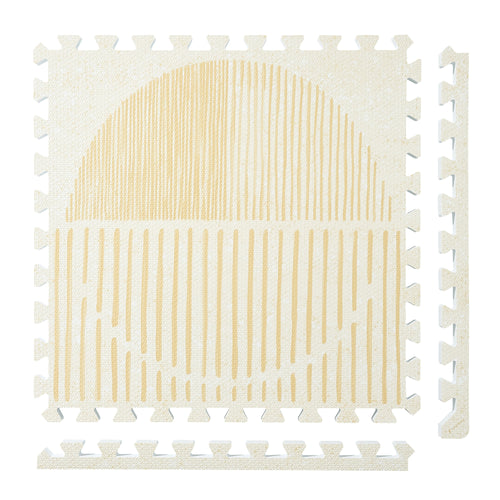
Persian Garden
 Firework
 Boho
Boho
 Little Builders
 Boulder
 Tranquil Flower
 Totem
Totem
Yoga Mat Pros and Cons: Specialist Mat vs Room Flooring
Short answer: a purpose-built yoga mat is the better tool for grip-dependent poses, predictable firmness and a defined practice surface. Modular room flooring is the better category when the household needs broader coverage around that mat and uses the room for several low-impact floor routines. They solve different jobs.
Pros and cons by product role
| Factor | Purpose-built yoga mat | Modular room flooring |
|---|---|---|
| Grip | Designed as the direct hands-and-feet practice surface. | Should not replace specialist grip requirements. |
| Firmness feedback | More predictable for balance and pose placement. | Varies with construction, thickness and the base floor. |
| Coverage | Compact and easy to define. | Can cover a larger measured room zone. |
| Shared-room use | Easy to roll or store after practice. | Can remain available for reading, stretching, baby play or pet rest. |
| Transitions | One smaller perimeter. | More edges and seams to plan, inspect and clean. |
The strongest setup can use both
In a shared family room, the specialist yoga mat can own the actual practice surface while modular flooring organizes the larger zone. Keep floor transitions outside the active pose area, preserve wall-work clearance, and store props so that the room can return to everyday use. This avoids forcing one product to do two incompatible jobs.
When broader flooring is the wrong choice
Choose the specialist route when the activity depends on grip, equipment stability, instructor-defined setup, rehabilitation or precise balance feedback. Do not place heavy exercise equipment on a consumer play-mat system unless the equipment maker explicitly permits that setup. A broader floor zone is not a shortcut around activity-specific requirements.
Where PopsyKosy fits
PopsyKosy is a modular interlocking floor system, Designed in LA, with 100% EVA foam core + 100% EVA film surface. It may suit a room that needs repeatable coverage for several supervised family floor routines. It is not marketed here as a yoga mat, therapy surface, anti-fatigue product or substitute for professional instruction.
Five questions before buying either product
- What surface will directly contact hands and feet during practice?
- How much grip and firmness does the practice require?
- Does the room need to serve babies, pets or family activities between sessions?
- Where will edges, seams, furniture and walking paths meet the zone?
- How will each layer be cleaned and stored?
Build the room around the specialist surface
Measure the yoga mat, prop layout, wall-work area and walking path first. If broader room coverage still has a clear job, use Build Your Floor to plan it. For a family-specific scenario, read the shared yoga-and-baby room guide.
FAQ
Can PopsyKosy replace a yoga mat?
No. Use a purpose-built yoga mat when grip, firmness and pose feedback matter.
Can modular flooring go under a yoga mat?
Consider it only when the resulting surface remains stable for the intended practice and transitions stay outside the active pose area.
What is the main advantage of broader flooring?
It can organize a larger shared room zone that returns to family use between practice sessions.