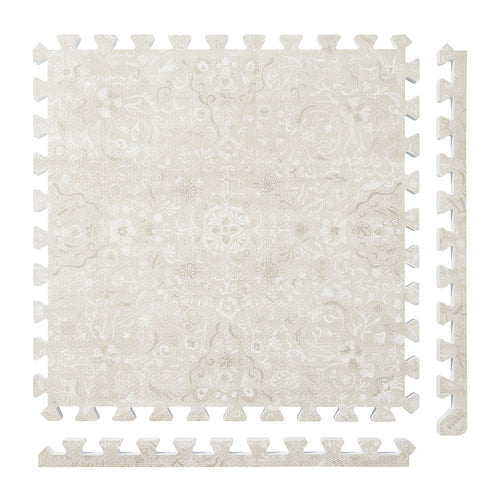
Persian Garden
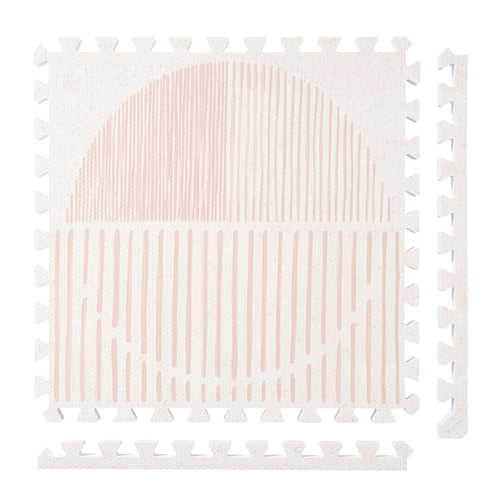
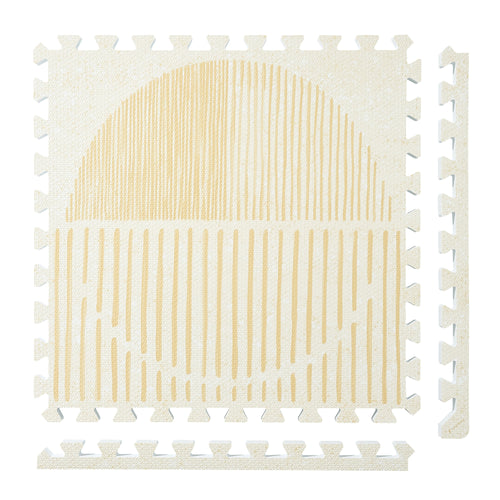
 Firework
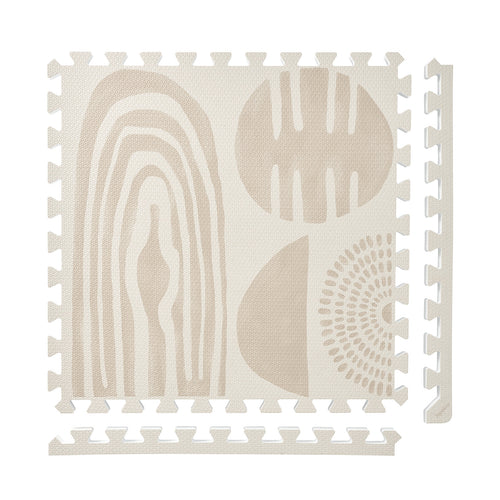
 Boho
Boho
 Little Builders
 Boulder
 Tranquil Flower
 Totem
Totem
Iyengar Yoga Mat: Home Practice Surface Guide
Quick answer: The honest answer first: Iyengar practice wants precision and a firm, grippy base. For standing asanas, a traditional firm yoga mat — chosen with your teacher's guidance — beats any cushioned floor tile, ours included. Where a cushioned surface earns its place is around the practice, not under the standing poses.
Match the surface to the practice element
| Practice element | Surface call |
|---|---|
| Standing asanas | Firm sticky mat per teacher guidance — foam adds wobble where precision matters |
| Props work — blocks, bolsters, chairs | Props want a stable base; ask your teacher before setting them on foam |
| Restorative and supine work | A cushioned zone is comfortable under the spine and knees |
| The home practice corner | Tiles keep the space inviting between sessions — sticky mat goes on top to practice |
Where PopsyKosy stands
We're the room surface, not the practice mat — and we'd rather say so than sell you the wrong tool. Construction: 100% EVA foam core + 100% EVA film surface — no XPE, IXPE, or recycled PE, with and USP Class VI-tested EVA. 2-year warranty, 30-night risk-free trial, single-tile replacement.
FAQ
Can I practice Iyengar yoga on foam tiles?
For standing and balance work, a firm surface is generally preferred — follow your teacher's guidance. Restorative and supine elements are where a cushioned zone helps.
What is PopsyKosy for, then?
The surrounding zone: a clean, cushioned, inviting floor for the corner your practice lives in, with your dedicated mat on top when you practice.
Yoga floor tiles guide · Stretching mats · Wellness mats · Shop mats