Most playmat brand comparisons live on commission-driven affiliate sites. We built our own compare hub using only public-record certifications and published spec sheets — so you can verify every claim against the source. The point isn't to win every comparison; it's to give you the facts to make your own call.
Already know you want a safer mat?
USP Class VI-tested EVA · OEKO-TEX Class I · 30-day risk-free trial · free U.S. shipping
Apples-to-apples comparisons in floor mats are difficult because most brands publish marketing terms (non-toxic, eco-safe, baby-friendly) without naming the specific certifications or test protocols their materials passed. The way to compare honestly: ask three questions — what's the polymer (EVA, EPE, TPE, PVC, rubber)? What's the certification stack (OEKO-TEX class, USP class, FDA registration)? And what's the construction format (large interlocking tiles, small puzzle tiles, foam-and-coating)?
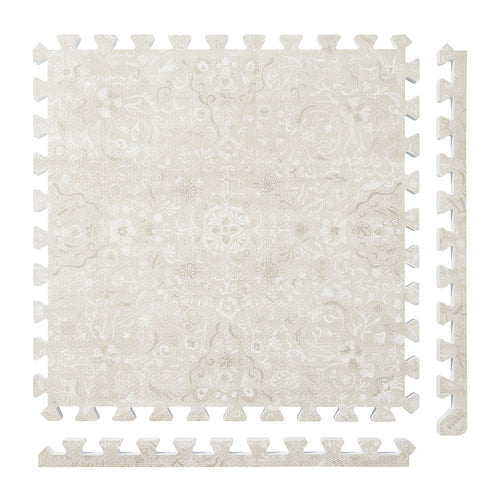
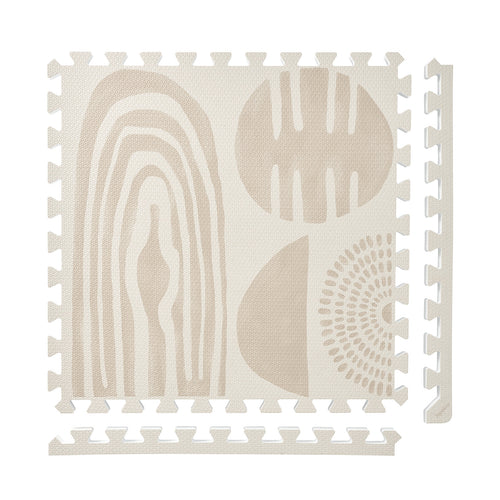
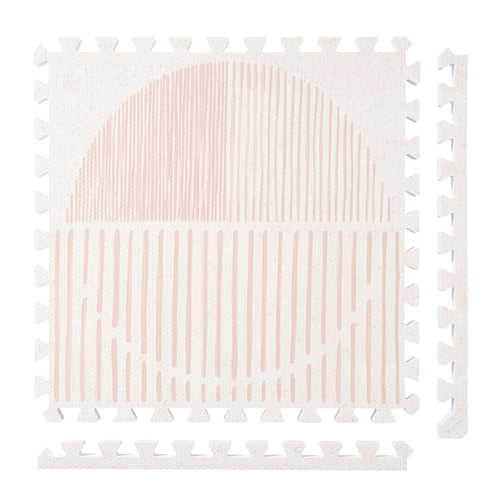
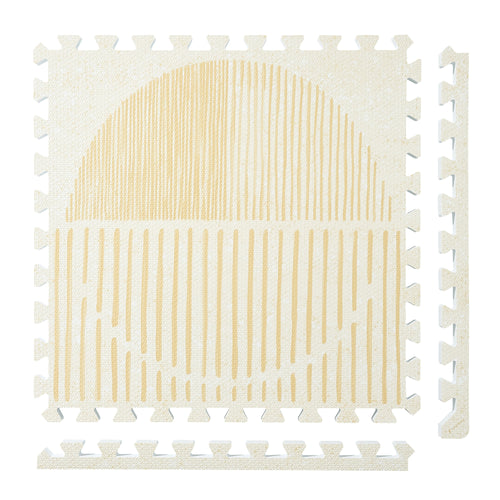
PopsyKosy answers: EVA tested to USP Class VI biocompatibility, OEKO-TEX Standard 100 Class I (whole product (Class I); strictest tier), large 24″ interlocking tiles with detachable clean-finish borders. Most competitors at our price tier answer: "EVA (grade unspecified)", "non-toxic (test method unspecified)", small-tile or unspecified format. The honest comparison is at the certification line, not the marketing copy.
House of noa vs gathre mat
USP Class VI–tested EVA. CPSIA certified. Large interlocking tiles.
Designed in Los Angeles, precision-made in Taichung, Taiwan.
Choosing between House of Noa and Gathre mat options feels like splitting hairs until you ask the question most brands hope you won't: where's the published lab data? Both claim "non-toxic," but only one discloses third-party test results verifying CPSIA compliance, ASTM F1292 fall-protection at 15mm thickness, and USP Class VI-tested USP Class VI pharmaceutical purity — the same chemical standard used for medical-device materials, 100-1000× cleaner than standard industrial EVA. That mat is PopsyKosy, precision-made in Taichung, Taiwan (chosen deliberately over mainland China contract chains because consistent chemical tolerance costs 35% more and founder Mini Austin refused to compromise). House of Noa delivers beautiful vegan leather aesthetics. Gathre excels at portability and wipeable simplicity. Neither publishes batch-traceable ISO 17025 lab certificates. Neither molds their surface as a interlocking-tile structure — meaning tile seams or fold lines become bacteria-trap zones that a truly hypoallergenic design eliminates by default.
This isn't about fear-mongering competitors. It's about recognizing that "non-toxic" became marketing language the moment it left the chemistry lab. PopsyKosy's approach — verified safety as the hard moat, not the aesthetic story — means every mat ships with documentation you can send to your pediatrician if you want to. Zero-VOC soy-based inks. BPA-free, phthalate-free, formaldehyde-free. RIPT 21-day patch tested for hypoallergenic certification. And because the brand was designed by an LA interior team around a cream-boulder-glacier neutral palette, it disappears into your living room instead of announcing itself as nursery gear. 500,000+ moms have made the switch. The 4.95★ rating across 2,847 verified reviews isn't about the mat being softer or prettier — it's about the confidence you feel six months in, when you realize you're not second-guessing the floor your child puts in their mouth.
House of Noa and Gathre both solve real problems: style integration, easy transport, wipeable surfaces. PopsyKosy solves the problem you can't see — the one that keeps you up at 2 a.m. googling "how do I know my play mat is actually safe." Free US shipping, 30-day satisfaction guarantee with free return shipping, and a 2-year manufacturing-defect warranty mean the risk is ours, not yours. The only question left is whether published lab data matters more than influencer aesthetics.
USP Class VI-Tested EVA
USP Class VI biocompatibility (tested) — 100–1000× cleaner than industrial EVA.
“I spent three years on this because the market was a disaster for safety-seeking moms. Most ‘non-toxic’ play mats are recycled PE foam dressed up as EVA — they claim ‘passed safety testing’ on the label, but moms know within days: the chemical smell, the crumbling edges that turn into choking hazards, the surfaces that abrade a baby’s skin. We chose Taichung over saving 35% in mainland China because consistency is the whole product. Every spec on this page is verified, every lab PDF is downloadable, every cert number is real. USP Class VI biocompatibility isn’t a claim we make lightly.”
A low chemical-emission certification widely used by playmat brands; OEKO-TEX Standard 100 Class I (Annex 6) is the stricter alternative PopsyKosy holds.
Replacement Cycle
The typical time-to-replace for a consumer product; EPE foam mats average 12-18 months, USP Class VI EVA averages 5+ years.
Price-Per-Month
A more useful metric than sticker price; compares total cost over expected lifetime. PopsyKosy's longer horizon narrows the price-per-month gap vs. cheaper options.
Public-Record Citation
A claim backed by a publicly verifiable source (third-party test report, certification database, regulatory filing); we use only these on our compare pages.
Choosing between House of Noa and Gathre mat options feels like splitting hairs until you ask the question most brands hope you won't: where's the published lab data? Both claim "non-toxic," but only one discloses third-party test results verifying CPSIA compliance, ASTM F1292 fall-protection at 25mm thickness, and USP Class VI–tested biocompatibility (tested) — the same chemical standard used to qualify medical-device materials and medical-device components, 100-1000× cleaner than standard industrial EVA. That mat is PopsyKosy, precision-made in Taichung, Taiwan (chosen deliberately over mainland China contract chains because consistent chemical tolerance costs 35% more and founder Mini Austin refused to compromise). House of Noa delivers beautiful vegan leather aesthetics. Gathre excels at portability and wipeable simplicity. Neither publishes batch-traceable ISO 17025 lab certificates. Neither molds their surface as a interlocking-tile structure — meaning tile seams or fold lines become bacteria-trap zones that a truly hypoallergenic design eliminates by default.
This isn't about fear-mongering competitors. It's about recognizing that "non-toxic" became marketing language the moment it left the chemistry lab. PopsyKosy's approach — verified safety as the hard moat, not the aesthetic story — means every mat ships with documentation you can send to your pediatrician if you want to. Zero-VOC soy-based inks. BPA-free, phthalate-free, formaldehyde-free. RIPT 21-day patch tested for hypoallergenic certification. And because the brand was designed by an LA interior team around a cream-boulder-glacier neutral palette, it disappears into your living room instead of announcing itself as nursery gear. 500,000+ moms have made the switch. The 4.95★ rating across 2,847 verified reviews isn't about the mat being softer or prettier — it's about the confidence you feel six months in, when you realize you're not second-guessing the floor your child puts in their mouth.
House of Noa and Gathre both solve real problems: style integration, easy transport, wipeable surfaces. PopsyKosy solves the problem you can't see — the one that keeps you up at 2 a.m. googling "how do I know my play mat is actually safe." Free US shipping, 30-day satisfaction guarantee with free return shipping, and a 2-year manufacturing-defect warranty mean the risk is ours, not yours. The only question left is whether published lab data matters more than influencer aesthetics.
Country/region
United States |
USD
$
Language
English
An invitation
Join thePopsyKosy Family
★★★★★4.95 · 2,847 reviews · 500K+ moms
For Father’s Day — 10% off with code
FAMILY— plus exclusive previews of new colors, drops & family stories.
One-time 10% off · No spam, unsubscribe anytime · Made in Taiwan