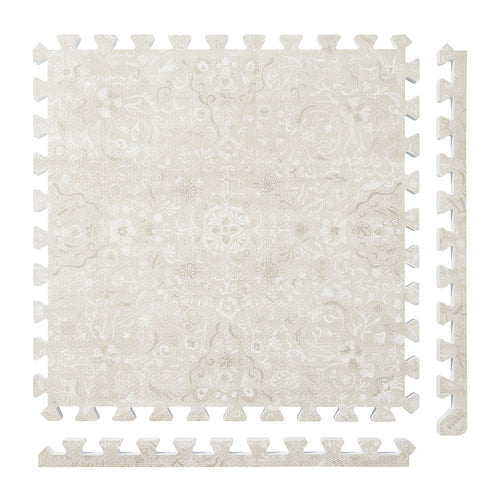
Persian Garden
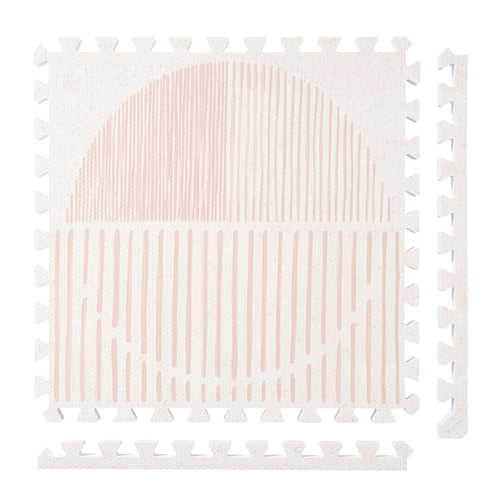
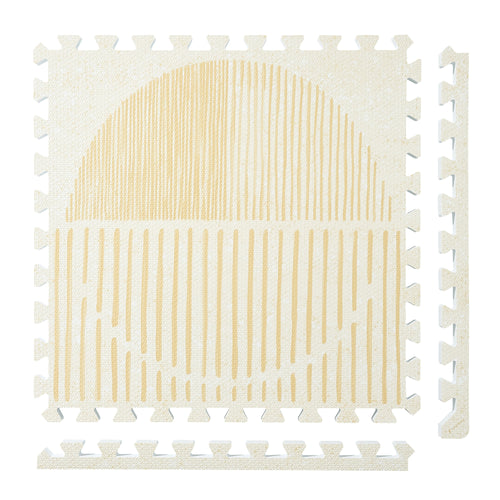
 Firework
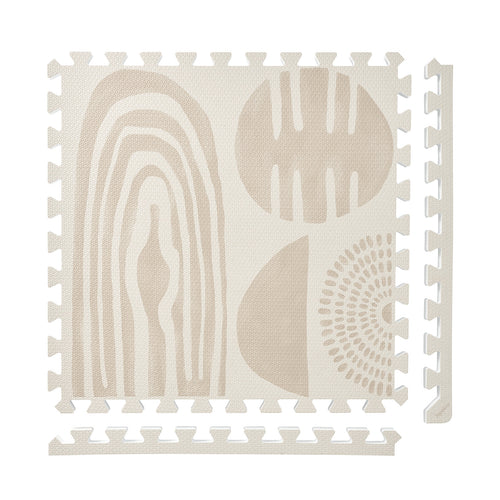
 Boho
Boho
 Little Builders
 Boulder
 Tranquil Flower
 Totem
Totem
Choosing a Play Mat for a Toddler Room
Quick answer: a toddler-room play mat should cover the real movement zone, stay easy to clean, and leave edges and furniture paths inspectable. The best layout is not automatically the biggest one; it is the one that supports blocks, books, pretend play and daily room reset.
Use a toddler-room decision model
| Room signal | Layout decision |
|---|---|
| Play spreads from shelf to floor | Cover the active rectangle, not just the decorative center of the room. |
| Adults kneel for cleanup or play | Compare thickness by comfort and edge transition, not by safety promises. |
| Beds, bins or chairs move often | Keep pressure points visible and lift the mat during floor care. |
| The room may change soon | Use modular coverage that can adapt before buying a larger footprint. |
Where PopsyKosy stands
PopsyKosy is Designed in LA with 100% EVA foam core + 100% EVA film surface. It gives a cushioned, wipe-clean floor zone for supervised toddler rooms, while furniture anchoring, childproofing, climbing risks and activity-specific gear remain separate decisions.
Plan for the daily reset
Measure the space where toys actually land, leave clearance at doors and storage, and choose colors that can stay visible. For nearby decisions, compare choosing between mat sizes, neutral play mat styling, and play mat pairings. PopsyKosy serves US and Canada shoppers in English.
Frequently asked questions
What size play mat works for a toddler room?
Cover the active play zone generously while leaving doors, storage, furniture and cleaning access easy to manage.
Should a toddler-room mat be thick?
Choose thickness by comfort, floor hardness and edge transition; do not treat thickness as an comfort-focused cushioning promise.