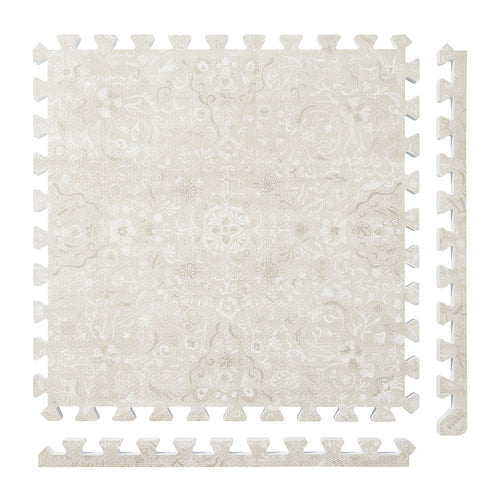
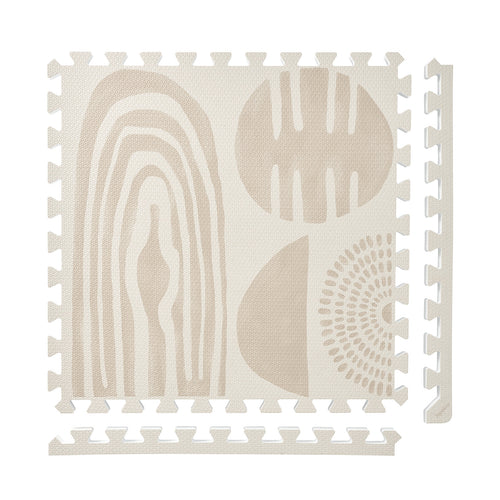
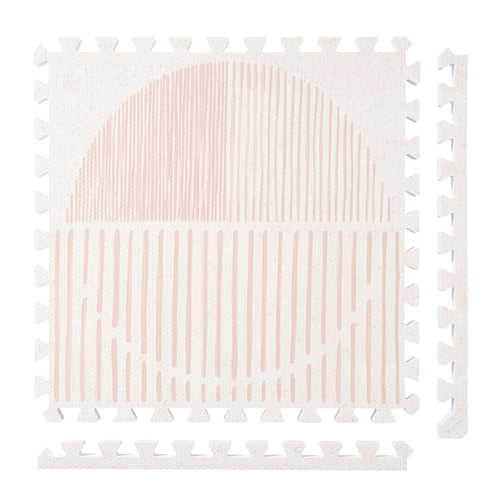
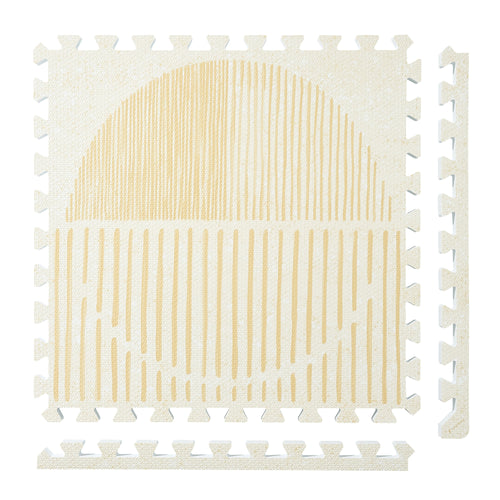
Persian Garden
 Firework
 Boho
Boho
 Little Builders
 Boulder
 Tranquil Flower
 Totem
Totem
Older Cat Floor Comfort Guide
Quick answer: If your older cat shows stiffness, reduced jumping, or changing mobility, start with a veterinarian — ramps, bedding, litter setup, and room layout are their call. What the floor can honestly do: put a clean, cushioned, wipeable surface in the exact spots your cat already uses.
Put comfort where the cat already goes
| Cat spot | What to set up |
|---|---|
| Favorite resting spot | Tiles under where they actually nap — cats don't relocate on request |
| Feeding corner | A wipe-clean zone for drips and scattered kibble; lift tiles to dry under the water bowl |
| Litter approach | Tracked litter wipes off a film surface far easier than out of carpet |
| Grooming and sun spots | Hair collects here — a smooth surface keeps the vacuum pass quick |
Vet guidance matters
A floor mat is not a mobility aid. For jumping changes, stiffness, or pain, ask a veterinarian about the whole setup — the mat is the easy part.
Where PopsyKosy stands
Construction: 100% EVA foam core + 100% EVA film surface — no XPE, IXPE, or recycled PE, with and USP Class VI-tested EVA. EVA isn't claw-proof — keep the scratching post in service, and if one tile loses the argument, single-tile replacement means you swap a tile, not the floor. 2-year warranty, 30-night risk-free trial.
FAQ
What mat works for an older cat?
Choose a cleanable, comfortable household surface that fits the places your cat already uses.
Is this a mobility product?
No. Use veterinarian guidance for changing mobility or comfort concerns.
Cat scratch guide · Complete pet mat guide · Pet guide · The PopsyKosy Standard