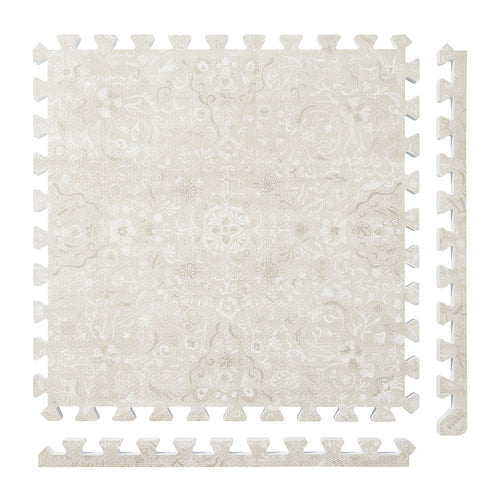
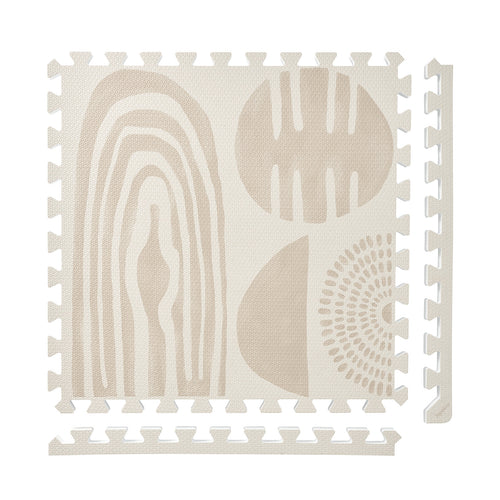
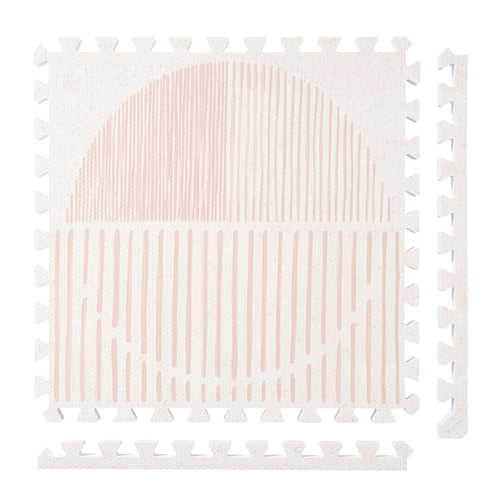
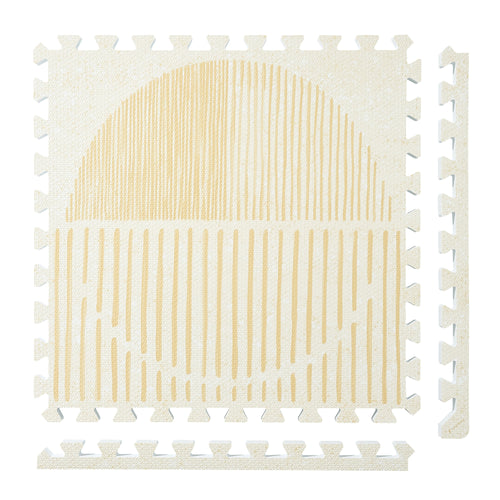
Persian Garden
 Firework
 Boho
Boho
 Little Builders
 Boulder
 Tranquil Flower
 Totem
Totem
Wellness Mat Material Documents
For a mat used every day, comfort matters, but documentation matters too. Instead of relying on a generic safety label, compare the material, report scope, and how the mat will actually be used in your home.
Useful checks
- Material type: EVA, PVC, rubber, 100% EVA printed film surface, cotton, and XPE behave differently underfoot and in daily cleaning.
- Report scope: read whether the document covers the finished product, the material, or a separate sample.
- Room fit: check thickness, edge height, door clearance, furniture placement, and whether the layout can be adjusted.
- Care routine: choose a surface that can be cleaned consistently without special equipment.
PopsyKosy as a wellness-floor option
PopsyKosy is a large-format EVA tile mat for supervised family floor use, light stretching, play, reading, and everyday standing or seated routines. The wipe-clean surface can be wiped with a damp cloth during routine care, and individual tiles can be reconfigured or replaced.
For specialized rehabilitation, pain management, fall-risk concerns, or diagnosed mobility conditions, follow professional guidance and do not treat any consumer mat as a guarantee.
FAQ
Should wellness mats be treated like medical equipment?
No. Use consumer mats for suitable home routines and follow professional guidance for rehabilitation, pain management, balance work, or diagnosed conditions.
What documents should I compare before choosing a wellness mat?
Compare material identity, report scope, product match, lab date, care instructions, and whether the mat is suitable for the activity and room setup you plan to use.